How long does dehydrated food last? Shelf life by food and storage
Dried food does not spoil on a date. It spoils when heat, moisture and air get back in. Control those three and the shelf life takes care of itself.
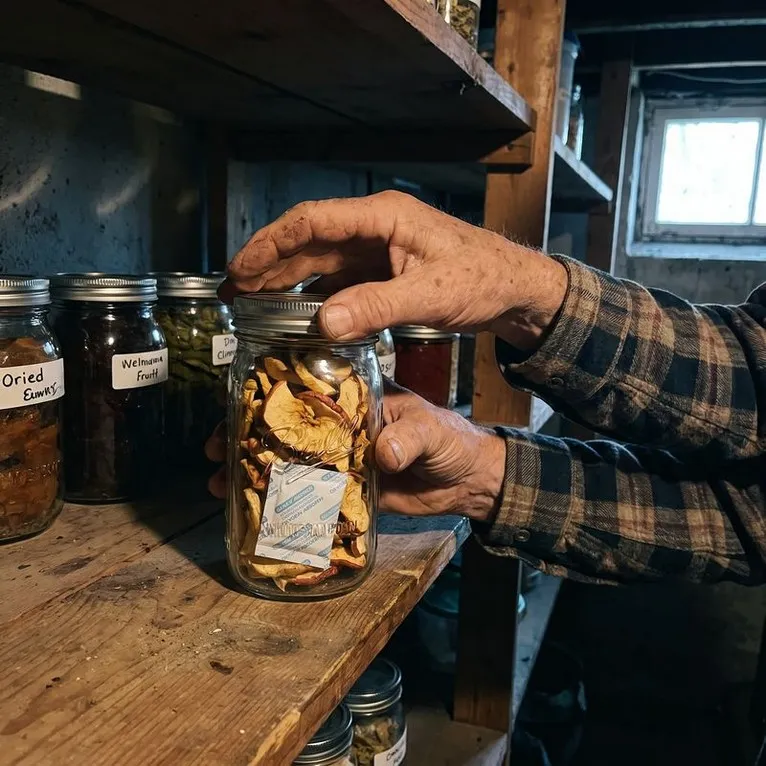
In this article
- How long does dehydrated food last? A shelf life chart
- What shortens dehydrated food shelf life
- How to store dehydrated food
- Oxygen absorbers and vacuum sealing: only for truly dry food
- Checking stored jars, and when to throw food out
- Why dried food earns its shelf space
- Making dried food last longer
- Frequently asked questions
How long does dehydrated food last? It depends mostly on temperature and dryness. Home-dried food generally keeps 4 months to 1 year, according to the National Center for Home Food Preservation (NCHFP). Most dried fruit keeps about 1 year at 60°F and 6 months at 80°F, and dried vegetables keep about half as long as fruit. Home-dried jerky is shorter still: 1 to 2 months, per USDA.
Project 33 of The Off-Grid Handbook, the Dehydration Line, ends with two storage steps: condition the fruit for a week, then store everything airtight, dark and cool. It takes about two hours to set up for around $60, according to the book. This guide covers what happens after the trays come out.
How long does dehydrated food last? A shelf life chart
| Food | Typical storage life | Source |
|---|---|---|
| Dried fruit, stored at 60°F | About 1 year | NCHFP |
| Dried fruit, stored at 80°F | About 6 months | NCHFP |
| Dried vegetables | About half as long as fruit | NCHFP |
| Dried herbs | Airtight, cool, dark; best for color and fragrance | NCHFP |
| Home-dried jerky | 1 to 2 months (USDA); about 2 weeks at room temperature, longer refrigerated or frozen (NCHFP) | USDA FSIS, NCHFP |
These are quality guidelines. Oregon State University Extension notes that properly dried food stays safe well beyond them, but after about a year nutrient loss speeds up and a browning reaction starts to change the flavor. Plan to eat what you dry within the year and dry again next season.
What shortens dehydrated food shelf life
Utah State University Extension lists the enemies of stored food. Four of them matter most for dried food:
- Heat. The warmer the storage, the shorter the life. That is why fruit lasts twice as long at 60°F as at 80°F.
- Moisture. Moisture lets bacteria and mold grow. The Handbook's field note calls quiet moisture the enemy of dried food.
- Oxygen. Oxygen slowly changes flavor and color, especially in foods with some fat.
- Light. USU notes light degrades vitamins and color, starting with the side of the food nearest the glass.
Insects are the fifth. A tight lid keeps them out, and NCHFP calls for insect-proof containers.
How to store dehydrated food
- Cool it completely. Warm food packed in a jar sweats, and that moisture is where mold starts.
- Condition fruit. NCHFP's method, which the Handbook also uses: pack cooled fruit loosely in a closed jar for 7 to 10 days and shake it daily. If condensation appears, the fruit goes back in the dryer.
- Pack tightly, without crushing, in clean, dry canning jars, freezer containers or freezer bags. NCHFP also lists vacuum packaging.
- Pack in recipe-size amounts. NCHFP notes that every time a container is reopened, air and moisture lower the quality.
- Label each container with the food and the month it was dried.
- Store cool, dry and dark: a basement shelf, an interior closet or a root cellar corner, not a cabinet over the stove.
Glass jars have one advantage over everything else: NCHFP points out that you can see moisture collect on the inside. If you dried fruit with sulfur, keep it in a plastic bag inside any metal container, because sulfured fruit should not touch metal.
Oxygen absorbers and vacuum sealing: only for truly dry food
The Handbook adds an oxygen absorber to jars meant for long holds. Absorbers do help: USU explains that once the oxygen in a sealed jar is absorbed, what remains is mostly nitrogen, which slows oxidation and stops insects.
There is one firm condition. USU warns that botulism can occur if moist food is stored in packaging that removes oxygen, and that food stored with absorbers should be about 10 percent moisture or less. University of Illinois Extension puts properly dried vegetables at about 10 percent moisture, brittle or crisp, while properly dried fruit is still pliable at about 20 percent.
So in practice:
- Brittle, crisp vegetables and herbs can go into jars or Mylar with an oxygen absorber, or be vacuum sealed.
- Leathery dried fruit is better stored in a plain airtight jar in a cool spot, or in the freezer for longer holds.
- Jerky belongs in the refrigerator or freezer for anything beyond a couple of weeks.
Vacuum sealing is not a safety process by itself, USU notes. It only protects food that was already dried properly.
Checking stored jars, and when to throw food out
NCHFP recommends checking dried foods often to make sure they are still dry. Look at the inside of each jar for droplets and squeeze a piece or two. Then follow its rule:
- Damp but not spoiled: use it right away, or dry it again and repackage it.
- Any mold: throw the whole container out.
- Off smells, stickiness or insects: throw it out.
Oregon State suggests rotating stock every six months, eating the oldest first. The Handbook's FIFO pantry shelves make that automatic, as described in a DIY can rotation rack.
Why dried food earns its shelf space
Even at a year or less, dried food is worth the effort. The Handbook notes that drying cuts food weight by 70 to 90 percent, so a season of apples, tomatoes and greens fits on a single shelf, needs no power to keep, and travels in a go-bag. In an outage, that matters more than a few extra months of shelf life. Dried vegetables go straight into soups made on a camp stove outdoors, and dried fruit is a ready snack that needs no water or cooking at all.
Making dried food last longer
The single biggest gain is a colder storage spot. Moving jars from an 80°F kitchen to a 60°F basement roughly doubles the life of dried fruit, by NCHFP's figures. The freezer goes further still, and it is the right place for jerky and leathery fruit you want to keep for many months.
Dry it right in the first place, too. The temperatures that keep food from case hardening, which traps moisture inside, are in the food dehydrator temperature chart, and the full method is in dehydrating food for beginners. Meat has its own rules, covered in how to make jerky in a dehydrator. If you want storage measured in years rather than months, dehydrating vs freeze drying compares the two methods.
Frequently asked questions
How long does dehydrated food last?
Home-dried food generally keeps 4 months to 1 year. NCHFP says most dried fruit keeps about 1 year at 60°F and 6 months at 80°F, and dried vegetables keep about half as long as fruit. Home-dried jerky keeps 1 to 2 months, according to USDA.
Does dehydrated food go bad?
Properly dried and stored food stays safe for a long time, but its quality declines, especially after about a year. Food that picks up moisture can mold. Use or re-dry food that feels damp, and throw out anything with mold, an off smell or insects.
Should I use oxygen absorbers with dehydrated food?
Only with food that is truly dry. Utah State University Extension warns that moist food sealed without oxygen can allow botulism, and that food stored with absorbers should be about 10 percent moisture or less. Brittle vegetables qualify; leathery dried fruit is better kept in a plain airtight jar or the freezer.
What is the best way to store dehydrated food?
Cool it completely, condition fruit for 7 to 10 days, then pack it tightly in clean, dry glass jars or freezer containers in recipe-size amounts. Label it with the date and store it somewhere cool, dry and dark. Check jars regularly for moisture.
Sources
- The Off-Grid Handbook, Garrett Dalton, Project 33
- NCHFP: Packaging and Storing Dried Foods
- Oregon State University Extension: Safety tips for dehydrated produce
- Utah State University Extension: Food Storage
- Utah State University Extension: Buying a Home Freeze-Dryer
- University of Illinois Extension: Drying Foods at Home
- USDA FSIS: Jerky and Food Safety
Safety guidance changes. Check the agency pages above for the current version, and follow your local code and manufacturer instructions.