How to make jerky in a dehydrator, the USDA-safe way
A dehydrator dries meat, but it does not cook it. One extra heating step, before or after drying, is what makes homemade jerky safe.
In this article
Here is how to make jerky in a dehydrator safely: slice lean meat no thicker than 1/4 inch, marinate it in the refrigerator, and then heat it to 160°F, or 165°F for poultry, before drying. Dry the strips at a steady 130 to 140°F until a piece cracks but does not break when you bend it. If you skip the heating step, NCHFP gives a second option: heat the finished jerky in a 275°F oven for 10 minutes.
Project 33 of The Off-Grid Handbook, the Dehydration Line, is built mainly for fruit and vegetables: about two hours of setup and around $60, per the book. For meat, its safety box is firm. Follow current USDA jerky guidance exactly, including the heating step, or keep the dehydrator for produce and preserve meat by pressure canning or freezing.
Why a dehydrator alone is not enough
USDA's Food Safety and Inspection Service (FSIS) explains the problem. Inside a dehydrator, the evaporating moisture absorbs most of the heat, so the meat itself does not warm up until most of its water is gone. By then, bacteria have become more heat resistant and are more likely to survive.
FSIS links illnesses from Salmonella and E. coli O157:H7 to homemade jerky. In research it cites, pathogenic E. coli on venison survived drying for up to 10 hours at temperatures up to 145°F. Marinating does not help on its own: the study found that marinade alone did not significantly reduce the bacteria.
Choosing and slicing the meat
- Pick lean cuts. Fat goes rancid. University of Illinois Extension notes that jerky fat starts to spoil at room temperature and hurts the flavor.
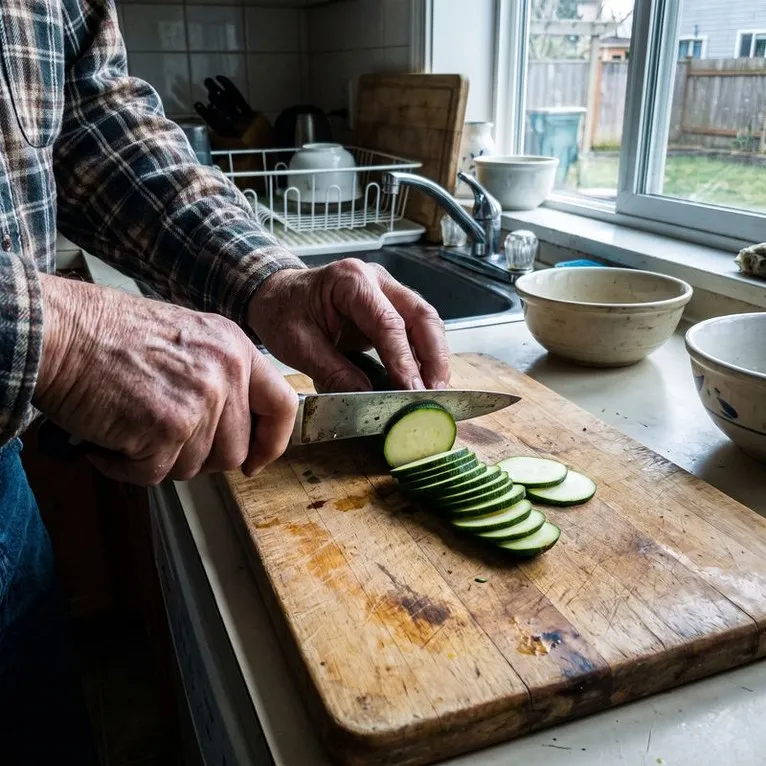
- Slice no thicker than 1/4 inch. NCHFP suggests partially freezing the meat first so it slices cleanly.
- Grain matters. Slicing with the grain gives a chewy jerky; slicing across it gives a more tender, brittle one, according to NCHFP.
- Keep the strips even. The Handbook's rule for all drying is uniform thickness, because uniform pieces finish together.
Be careful with ground meat and wild game. FSIS research found more bacterial survival in jerky made from ground beef, and FSIS notes that venison can be heavily contaminated depending on how the animal was handled. NCHFP adds that pork or wild game should be frozen at 0°F or below for at least 30 days, in pieces 6 inches thick or less, before being made into jerky. That freezing step does not replace heating.
Marinate in the refrigerator
Marinate the strips in a covered dish in the refrigerator, never on the counter, for 1 to 2 hours or overnight, as NCHFP and Illinois Extension recommend. FSIS adds a simple rule: do not save marinade to reuse. Long marinating makes jerky saltier, so start short if you are unsure.
Keep raw meat cold until it is time to cook it. FSIS advises refrigerating meat at 40°F or slightly below and thawing frozen meat in the refrigerator, not on the counter. Wash hands, boards and knives before and after.
Jerky dehydrator temperature: heat first, then dry
There are two tested ways to get the meat hot enough. Choose one.
Option 1: heat before drying
FSIS recommends steaming or roasting the meat to 160°F for beef, pork and venison, or 165°F for poultry, measured with a food thermometer. NCHFP describes a simple version: bring the strips and marinade to a boil and boil for 5 minutes, longer for strips thicker than 1/4 inch, then drain. Check several strips with a thermometer.
Option 2: heat after drying
If you dried the meat without pre-heating, NCHFP and Illinois Extension say to place the dried strips on a baking sheet in an oven preheated to 275°F for 10 minutes, longer for thicker pieces.
Either way, the drying itself happens at a constant 130 to 140°F, according to FSIS. Use a dehydrator with an adjustable thermostat that holds that range. NCHFP notes a dehydrator thermostat should run from about 85°F to 160°F. Many dehydrators cannot heat meat to 160°F on their own, which is why the separate heating step exists.
How to make jerky in a dehydrator, step by step
- Trim the fat and partially freeze the meat. Slice into even strips no thicker than 1/4 inch.
- Marinate in a covered dish in the refrigerator for 1 to 2 hours or overnight.
- Heat the strips in the marinade to 160°F (165°F for poultry), or plan to heat them in the oven after drying.
- Drain and lay the strips on the trays close together, but not touching or overlapping.
- Dry at 130 to 140°F. NCHFP says pre-heated strips dry faster, so start checking after about 3 hours; unheated strips can take 10 to 24 hours.
- Test a cooled piece: it should crack but not break when bent.
- If you did not pre-heat, heat the dried strips at 275°F for 10 minutes.
- Cool completely, pack airtight and label with the date.
Is homemade jerky safe to store?
Homemade jerky made this way is safe, but it does not keep as long as store-bought. FSIS says home-dried jerky can be stored 1 to 2 months, against 12 months for commercially packaged jerky. NCHFP is more conservative: about two weeks sealed at room temperature, with the refrigerator or freezer for anything longer. Illinois Extension agrees, noting the fat starts to go rancid at room temperature.
Throw out jerky that smells off, feels sticky or shows any mold. For more on keeping dried foods, see how long does dehydrated food last.
Where jerky fits in the dehydration line
For most households, the dehydrator earns its place with fruit, vegetables and herbs, which are simpler and keep longer. The settings for each are in the food dehydrator temperature chart, and the full method is in dehydrating food for beginners.
FSIS also notes that sun drying is not recommended for jerky, because there is no steady heat and too much exposure to insects and dust. Keep the Handbook's solar screens for fruit. For long-term meat storage without a freezer, the book points to pressure canning with a tested recipe. If you are weighing a bigger machine, dehydrating vs freeze drying compares the two.
Frequently asked questions
What temperature should jerky be dehydrated at?
USDA recommends heating meat to 160°F, or poultry to 165°F, before drying, then drying at a steady 130 to 140°F. If you did not heat the meat first, NCHFP says to heat the dried strips in a 275°F oven for 10 minutes. A dehydrator alone does not get meat hot enough to kill bacteria.
Is homemade jerky safe?
Yes, if you follow USDA guidance. Marinate in the refrigerator, heat the meat to 160°F (165°F for poultry) before or after drying, dry at 130 to 140°F, and store it properly. Without the heating step, Salmonella and E. coli can survive the low drying temperature.
How long does homemade jerky last?
USDA says home-dried jerky can be stored 1 to 2 months. NCHFP is more conservative, suggesting about two weeks sealed at room temperature and the refrigerator or freezer for longer storage. Throw out any jerky that smells off, feels sticky or shows mold.
How thick should jerky be sliced?
No thicker than 1/4 inch, according to NCHFP. Partially freezing the meat makes even slicing easier. Slice with the grain for chewy jerky or across the grain for a more tender, brittle texture. Keep strips uniform so they finish drying at the same time.
Can you make jerky in a dehydrator without cooking it first?
Only if you heat it afterward. NCHFP's tested option is to place the dried strips in an oven preheated to 275°F for 10 minutes. Skipping both heating steps is not recommended, because pathogens can survive the 130 to 140°F inside a dehydrator.
Sources
- The Off-Grid Handbook, Garrett Dalton, Project 33
- USDA FSIS: Jerky and Food Safety
- NCHFP: Drying Jerky
- NCHFP: Food Dehydrators
- University of Illinois Extension: Drying Foods at Home
Safety guidance changes. Check the agency pages above for the current version, and follow your local code and manufacturer instructions.