Dehydrating food for beginners: the right temperatures, oven drying, and storage that keeps
Thin slices, steady 140°F air and a one-week check in a glass jar are most of what there is to know.
In this article
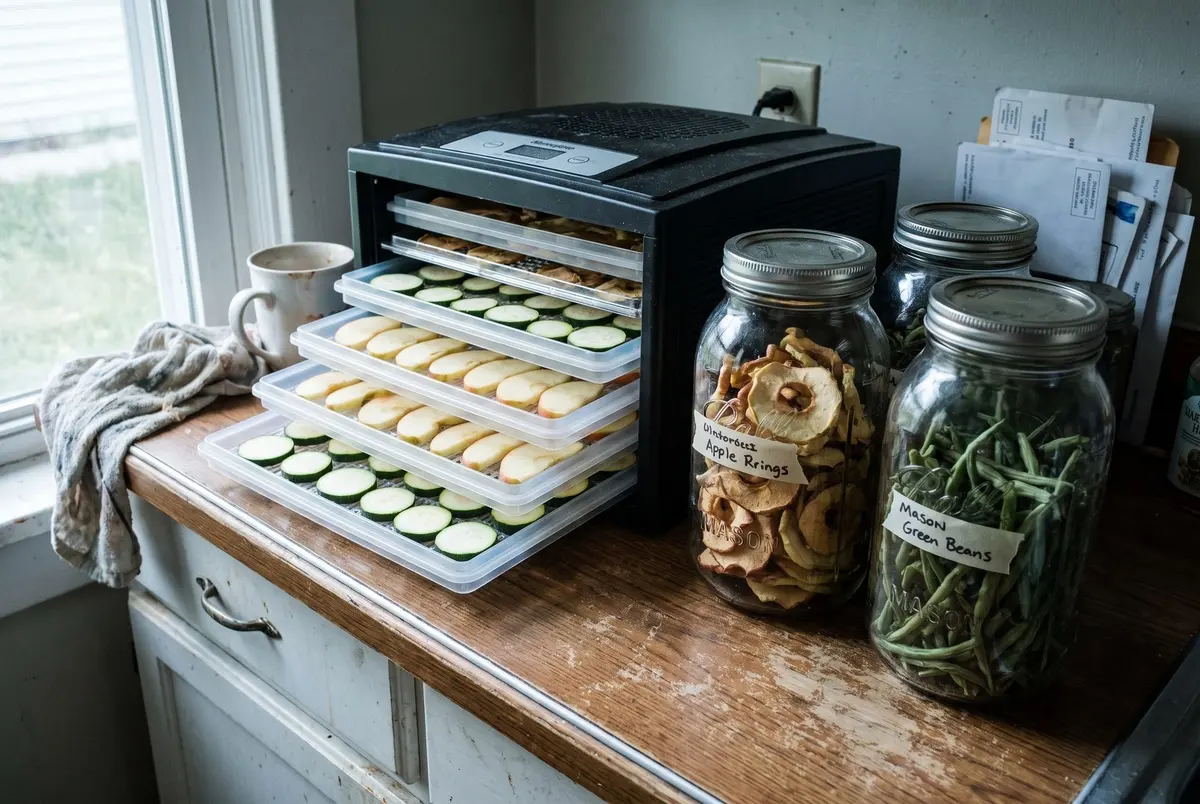
To dehydrate food at home, slice it evenly, about 1/4 inch thick, and dry fruits and vegetables at about 140°F until fruit is leathery and vegetables are brittle. Herbs dry cooler, at 95 to 115°F. Cool the pieces, pack them airtight in glass jars, and store them somewhere cool and dark, checking for moisture during the first week.
Project 33 of The Off-Grid Handbook sets this up as a two-hour, roughly $60 dehydration line: an electric dehydrator for normal days and a solar screen for when the grid is down. Drying removes the water that mold and bacteria need, which is why it is the oldest preservation method there is.
Dehydrator temperatures by food
Extension services agree on 140°F as the working temperature for fruits and vegetables. Clemson Cooperative Extension explains why: hotter air cooks the outside before the inside dries, a problem called case hardening, and that trapped moisture eventually molds.
| Food | Drying temperature | Done when |
|---|---|---|
| Fruits | 140°F | Leathery and pliable, no moist spots |
| Vegetables | 140°F | Brittle or crisp |
| Herbs | 95 to 115°F | Crumbly leaves |
| Meat for jerky | Heat to 160°F first (poultry 165°F), then dry at 130 to 140°F | Cracks but does not break when bent |
The book lists slightly lower settings for fruit and vegetables. Follow the 140°F guidance from the National Center for Home Food Preservation (NCHFP) and the extension services; a dehydrator with a thermostat that runs from about 85°F to 160°F covers every line of the table.
Dehydrating food step by step
- Start with produce at peak ripeness. Drying does not improve bruised or overripe food.
- Slice uniformly thin, about 1/4 inch. The book's point is that uniform slices finish together, so no tray holds a few wet pieces.
- Pretreat fruits that brown, such as apples and bananas. University of Illinois Extension suggests a 10-minute soak in equal parts bottled lemon juice and cold water.
- Blanch vegetables that need it. Illinois Extension gives carrots 4 minutes and potatoes 7 minutes in boiling water, then a plunge into very cold water.
- Lay pieces in a single layer with space between them for air to move.
- Dry at 140°F, testing several pieces from different trays before calling the batch done.
- Condition fruit before long storage (see below).
Conditioning: the step beginners skip
Pack cooled dried fruit loosely in a closed glass jar for 7 to 10 days and shake it daily. Moisture evens out between the drier and the damper pieces. If condensation shows on the glass, the fruit goes back in the dryer.
The book's field note calls quiet moisture the enemy of dried food. The conditioning jar catches the batch that felt dry but was not.
Dehydrating food in an oven
An oven works if it can hold 140°F, which many cannot. Check with an oven thermometer placed next to the food, not the dial. If it runs hotter, the food cooks instead of drying.
- Prop the oven door open 2 to 6 inches so moist air can escape.
- Set a fan near the door to push air through.
- Keep the racks 2 to 3 inches apart.
- Expect it to take about twice as long as a dehydrator, and use more energy.
Clemson Extension cautions that an open, hot oven door is not a safe setup in a home with small children. For occasional batches of apple rings or jerky, though, the oven is a dehydrator most people already own.
Sun and solar drying: fruit only
The book's grid-down fallback is a set of window-screen frames tilted to the sun, covered with cheesecloth, brought in every night, with two to four days per batch. Extension guidance limits outdoor drying to fruits only. Vegetables, which are low in sugar and acid, and meats should be dried indoors where heat can be controlled.
Sun drying needs at least 85°F and, ideally, humidity below 60%. Use stainless steel, Teflon-coated fiberglass or plastic screens, never galvanized hardware cloth, copper or aluminum.
Sun-dried fruit needs pasteurizing afterward to kill insect eggs. Clemson gives two options: 48 hours in a freezer at 0°F or below, or 30 minutes on a tray in a 160°F oven.
Jerky: the one exception
A dehydrator alone does not make meat safe. The USDA explains that evaporating moisture absorbs most of the heat, so the meat never gets hot enough to kill bacteria before it dries. The USDA Meat and Poultry Hotline recommends heating meat to 160°F and poultry to 165°F before drying, then drying at a steady 130 to 140°F.
The USDA gives home-dried jerky a shelf life of 1 to 2 months. If that sounds like too many rules, the book's alternative is fine: keep the dehydrator for produce and preserve meat by pressure canning or freezing.
How to store dehydrated food
Cool everything completely before packing, because warm food sweats inside the jar. Glass jars with tight lids are the best choice, since you can see moisture through them, and the book adds an oxygen absorber for long holds. Pack in amounts you will use at once, so the jar is not opened over and over.
Clemson Extension puts storage at four months to a year. Most dried fruit keeps about a year at 60°F and six months at 80°F, and vegetables keep about half as long as fruit. A cool, dark shelf or a root cellar corner beats a warm kitchen cabinet.
Check stored jars now and then. Moist but unspoiled food can be dried again, and anything moldy gets thrown out. Dried fruit and vegetables add weightless, no-fridge variety to a 30-day food supply, alongside jars from water bath canning.
Frequently asked questions
What temperature should you dehydrate fruits and vegetables at?
About 140°F, according to the National Center for Home Food Preservation and university extension services. Higher temperatures cook the outside of the food before the inside dries, which traps moisture and leads to mold. Herbs are the exception and dry best at 95 to 115°F. Meat for jerky must be heated to 160°F first.
Can you dehydrate food in an oven?
Yes, if your oven can hold a steady 140°F. Check it with an oven thermometer next to the food. Prop the door open 2 to 6 inches, place a fan near the opening to move air, and keep racks 2 to 3 inches apart. Oven drying takes about twice as long as a dehydrator and is not safe around small children.
How long does dehydrated food last?
Home-dried food generally keeps four months to a year, depending on temperature. Most dried fruit lasts about a year at 60°F and about six months at 80°F, and dried vegetables keep about half as long as fruit. Home-dried jerky keeps 1 to 2 months. Store it airtight, cool and dark, and check jars for moisture.
Do you need to blanch vegetables before dehydrating?
Many vegetables benefit from it. Blanching in boiling water softens the cell walls so they dry more evenly and hold color better. University of Illinois Extension gives carrots 4 minutes and potatoes 7 minutes, followed by a plunge in very cold water. Some foods, such as mushrooms and tomatoes, do not need blanching.
Is homemade jerky safe?
It can be, if you follow USDA guidance. Heat beef or other meat to 160°F and poultry to 165°F before drying, then dry at a steady 130 to 140°F in a dehydrator with an adjustable thermostat. Without the heating step, bacteria can survive the low drying temperature. Eat home-dried jerky within 1 to 2 months.
Sources
- The Off-Grid Handbook, Garrett Dalton, Project 33
- NCHFP: Food Dehydrators
- NCHFP: Drying Herbs
- Clemson Cooperative Extension HGIC: Drying Foods
- University of Illinois Extension: Drying Foods at Home
- USDA FSIS: Shelf-Stable Food Safety
Safety guidance changes. Check the agency pages above for the current version, and follow your local code and manufacturer instructions.