How to grow potatoes in containers: grow bags, buckets and the hilling trick
If you grow only one food for resilience, make it potatoes, and you do not need a field: a patio and a few fabric bags will do.
In this article
To grow potatoes in containers, fill a 10 to 15 gallon grow bag one-third full of compost-rich mix and plant 3 or 4 certified seed potato pieces, eyes up, about 4 inches deep. As the plants grow, keep adding mix or straw around the stems, water deeply and evenly, and tip the bag out at harvest. Expect roughly 5 to 10 pounds of potatoes per bag.
The Off-Grid Handbook makes potatoes its first calorie crop for a reason. They are one of the densest common sources of calories per square foot and they store for months; USDA nutrient data puts raw potatoes at about 350 calories per pound. Six bags on a patio, as Project 39 lays out, is a real buffer rather than a garnish.
What you need
- Four to six fabric grow bags, 10 to 15 gallons each.
- Certified seed potatoes, not sprouted potatoes from the grocery store.
- Compost-rich potting mix, plus straw for hilling.
- A trowel and a watering can, or a drip line.
The book puts the materials at about $40. The seed potatoes matter most: University of Minnesota Extension advises buying disease-free seed tubers from a certified grower, because grocery potatoes may be treated to stay dormant and will be slow to grow.
How to plant potatoes in grow bags
- Prepare the seed. Plant small seed potatoes whole. Cut larger ones into chunks with two or three eyes each.
- Start low. Fill each bag only one-third full of mix. The empty space above is where the crop will form.
- Plant. Set 3 to 4 pieces per bag, eyes up, and cover them so they sit about 4 inches deep.
- Place the bags in full sun, on a patio, a driveway edge or a strip of yard.
- Water in well and keep the mix evenly moist from the start.
Hilling potatoes in a container
Hilling is the step that makes container potatoes work. Each time the plants reach about 8 inches, add mix or straw around them, burying the stems, and repeat until the bag is filled to about two-thirds of the plant's height.
The book sums up the logic in one line: buried stem becomes root becomes potatoes. Hilling also keeps the forming tubers in the dark, which matters because light turns potato skin green.
Straw is lighter than mix and makes the final harvest cleaner. Either works, as long as no tubers are left exposed to the sun.
Grow bags vs. buckets
Any container with drainage will grow potatoes. The difference is how much room the roots get and how fast the container dries out.
| Container | Pros | Watch for |
|---|---|---|
| Fabric grow bag, 10 to 15 gal | Breathes, drains well, tips out easily at harvest, folds flat for storage | Dries out quickly in heat; water often |
| 5-gallon bucket | Cheap and easy to find | About a third of the volume of the book's bags, so plant fewer pieces and expect a smaller harvest; drill drainage holes in the bottom |
| Large tub or barrel | Holds moisture longer | Heavy to move; needs drainage holes |
If you have the ground, the same crop also anchors a 4x8 raised garden bed. Bags win where the only space is paved.
Watering potatoes in containers
Containers dry out fast, and potatoes punish uneven watering. Irregular water splits tubers, the book warns, and University of Minnesota Extension notes that swings between too much and too little water cause hollow heart, a hole in the center of the potato.
Water deeply so the whole bag is wet, then water again before it dries out completely. In hot weather that can mean every day. A drip line fed from a raised tank, like the one in a gravity-fed water system, takes the daily chore off your list, and a rain barrel can supply it.
Harvesting and curing potatoes
When to harvest
- New potatoes: reach in and take a few small ones once the plants flower.
- Main crop: wait until about two weeks after the vines die back, so the skins firm up.
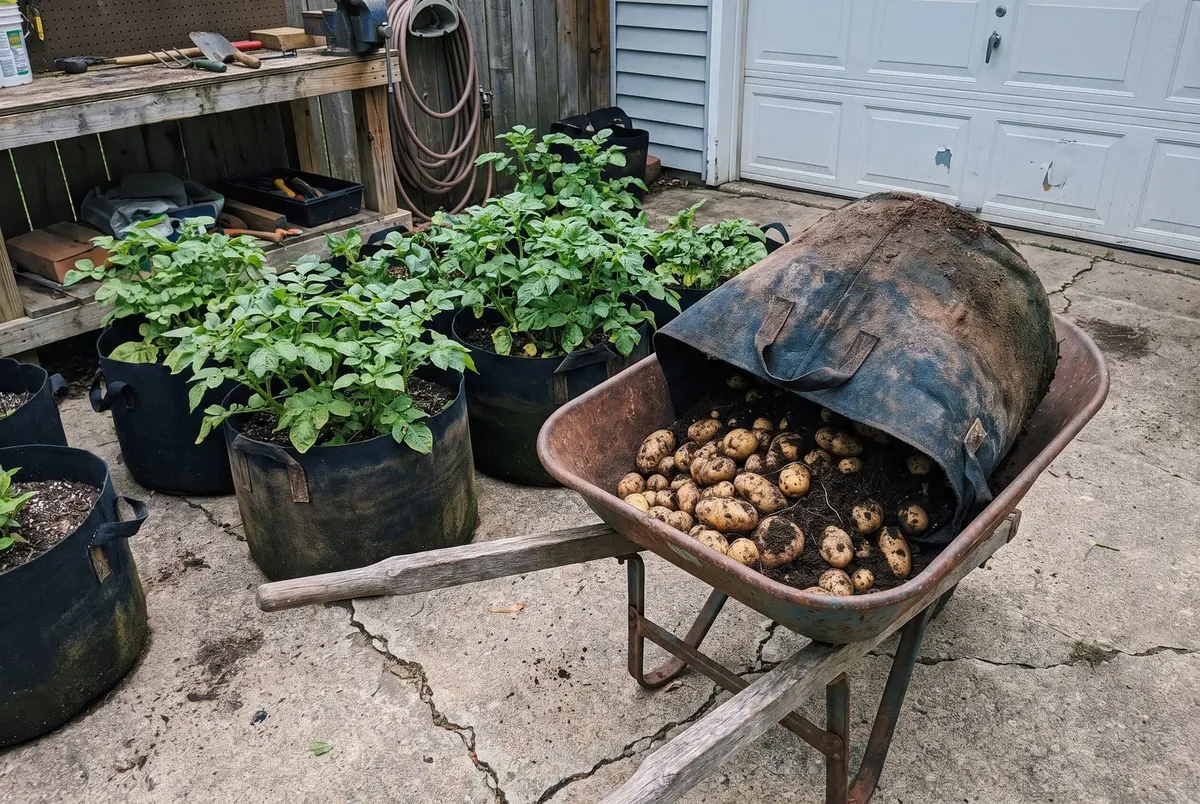
- Harvest: tip the whole bag into a wheelbarrow and sort the potatoes out by hand. No digging, and no fork tines through the crop.
Set aside any damaged potatoes for eating soon, since injured tubers spoil in storage.
Curing and storing
Before storage, potatoes need to cure so the skins set and small wounds heal. The book calls for about two weeks in a dark, ventilated spot; University of Minnesota Extension gives 60 to 65°F for ten days or more.
After curing, store them dark, cold and humid. Extension guidance gives 32 to 40°F at high humidity, which is the job of a root cellar. Cut away green areas before cooking, do not eat potatoes that are extensively green, and remove any sprouts, which can be toxic.
Keep a few notes on each bag: planting date, variety, harvest weight. Next year's plan starts from those numbers.
Common container potato problems
- Green potatoes. The tubers saw light. Hill sooner and deeper, and check that none are pushing up at the surface.
- Knobby or hollow potatoes. University of Minnesota Extension links both to a lack of moisture early on, and hollow heart to swings between wet and dry. Water on a schedule, not when you remember.
- Few tubers. Dry spells in early growth can stop the plant from setting new tubers, per the same source. Too little sun or too small a container also cuts the harvest.
- Slow, weak plants. Often grocery potatoes treated to stay dormant. Start next year with certified seed.
Frequently asked questions
How many potatoes do you get from one grow bag?
The Off-Grid Handbook puts the yield at roughly 5 to 10 pounds per 10 to 15 gallon grow bag, planted with 3 or 4 seed pieces. The harvest depends on sun, steady watering and how well you hill. Six bags is the book's recommended setup, which makes a meaningful amount of stored food from a patio.
Can you grow potatoes in a 5 gallon bucket?
Yes, as long as you drill drainage holes in the bottom. A 5-gallon bucket holds about a third of the volume of a 15-gallon grow bag, so plant fewer seed pieces and expect a smaller harvest. Buckets also dry out quickly in the sun, so check the moisture every day in hot weather.
When should you hill potatoes in a grow bag?
Start when the plants are about 8 inches tall. Add potting mix or straw around the stems, burying them, and repeat each time they grow another 8 inches or so, until the bag is filled to about two-thirds of the plant's height. Buried stem forms the roots where new potatoes grow, and the cover keeps tubers from turning green.
Can I plant potatoes from the grocery store?
It is not recommended. University of Minnesota Extension advises buying certified, disease-free seed potatoes, because store potatoes may be treated to stay dormant and will be slow to grow. Certified seed also avoids bringing potato diseases into your containers and garden soil. Most garden centers carry seed potatoes in spring.
Sources
- The Off-Grid Handbook, Garrett Dalton, Project 39
- University of Minnesota Extension: Growing potatoes in home gardens
- USDA FoodData Central: Potatoes, flesh and skin, raw
Safety guidance changes. Check the agency pages above for the current version, and follow your local code and manufacturer instructions.