DIY cold frame: build one from an old window and add weeks to both ends of the season
A raised bed with a clear lid, aimed south, turns a garden into a food supply that keeps producing into the cold months.
In this article
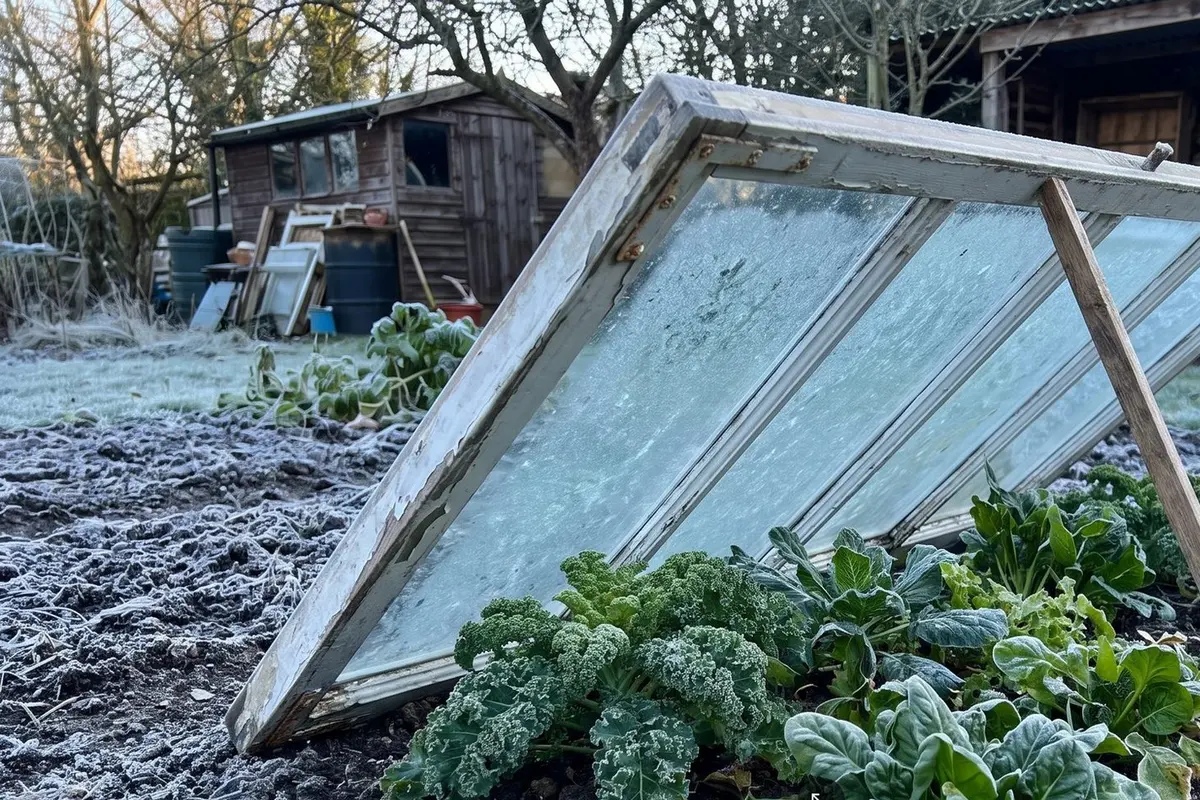
A DIY cold frame is a bottomless wooden box with a clear lid, usually an old window sash, built with a back wall higher than the front (12 inches and 8 inches) so the lid slopes toward the south sun. Hinge the window at the high back edge, set the box over garden soil, and prop the lid open on sunny days so the plants do not overheat. The Off-Grid Handbook says a cold frame adds four to eight weeks of growing on each end of the season.
That stretch matters. In most climates it is the difference between a summer garden and greens through late fall and early spring, which is why Project 41 puts it right after the raised bed.
How a cold frame works
Sunlight passes through the glass or plastic, warms the soil and the air inside, and the lid holds that heat in overnight. There is no power and no fuel involved.
The same effect is the main hazard. On a bright day a closed frame heats up fast, which is why venting, covered below, matters more than the carpentry.
Materials for a cold frame from old windows
- A reclaimed window sash, or a sheet of twin-wall polycarbonate.
- 2x8 lumber for the box, ripped or stacked to give a 12-inch back and an 8-inch front.
- Two hinges, exterior screws and a prop stick.
- Saw and drill/driver.
The book puts the cost at about $50. Choose an intact window without cracked glass. Colorado State University's Pueblo County Extension points out that older windows break more easily and that old paint may not be lead-free, so a newer sash or polycarbonate is the safer choice if you are unsure.
For the box, a rot-resistant wood such as cedar is the usual recommendation from NC State Extension.
How to build a DIY cold frame, step by step
- Size the box to the window. Measure the sash and build the frame footprint to match it, so the lid sits flush.
- Cut the slope. Make the back wall 12 inches tall and the front 8 inches. Cut the two side pieces on a taper from 12 down to 8.
- Assemble the four sides with exterior screws.
- Hinge the sash along the high back edge so it lifts from the front.
- Fit a prop stick to hold the lid open at a few set heights.
- Place it. Set it over a section of an existing bed, or fill it with soil as its own small bed, with the low side facing south.
NC State Extension recommends a south or southeast exposure with a slight slope for drainage, and no wider than 4 to 5 feet so you can reach across. Colorado State's Pueblo office adds that a spot against a building, protected from wind, gains extra warmth.
The frame fits neatly on top of a 4x8 raised garden bed, which is how many gardeners use it.
When to open a cold frame
This is the rule that decides whether a cold frame works. The book's version: when it is above about 45°F outside, prop the lid, or a sunny January day cooks the crop. Close it again in the late afternoon to hold the day's heat overnight.
Extension guidance agrees on the principle. Colorado State's Pueblo office says to lift the lid on warm days over 50°F, and NC State notes that venting is most critical on clear, sunny days in late winter, early spring and early fall, and suggests keeping a thermometer inside to track highs and lows.
- Sunny and above about 45°F: prop the lid partway.
- Warm and sunny: open it fully.
- Cloudy and cold, or any night: keep it closed.
- Late afternoon: close it to trap heat.
An automatic vent opener, which opens as the frame warms and costs about $15 according to the book, removes the need to remember. As the book's field note says, frozen crops recover; steamed ones do not.
Watering inside the frame
A closed frame slows evaporation, so it is easy to overwater. NC State advises watering early in the day so the plants dry before dark, which helps prevent disease.
What to grow in a cold frame
Cold frame gardening is about cold-hardy crops, not tomatoes in January. The book's roster:
| Crop | How it is used |
|---|---|
| Spinach | Fall and early spring greens; among the hardiest |
| Kale | Picked leaf by leaf through the cold months |
| Lettuce | Early spring and late fall salads |
| Radishes | A quick crop at either end of the season |
| Carrots | Sown late and overwintered for an early harvest |
University of Minnesota Extension describes the same use: a cold frame over a raised bed lets you grow frost-tolerant crops such as spinach and lettuce earlier in spring and later in fall.
Cold frame vs. row cover
A floating row cover, the light fabric sold as frost blanket, is the cheaper option. Utah State University Extension says air under it runs about 2 to 10°F warmer than outside, depending on the grade of fabric.
A cold frame is a sturdier, longer-lasting step up. Its rigid lid sheds snow and wind, holds more heat, and can be opened and closed every day for years.
Many gardeners use both: row cover over the open bed in fall, and a cold frame for the crops they want to keep picking through the coldest weeks.
Extend the growing season with what you already have
In spring, a cold frame is also the place to harden off seedlings before they go into the open bed. In fall it keeps greens coming after the first frosts, while the storage crops move to the root cellar.
The glazed-box idea carries over to heating, too: the DIY solar air heater uses the same sun-through-glass physics to warm a room. And if you save seed from your cold-hardy greens, the seed saving guide covers how to keep it.
Frequently asked questions
When should you open a cold frame?
Open it on sunny days once the outside temperature climbs above about 45°F, and close it again in the late afternoon to trap heat overnight. Colorado State University Extension gives a similar threshold of about 50°F. A closed frame on a bright day overheats quickly, so a thermometer inside or an automatic vent opener is worth having.
Can you use an old window for a cold frame?
Yes, a reclaimed window sash is the classic lid. Choose one without cracked glass, and build the box to match its size. Extension staff note that older windows break more easily and that old paint may contain lead, so if you are unsure about the paint, use a newer sash or a sheet of twin-wall polycarbonate instead.
How much does a cold frame extend the growing season?
The Off-Grid Handbook puts it at four to eight weeks on each end of the season, depending on climate and crop. That is enough to start cold-hardy greens weeks earlier in spring and keep harvesting spinach, kale and lettuce well after the first fall frosts.
What can you grow in a cold frame in winter?
Stick to cold-hardy crops: spinach, kale, lettuce, radishes, and carrots sown late for overwintering. These tolerate cold nights and recover from light freezes. Warm-season crops such as tomatoes and peppers will not produce in a cold frame through winter, though the frame is useful for hardening off their seedlings in spring.
Sources
- The Off-Grid Handbook, Garrett Dalton, Project 41
- NC State Extension Gardener Handbook: Season Extenders and Greenhouses
- Colorado State University, Pueblo County Extension: Making a Cold Frame
- Utah State University Extension: Extending the Garden Season
- University of Minnesota Extension: Raised bed gardens
Safety guidance changes. Check the agency pages above for the current version, and follow your local code and manufacturer instructions.