How to build a raised garden bed: a 4x8 cedar bed in one afternoon
One 4x8 bed is the production floor of a home food system: soil you control, planted for calories, and easy to add to one frame at a time.
In this article
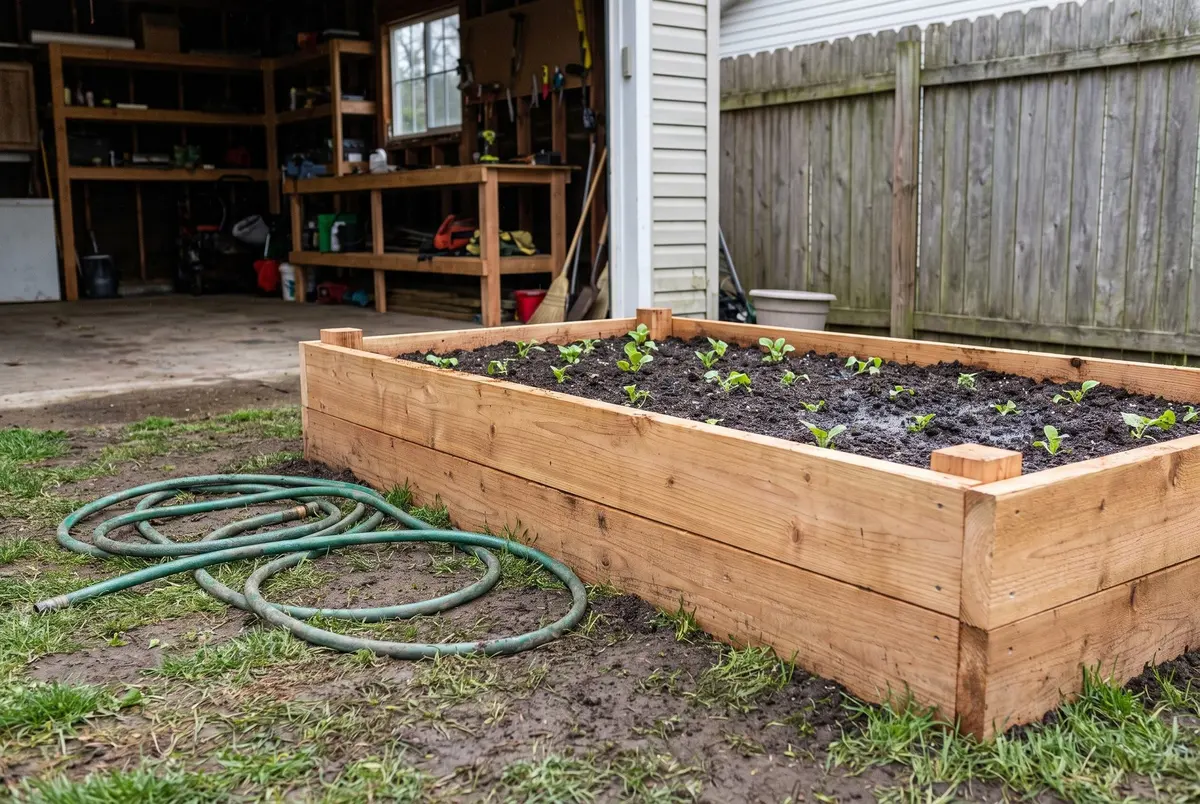
To build a raised garden bed, screw together a 4x8 frame of untreated 2x10 or 2x12 cedar, square it and stake the corners, then lay cardboard over the grass inside it. Fill it to within 2 inches of the rim with roughly half topsoil and half compost, and site it where it gets at least 6 hours of direct sun. The whole job takes about three hours.
Project 40 of The Off-Grid Handbook treats this single bed as the production floor of the food system. Materials run about $70, per the book, and the bed expands the cheap way: one more frame each season.
Why a 4x8 raised bed?
Four feet is about as wide as most people can reach into from both sides without stepping on the soil, which keeps it loose. Eight feet is a standard lumber length, so two boards make the long sides and one board cut in half makes the ends, with no waste.
NC State Extension notes that a well-planted 4x8 bed can supply most of the produce for one or two people during the growing season. It also warms up earlier in spring and drains better than ground soil.
Materials and tools
- Lumber: three 8-foot 2x10s or 2x12s, untreated cedar or fir. One is cut into two 4-foot ends.
- Exterior screws and four corner stakes.
- Soil mix: roughly half topsoil, half compost (see the soil math below).
- Plain cardboard, tape and staples removed, to cover the base.
- Tools: saw, drill/driver, level, wheelbarrow.
How to build a raised garden bed, step by step
- Pick the site. Look for 6 to 8 hours of sun, on fairly level ground, within hose reach of your water. The book places the bed near the rain barrels so the water system feeds the garden.
- Cut and frame. Cut one board in half for the ends. Screw the four sides together at the corners with exterior screws.
- Square it. Measure both diagonals; when they match, the frame is square.
- Stake and level. Drive a stake inside each corner and screw it to the frame. Check the top edge with the level and adjust the soil under the low side.
- Lay cardboard. Cover the grass inside the frame, overlapping the pieces so no light gets through. It smothers the grass and breaks down over time.
- Fill. Add the soil mix to within 2 inches of the rim and water it to settle it.
- Plant, mulch and log. Plant, mulch, water deeply, and write the planting dates down.
Raised bed soil mix: how much do you need?
The book's mix is half topsoil and half compost. University of Minnesota Extension gives a similar range: 1/2 to 2/3 topsoil with 1/2 to 1/3 plant-based compost, ideally loam or sandy loam topsoil, with a little sand if it is heavy clay.
A 2x10 is actually about 9 1/4 inches wide and a 2x12 about 11 1/4 inches. Filled to 2 inches below the rim, a 4x8 bed holds:
| Board | Soil depth | Volume | About |
|---|---|---|---|
| 2x10 | about 7 1/4 in | about 19 cubic feet | 0.7 cubic yard |
| 2x12 | about 9 1/4 in | about 25 cubic feet | 0.9 cubic yard |
Bagged soil is usually sold by the cubic foot, so divide by the bag size. For more than one bed, buying topsoil and compost by the yard is generally cheaper.
How deep should a raised bed be?
NC State Extension says raised beds are generally 8 to 12 inches high, and University of Minnesota Extension notes that many gardeners do not need beds more than a few inches above the ground. Because this bed sits on cardboard over native soil, roots can keep going down once the cardboard breaks down.
Cedar raised bed or treated lumber?
The book specifies untreated lumber. Cedar costs more but lasts much longer than pine or fir; NC State lists Eastern red cedar, redwood and black locust as naturally rot-resistant woods.
Avoid creosote railroad ties and old lumber treated with CCA (chromated copper arsenate). NC State and Minnesota Extension both warn that arsenic can leach from CCA wood, and NC State says not to use any remaining stock for food beds. Newer copper-based treatments contain no arsenic, but copper can still leach into the soil.
Untreated fir is the budget option. Expect to replace it sooner, which is easy, since the frame is only screws and boards.
What to plant in a resilience bed
The book's rule is to plant to store, not to garnish. These crops keep after harvest and carry real calories:
- Potatoes, the densest of the group (see growing potatoes in containers for the hilling method)
- Carrots and beets
- Onions
- Winter squash
- Dry beans
All of them end up in a root cellar or a pantry, which is the point. Save seed from the open-pollinated varieties, as explained in seed saving for beginners, and the bed replants itself.
Watering and keeping records
Raised beds dry out faster than ground beds and need watering more often. University of Minnesota Extension suggests a soaker hose or watering can, keeping water low on the soil rather than on the leaves to help prevent disease.
Mulch helps hold moisture. A rain barrel within reach makes the water free.
Log what you planted and when in the household binder. As the book puts it, the log becomes next year's calendar. When one bed works, add a second frame, and a cold frame on top stretches the season at both ends.
Frequently asked questions
How deep should a raised garden bed be?
NC State Extension says raised beds are generally 8 to 12 inches high. A frame of 2x10 or 2x12 boards, filled to 2 inches below the rim, gives about 7 to 9 inches of soil, which suits most vegetables. Building on cardboard over native ground lets roots go deeper once the cardboard breaks down.
What is the best soil mix for a raised bed?
A simple, reliable mix is roughly half topsoil and half compost. University of Minnesota Extension recommends 1/2 to 2/3 topsoil with 1/2 to 1/3 plant-based compost, using loam or sandy loam topsoil and adding some sand if it is heavy clay. A 4x8 bed built from 2x12s needs about 25 cubic feet of mix.
Is cedar worth it for a raised bed?
For most people, yes. Cedar costs more than pine or fir but resists rot naturally and lasts much longer, and it is safe around food crops. Avoid creosote railroad ties and old CCA-treated lumber, which extension services warn can leach arsenic. Untreated fir works on a budget but will need replacing sooner.
Should I put cardboard under a raised bed?
Plain cardboard laid over the grass inside the frame smothers the grass and weeds and slowly breaks down into the soil. Remove tape and staples first and overlap the pieces so no light gets through. It is a cheap alternative to digging out the sod before you fill the bed.
Sources
- The Off-Grid Handbook, Garrett Dalton, Project 40
- University of Minnesota Extension: Raised bed gardens
- NC State Extension Gardener Handbook: Vegetable Gardening
Safety guidance changes. Check the agency pages above for the current version, and follow your local code and manufacturer instructions.