DIY solar air heater: a window box that warms a room with no fuel and no fan
A shallow glazed box hung in a south window pumps warm air into the room on any sunny winter day, and it is the one room heater in the book that cannot poison anyone.
In this article
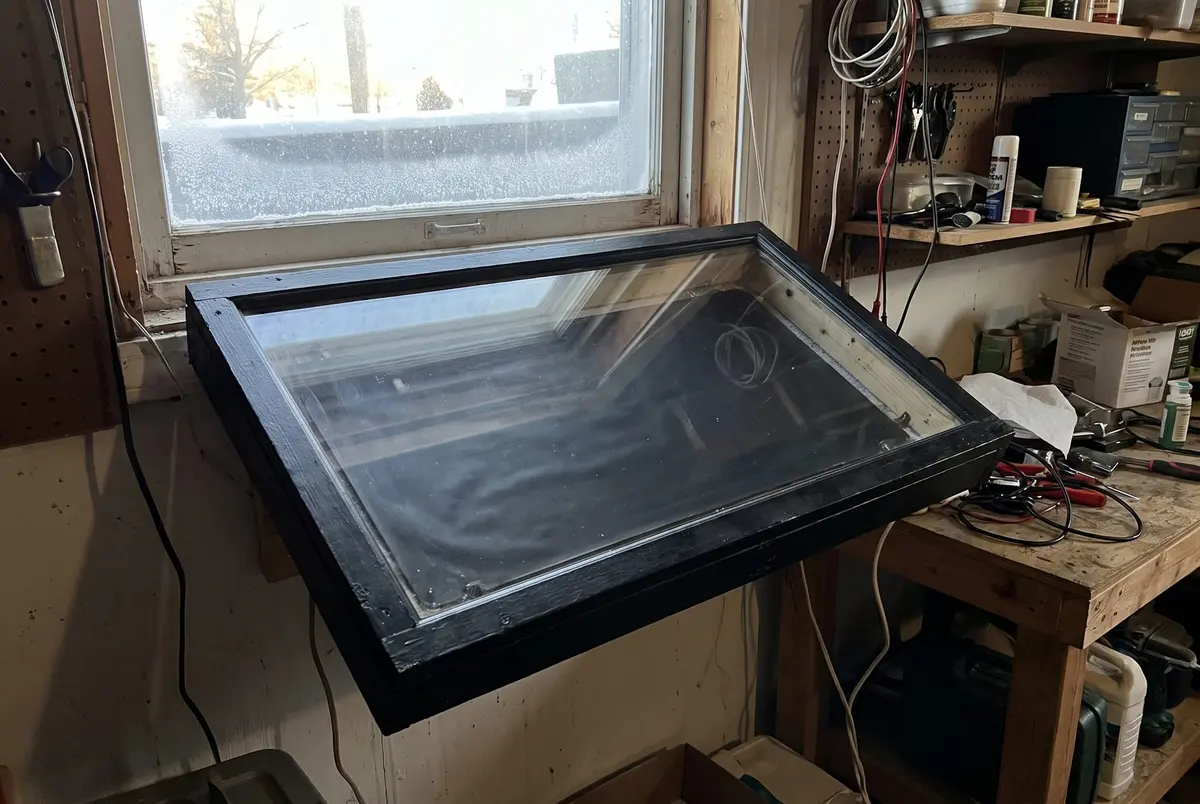
A DIY solar air heater is a shallow, insulated box with a clear cover and a flat-black absorber inside, mounted in or just below a south-facing window. Cool room air enters a low vent, the sun heats it as it passes over the black absorber, and the warm air rises back into the room through a high vent, with no fan and no fuel. The Off-Grid Handbook puts a window-sized unit at about 100 to 250 watts of heat in full winter sun, built in half a day for about $60.
That is a real contribution to one room, not a furnace. The book is clear that the heater's honest job is a daytime supplement.
How a solar window heater works
The box is a small flat-plate solar collector. The US Energy Information Administration describes the three parts every flat-plate collector shares: a dark metal surface that absorbs the sun, a transparent cover that lets sunlight in and slows heat loss, and insulation behind.
Commercial solar air heaters use fans to move air through the collector. The window version relies on thermosiphon instead: hot air rises, so air heated in the box climbs out the top vent and pulls cooler room air in through the bottom one. Montana's consumer guide to solar heating notes that simple window-mounted air heaters were popular there in the 1970s and 80s and are still in use.
Materials and tools
- 1x6 lumber for a frame sized to your south window
- Plywood for the back, plus rigid foam board to insulate it
- An absorber: aluminum downspout or window screen, painted flat black with high-temperature paint
- Glazing: twin-wall polycarbonate or glass
- Foil tape and exterior caulk
- Tools: saw, drill/driver, staple gun, caulk gun
How to build a solar heater box for a window
- Frame a shallow box, 3 to 4 inches deep, matched to the window width. Fasten the plywood back and line it with rigid foam so heat goes into the air, not out the back.
- Cut two vent slots on the window-side face: one low, one high. These are the inlet and outlet.
- Fit the black absorber in the channel so air has to travel across it on the way from the low vent to the high one. Let the high-temperature paint cure completely, following the can, before the box goes anywhere near a living space.
- Glaze the sun face and seal every seam with foil tape and caulk. The book's rule: leaks are lost heat.
- Mount it tilted against or below the window, depending on your sill and frame. Mate the vents to the open window and seal the remaining gaps with removable foam.
How much heat does a DIY solar air heater make?
Per the book, 100 to 250 watts in full winter sun from a window-sized unit. Output falls fast under clouds and stops at sunset. To put the number in context, the book's warm-room chapter notes that four people at rest give off about 400 watts.
| Heat source in a small sealed room | Output, per the book | When it works |
|---|---|---|
| Solar window heater, window-sized | About 100 to 250 W | Sunny daylight hours |
| Four people in the room | About 400 W | Around the clock |
Neither number will heat a house. Together, in one well-sealed room, they change how much fuel or battery the rest of the plan needs, which is the point of pairing this build with air sealing and the window winter kit.
Where to put it, and mistakes to avoid
Placement decides most of the output. Use the sunniest south-facing window you have, ideally in the room you will heat during an outage, and check that trees, a porch roof or a neighbor's house don't shade it in the low winter sun.
- Air leaks around the box. Every gap between the box and the window frame lets cold outside air in. Seal them all with removable foam.
- A shiny absorber. Bare aluminum reflects sunlight back out. It has to be flat black, not glossy.
- An uninsulated back. Without foam behind the absorber, much of the heat leaves through the plywood.
- Blocked vents. Furniture or curtains in front of the low inlet starve the airflow. Keep both vents clear during the day.
- Too deep a box. The book's 3 to 4 inches keeps the air moving close to the absorber; a deep box lets it drift past without picking up heat.
Block the vents at night
After sunset the box cools below room temperature, and the thermosiphon can run backward: warm room air enters the top vent, cools on the glass and sinks back into the room through the bottom. The book's fix is to block the vents every evening so the cycle cannot reverse. A piece of foam pushed into each slot works.
Make it part of the dusk routine, the same moment you close the curtains.
Passive solar heating with what you already have
The cheapest solar heater is the south window itself. EIA defines passive solar heating as the sun shining through windows and warming the interior, and the Department of Energy's advice is to open coverings on sunny south windows by day and close them at night.
The window box simply makes that window work harder. Aim it at the room you plan to live in during an outage, as described in how to stay warm without power.
Safety and placement
The reason this is the book's room-heater build is that it burns nothing. There is no flame, no fuel and no carbon monoxide. Every combustion heater still needs CO alarms; this one doesn't add to the risk.
Two placement rules. Don't block a bedroom window that is someone's second way out in a fire; NFPA asks every household to keep two exits from each room clear. And fasten the box so wind and curious pets can't tip it, since the glazing and the absorber get hot in full sun.
Frequently asked questions
Do DIY solar air heaters really work?
Yes, within limits. A well-sealed window-sized box in full winter sun delivers about 100 to 250 watts of heat, per The Off-Grid Handbook. That warms one room noticeably during sunny hours at zero operating cost. It does nothing at night or under heavy cloud, so treat it as a daytime supplement to other heat.
Does a solar window heater need a fan?
No. A window box heater works by thermosiphon: air warmed by the black absorber rises and leaves through the top vent, pulling cool room air in through the bottom vent. Larger wall- or roof-mounted solar air heaters often use a fan, but a window unit mated to the window opening moves air on its own.
Which direction should a solar air heater face?
South, or as close to south as you can get, for the most winter sun. In the northern US, the low winter sun reaches south-facing walls for the longest part of the day. East and west windows get only a few hours of direct sun in winter, which sharply cuts the heat you collect.
Can a solar air heater heat a whole house?
Not a window-sized one. It adds a few hundred watts at best, which is enough to help one small, sealed room. It works best paired with air sealing, insulated windows and a single warm room, where every watt counts. Whole-house solar heating needs much larger collectors designed into the building.
Sources
- The Off-Grid Handbook, Garrett Dalton, Project 46
- US Energy Information Administration: Solar thermal collectors
- Montana Department of Labor and Industry: The Montana Consumer Guide to Solar Heating Systems (PDF)
- US Department of Energy, Energy Saver: Energy Efficient Window Coverings (archived January 2026)
- NFPA: Home Fire Escape Planning
Safety guidance changes. Check the agency pages above for the current version, and follow your local code and manufacturer instructions.