How to sleep warm in a cold house, with no heat burning overnight
People rarely get into trouble in a cold house in the afternoon. The dangerous hours are the small hours, and a proper sleep system covers them with zero fuel.
In this article
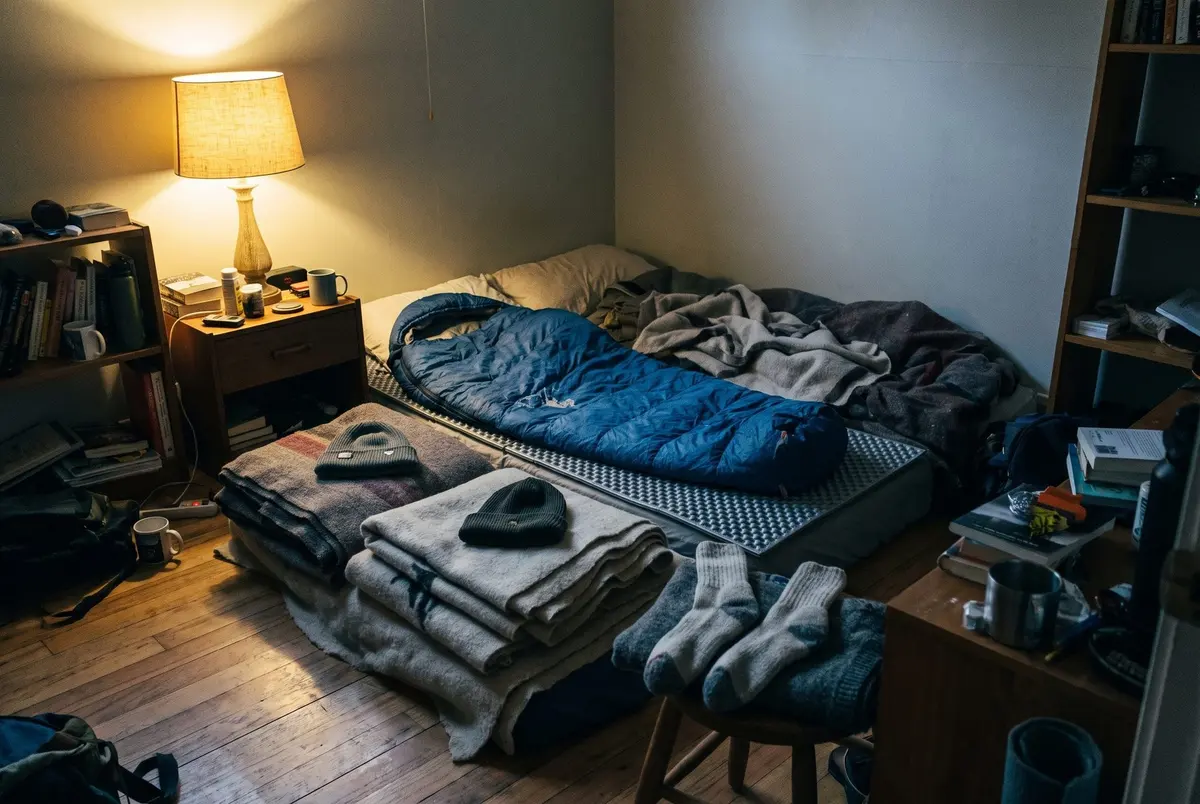
To sleep warm in a cold house, insulate below you first, then around and over you: a closed-cell foam pad under you, a sleeping bag rated at least 20°F below the coldest the room will get, a wool or fleece blanket on top, a knit cap on your head, and dry socks. Sleep together in one small, sealed room. That setup keeps a household safe through a night without heat, and it burns nothing.
Project 53 of The Off-Grid Handbook builds one of these sets per person in about half an hour, for around $60 in materials, per the book.
Layering for sleep: why the floor matters most
The book's layer doctrine runs in a fixed order: pad below, bag around, blanket over, hat on. Most heat lost during sleep goes into whatever you are lying on and out through an uncovered head. A sleeping bag crushed flat under your body has almost no insulation left, which is why the pad does more than an extra blanket on top.
The National Institute on Aging gives the same advice for older adults at bedtime: extra covers, long underwear under pajamas, and a head covering. Loose layers work better than tight ones, because the air between them is the insulation.
- Pad: closed-cell foam under anyone sleeping on the floor or on a cold mattress.
- Bag: one real sleeping bag per person, sized to fit.
- Blanket: wool or fleece over the bag to double it.
- Hat and socks: a knit cap and wool socks, staged with the bedding so nobody hunts for them in the dark.
- Dry clothes: change into dry sleepwear. Going to bed damp from the day defeats any bag.
Sleeping bag temperature rating: what to buy
The book's rule is to buy a bag rated at least 20°F below your realistic indoor minimum. If you expect the warm room to fall to 50°F on the worst night of an outage, look for a bag rated 30°F or lower. Many bags print more than one temperature; plan around the comfort figure, not the lowest number on the label.
Fit matters as much as the rating. A bag that is too large leaves dead space your body has to heat, so it warms slowly. Wool or fleece blankets on top cover the gap between the rating and a colder night than expected.
Sleeping without heat in winter: one warm room
Don't spread the household across cold bedrooms. The book's warm-room plan (Project 49) picks one small room with few windows, seals its doorway with blankets, and moves everyone's sleep system into it. Bodies are heaters: the book puts four people at rest at about 400 watts, which a small sealed room holds.
- Sleep close together, with children and older adults in the middle of the arrangement.
- Cover hard floors with rugs or foam mats; cold floors defeat warm air.
- Close the curtains at dusk and stuff a rolled towel against the door gap.
- Keep water, a flashlight and a battery radio within reach of the beds.
Stage the full set in or beside that room before winter, so bedding becomes one line on the activation checklist. The window winter kit and air sealing make the room hold that heat much longer.
Getting into bed warm
A sleeping bag holds heat, it doesn't make it. Climbing in already chilled means a long, cold first hour. A few habits help, all of them free:
- Eat a real evening meal. NIA notes that eating enough food matters for staying warm.
- Skip the nightcap. NIA warns that alcoholic drinks make you lose body heat.
- Change into dry sleepwear and dry socks just before bed, not after you are already cold.
- Keep tomorrow's clothes inside the bag or under the blanket so they are warm in the morning.
The book calls the sleep system cognition insurance as much as comfort: a household that sleeps warm makes better decisions the next morning. If you live alone, NIA suggests asking someone to check on you during cold weather.
How cold is too cold to sleep in?
Lower than most people think, especially for older adults. NIA advises keeping the heat at 68°F or higher when you can, because even mildly cool homes of 60 to 65°F can lead to hypothermia in older adults. If an outage leaves you without heat, NIA's advice is to stay with a relative or friend if you can.
Know the warning signs NIA lists: cold hands and feet, a puffy face, pale skin, shivering, slowed or slurred speech, and sleepiness, anger or confusion. Hypothermia is a medical emergency. Call 911, move the person somewhere warmer, and wrap them in dry blankets.
What never to use to warm the bedroom
The cold night is when people make the fatal mistake. Ready.gov is explicit: never heat your home with a gas stovetop or oven, and use generators and grills only outdoors, away from windows. Generators belong at least 20 feet from windows, doors and attached garages, never in the garage itself, even with the door open (see why the garage is never safe).
- No camp stoves, charcoal grills or unvented fuel heaters indoors.
- Space heaters only if rated for indoor use, never left running unattended, and following the manufacturer's instructions.
- Battery-backed carbon monoxide alarms on every level and outside sleeping areas.
Headache, dizziness, nausea or confusion during any heating or generator use should be treated as carbon monoxide until proven otherwise: everyone out to fresh air, then call for help. The rest of the cold-weather plan is in how to stay warm without power.
Frequently asked questions
What temperature sleeping bag do I need for sleeping indoors without heat?
Pick a bag rated at least 20°F below the coldest temperature you expect the room to reach, per The Off-Grid Handbook. For a room that may drop to 50°F, that means a bag rated 30°F or lower. If the label lists several ratings, plan around the comfort figure, and add a wool or fleece blanket on top.
How can I stay warm in bed without heat?
Put insulation under you first: a closed-cell foam pad stops the mattress or floor from draining your heat. Then a sleeping bag, a wool or fleece blanket over it, a knit cap and dry wool socks. Change into dry clothes before bed and sleep in one small room with the rest of the household.
Is it safe to sleep in a cold house?
For healthy adults with a proper sleep system, a cool room is uncomfortable but manageable. Older adults are at higher risk: the National Institute on Aging warns that homes of 60 to 65°F can lead to hypothermia. Watch for confusion, slurred speech and drowsiness, and move somewhere warmer if the house keeps dropping.
Should you wear a hat to bed when it's cold?
Yes. An uncovered head is one of the main routes for heat loss while you sleep, especially when the rest of you is inside a bag. The National Institute on Aging recommends a head covering at bedtime in cold weather, and a simple knit cap staged with the bedding does the job.
Sources
- The Off-Grid Handbook, Garrett Dalton, Project 53
- National Institute on Aging: Cold Weather Safety for Older Adults
- Ready.gov: Winter Weather
Safety guidance changes. Check the agency pages above for the current version, and follow your local code and manufacturer instructions.