How to keep pipes from freezing when the power is out
A burst pipe turns a power outage into a flood in the same week. Most of the protection costs about $30 and an afternoon in the fall.
In this article
To keep pipes from freezing when the power is out, let a pencil-thin stream of cold water drip from the faucets on exposed pipes, open the cabinet doors under sinks on outside walls, and keep the garage door closed. If the house is going to stay unheated for days, shut off the main water valve and drain the pipes before they freeze.
Moving water resists freezing, and room air around the plumbing buys time. The other half of the job happens before winter, with foam sleeves on exposed pipes and a main shutoff valve that everyone in the house can find in the dark.
Why pipes burst when the heat is off
Water expands as it freezes, and the American Red Cross notes that the expansion can break metal or plastic pipe no matter how strong it is. The Red Cross lists the pipes that freeze most often:
- Pipes exposed to severe cold, like outdoor hose bibs and sprinkler lines.
- Supply pipes in unheated spaces: basements, crawl spaces, attics, garages and kitchen cabinets.
- Pipes that run along exterior walls with little or no insulation.
The Off-Grid Handbook sums up the stakes in one line: a burst pipe turns a power outage into a flood, in the same week. Often the damage shows only when the ice thaws and water starts running through the split.
Drip faucets so pipes don't freeze
When heat is limited, the handbook's cold-snap routine is two moves. Open the cabinet doors on plumbing walls so room air reaches the pipes, and leave a pencil-thin drip at the farthest faucets. The Red Cross gives the same advice: running water through a pipe, even at a trickle, helps keep it from freezing.
Drip the cold side of the faucets served by exposed pipes. On a private well with no power, the pump can't refill the pressure tank, so a drip only drains it. In that case, your protection is insulation, whatever heat the house holds and, if it comes to it, draining the lines.
Keep pipes from freezing without heat
With the furnace off, every bit of warm air counts:
- Keep the garage door closed if water lines run through the garage.
- Open sink cabinets on outside walls, and move cleaners out of children's reach.
- Set up your heated room next to a plumbing wall if you can. Our guide to staying warm without power covers choosing that room.
- Stop cold drafts near the pipes. Our guide to finding air leaks in your house shows where they hide.
Never warm pipes with an open flame. Never bring a generator or a fuel-burning heater into a garage, basement or crawl space to warm them.
Where is my main water shutoff?
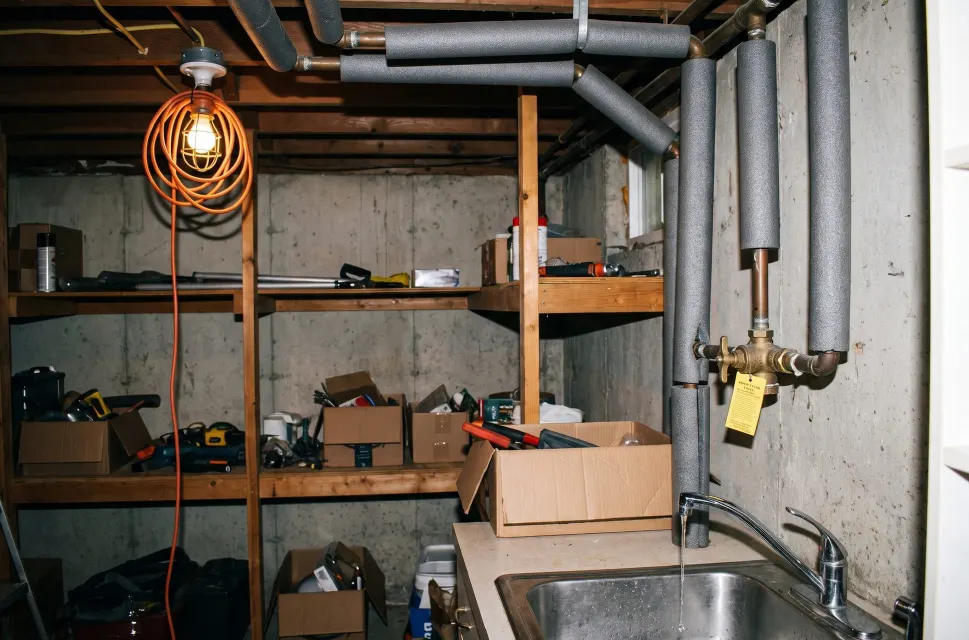
The main shutoff is a valve on the water line where it enters the house. It is often in the basement or crawl space on the wall facing the street, near the water meter, in a utility room or garage, or near the water heater. In some homes the only valve is in the meter box near the street.
The book's instruction is to find and exercise the main water shutoff today, and tag it. Turn it off and back on once so you know it moves, and if it is stiff, get a plumber now, not during the storm. Every adult in the house should know where it is, and the handbook calls that thirty-second rehearsal the single highest-leverage step in the project.
Insulate exposed pipes before winter
- Walk the house with a flashlight and list every exposed run: crawl space, garage, unheated basement, exterior walls and under sinks.
- Sleeve every run in foam pipe insulation, hot and cold lines alike. Miter the elbows, tape the seams and leave no gaps.
- Drain and store garden hoses. Close the indoor valves that feed the outdoor hose bibs, open the bibs outside so they drain, and fit faucet covers.
- Drain sprinkler and pool supply lines per the installer's directions. The Red Cross warns against adding antifreeze unless directed.
- Note the pipe that always chills first. The book treats that cold spot as the house's early-warning sensor.
Per the book, Project 59 takes about two hours and roughly $30 in foam sleeves, faucet covers and a shutoff tag. UL-listed heat tape, which the Red Cross also mentions, helps on problem runs, but it stops working when the power does.
If the house will stay cold for days
If the outage will outlast the house's stored heat, or you have to leave, drain the system before it freezes. First fill bottles and the bathtub, since you'll need that water for drinking and flushing; our guide to water during a power outage covers how much.
- Shut the main water valve.
- Open the taps on every floor, including the lowest, so the lines drain down.
- Flush the toilets to empty their tanks.
- Turn off the water heater's gas or breaker before it is drained, and have it and the drain traps winterized per its manual or by a plumber.
If you leave during cold weather but the heat is working, the Red Cross advises leaving it on and set no lower than 55°F. For the rest of the cold-weather list, see our winter storm preparedness checklist.
How to thaw a frozen pipe safely
If you turn on a faucet and only a trickle comes out, suspect a frozen pipe, usually on an exterior wall or where the line comes through the foundation. Keep that faucet open so meltwater can flow and help clear the ice.
The Red Cross lists safe heat sources: an electric heating pad wrapped around the pipe, a hair dryer, a space heater kept away from anything flammable, or towels soaked in hot water. With the power out, hot towels are the option that works. Never use a blowtorch, kerosene or propane heater, charcoal stove or any open flame.
Keep applying heat until full pressure returns, then check the other faucets, because if one pipe froze, others may have too. If you can't find or reach the frozen section, call a licensed plumber.
Frequently asked questions
Should I drip my faucets when the power goes out in winter?
Yes, if you are on city water. Leave a pencil-thin drip of cold water at the faucets farthest along exposed pipes and open the cabinet doors under sinks on outside walls. The Red Cross notes that even a trickle helps keep a pipe from freezing. On a well with no power, dripping just drains the pressure tank, so rely on insulation and draining.
Where is my main water shutoff valve?
It sits on the water line where it enters the house: often in the basement or crawl space on the street-facing wall, near the water meter, in a utility room or garage, or near the water heater. Some homes only have a valve in the meter box near the street. Find it now, turn it off and on once, and tag it.
How do I keep pipes from freezing without heat in the house?
Sleeve exposed pipes in foam, keep the garage door closed, open sink cabinets on outside walls and drip the faucets on exposed runs. If the house will stay unheated for days, shut the main valve, open the taps on every floor, flush the toilets and have the water heater winterized. Never use an open flame or bring a generator indoors.
How do you thaw a frozen pipe without electricity?
Open the faucet on the frozen line, then wrap the cold section in towels soaked in hot water and replace them as they cool until full pressure returns. The Red Cross says never to use a blowtorch, kerosene or propane heater, charcoal stove or any open flame. If you can't find or reach the frozen spot, call a licensed plumber.
Sources
- The Off-Grid Handbook, Garrett Dalton, Project 59
- American Red Cross: Frozen Pipes
- Ready.gov: Winter Weather
- Ready.gov: Power Outages
Safety guidance changes. Check the agency pages above for the current version, and follow your local code and manufacturer instructions.