Carbon monoxide detector placement: where CO and smoke alarms go, and why battery backup matters
The alarm grid is the cheapest life-saving project in the house, and it has to work exactly when the grid doesn't.
In this article
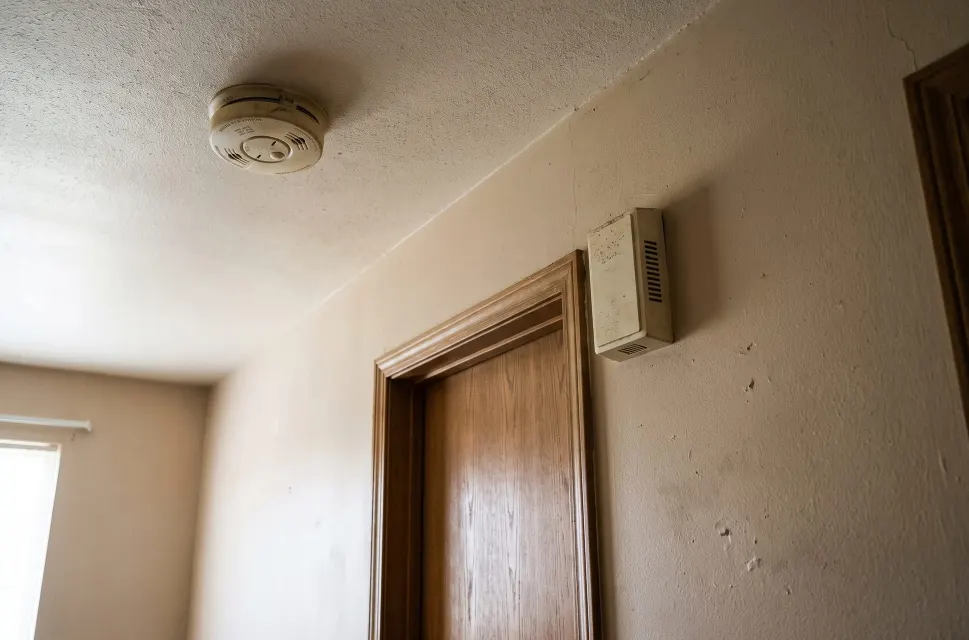
Put a carbon monoxide detector on every level of your home and outside each sleeping area, close enough to wake anyone behind a closed bedroom door. Choose alarms that run on batteries or have battery backup, mount them at the height the manufacturer specifies, and keep them a few feet from bathrooms and cooking appliances. Test them every month.
That is the guidance from the Consumer Product Safety Commission (CPSC), the CDC and Ready.gov. It is also Project 52 of The Off-Grid Handbook, which calls the CO and smoke alarm grid the highest life-safety-per-dollar project in the book.
Where to put carbon monoxide detectors
Carbon monoxide can't be seen or smelled, and the danger is greatest while people sleep. So placement follows the bedrooms first and the floors second.
- Outside each sleeping area. The CDC says near every sleeping area; CPSC says outside sleeping areas.
- On every level of the home, basement included.
- In the room where you'll run any fuel-burning heater during an outage, such as the one warm room.
- At the height the manufacturer gives. Wall, ceiling and plug-in models differ, so follow the instructions in the box.
Keep alarms a few feet from bathrooms and cooking appliances. Steam and cooking fumes cause nuisance alarms, and nuisance alarms are how alarms end up with their batteries pulled.
Where to put smoke detectors
Smoke alarms follow a similar pattern with one more location. The U.S. Fire Administration (USFA) recommends:
- Smoke alarms inside each bedroom and outside each sleeping area.
- Alarms on every level of the home.
- Mounting on the ceiling or high on the wall, per the manufacturer.
- Interconnected alarms, so that when one sounds, they all sound.
The book adds one detail: keep smoke alarms away from corners. A combination smoke and CO alarm can cover both jobs in the hallway, but each bedroom still needs its own smoke alarm.
| Location | Smoke alarm | CO alarm |
|---|---|---|
| Inside each bedroom | Yes | Optional |
| Hallway outside sleeping areas | Yes | Yes |
| Every level, basement included | Yes | Yes |
| Room used for outage heating | Yes | Yes |
| Within a few feet of a bathroom or stove | No | No |
What makes carbon monoxide during an outage
The book's safety notes list the usual sources: generators, camp stoves, grills, rocket stoves and vehicle engines. Add any fuel-burning heater, a gas oven pressed into service for heat, and a fireplace or wood stove with a blocked or leaking flue. The CDC adds that charcoal gives off CO whether it is red, gray, black or white.
The CDC also notes that infants, older adults and people with chronic heart disease, anemia or breathing problems are more likely to get sick from CO. That is one more reason to put an alarm in the room where the household sleeps during an outage.
Choosing the right alarm
- Hardwired with battery backup: good for new construction and remodels, and can be interconnected.
- Plug-in with battery backup: easy to add near bedrooms, as long as the backup battery is fresh.
- Sealed 10-year battery: the book's preference, since nothing depends on the grid or a spare battery.
- Combination smoke and CO: one device for hallways, with separate alarm sounds for each hazard.
Why a battery backup CO alarm matters in an outage
Many alarms are wired to house power. Outages are exactly when households run generators, light camp stoves and close up rooms against the cold, and CPSC's guidance is to install battery-operated CO alarms or alarms with battery backup. A hardwired alarm without a working backup battery goes silent at the worst possible moment.
The handbook makes battery backup the non-negotiable spec, and it prefers 10-year sealed-battery models, whose batteries can't be borrowed for the TV remote. Several projects in the book, from the generator hookup to the wood stove, assume this grid is already in place. Read why a generator never goes in the garage and our guide to wood stove safety with that in mind.
Carbon monoxide detector beeping: what the sounds mean
Learn the sounds before you need them. Many alarms use these common patterns:
- Four loud beeps, repeating: carbon monoxide detected.
- Three loud beeps, repeating: smoke or fire. Get out, stay out and call 911.
- A single chirp at intervals: usually a low battery, or on sealed models, end of life.
- Chirping that continues after a new battery: the alarm has reached end of life. Replace the unit.
Patterns vary by brand, so read the guide printed on the back of yours. When a CO alarm sounds, the book's rule is everyone outside to fresh air first, then call 911 from outside, which matches CPSC's advice.
Don't talk yourself into a false alarm. CPSC lists the symptoms of CO poisoning as headache, dizziness, weakness, nausea, vomiting, sleepiness and confusion, and they are easy to mistake for the flu. If they show up while a heater, stove or generator is running, treat it as CO until proven otherwise.
How to install and test the alarm grid
- Map the house: mark each bedroom, each sleeping-area hallway and each level.
- Mount smoke alarms on ceilings or high on walls, away from corners. Mount CO alarms at the manufacturer's height.
- Test every alarm monthly with its test button.
- Check replaceable batteries on a schedule. The CDC suggests doing it when the clocks change each spring and fall.
- Replace smoke alarms every 10 years, per USFA, and CO alarms at the end-of-life date printed on them.
- Brief the household: smoke means out by the planned routes, and a CO alarm means everyone outside to fresh air before anyone calls.
Per the book, the grid takes about an hour and roughly $90 in alarms, with a drill and a ladder. Pair it with a fire extinguisher in the right places and an outside meeting point in your family emergency communication plan.
Frequently asked questions
Where should a carbon monoxide detector be placed?
Install one on every level of the home and outside each sleeping area, plus one in any room where you'll run a fuel-burning heater. Use battery-operated or battery-backup models, mount them at the height the manufacturer specifies, and keep them a few feet from bathrooms and cooking appliances to avoid nuisance alarms. Interconnected alarms are best.
Why is my carbon monoxide detector beeping?
Four loud beeps that repeat usually mean carbon monoxide is present: get everyone outside to fresh air and call 911. A single chirp at intervals usually means a low battery, and chirping that continues after a new battery means the alarm has reached end of life. Patterns vary by brand, so check the guide on the back of the unit.
Do carbon monoxide detectors work when the power is out?
Only if they run on batteries or have a working backup battery. Many alarms are wired to house power and go silent in an outage without one, which is exactly when generators, camp stoves and heaters raise the risk. CPSC recommends battery-operated or battery-backup CO alarms, and sealed 10-year battery models avoid dead or borrowed batteries.
How many smoke detectors do I need?
Per the U.S. Fire Administration, you need a smoke alarm inside each bedroom, outside each sleeping area and on every level of the home. So a two-story house with three bedrooms upstairs needs at least five. Interconnect them so they all sound together, test them monthly, and replace each one 10 years after its manufacture date.
Sources
- The Off-Grid Handbook, Garrett Dalton, Project 52
- CPSC: Carbon Monoxide Information Center
- U.S. Fire Administration: Smoke Alarms
- CDC: Carbon Monoxide Poisoning Basics
- City of Madison Fire Department: What's My Smoke Alarm Telling Me?
Safety guidance changes. Check the agency pages above for the current version, and follow your local code and manufacturer instructions.