The best fire extinguisher for home use, and where to put it
Outages pile up flames, fuel, cords and distraction all at once. A mounted extinguisher and a rehearsed plan beat any improvisation.
In this article
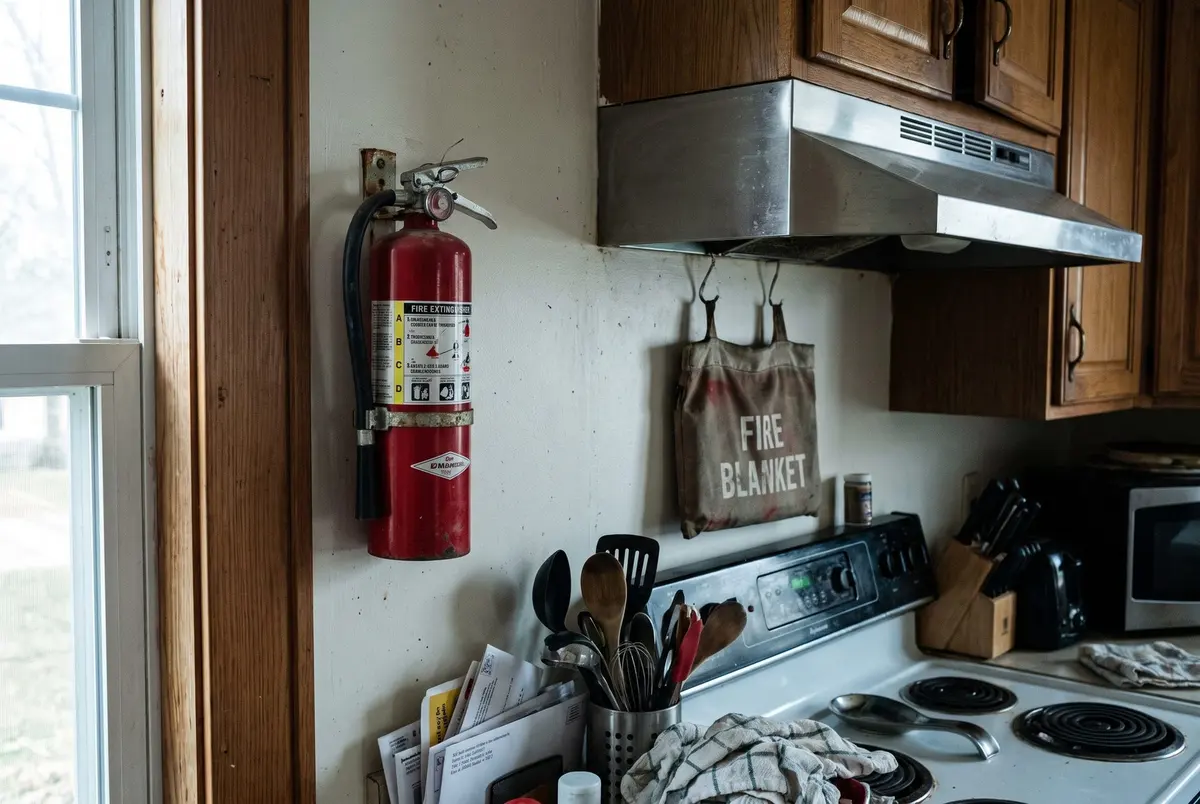
The best fire extinguisher for most homes is a multipurpose ABC model with a UL listing, as large as the person using it can handle comfortably. Mount one near the kitchen's exit, one in the garage or utility area and one in the room where you'll cook or heat during an outage, on brackets in plain sight rather than in a cabinet. Use it only on a small fire, with a clear way out behind you.
That setup is Project 51 of The Off-Grid Handbook, "Fire Response Stations," which plans for two or three ABC extinguishers and a fire blanket. Outages, the book notes, concentrate fire risk: flames, fuel, cords and distraction all at once.
Which type of fire extinguisher is best for a house?
Extinguishers are rated by the kind of fire they put out. The U.S. Fire Administration (USFA) lists five classes:
| Class | Fire type | Typical example |
|---|---|---|
| A | Ordinary combustibles | Wood, paper, cloth |
| B | Flammable liquids | Grease, gasoline, oil-based paint |
| C | Electrical equipment | Plugged-in appliances and tools |
| D | Flammable metals | Mostly in factories |
| K | Cooking oils and fats in cooking appliances | Mostly in commercial kitchens |
A multipurpose extinguisher labeled A-B-C covers most home fires, and most home improvement stores carry them. Look for the "UL Listed" or "ULC Listed" mark, which means a recognized testing laboratory certified it.
How to read the label
The numbers tell you capacity. Per USFA, the number before the A is a multiple of 1.25 gallons of water, and the number before the B is the square feet of liquid fire it can handle. A label of 1A:10B:C means the equivalent of 1.25 gallons of water on ordinary fires, Class B fires up to 10 square feet, and safe use on electrical fires.
Bigger ratings handle bigger fires, but an extinguisher nobody can lift does nothing. USFA recommends the largest model the user can operate safely and comfortably.
Where to put fire extinguishers in a house
The book's rule is mount, don't shelve. An extinguisher in the back of a cabinet costs the seconds that matter. Its stations:
- Kitchen: on a bracket by the kitchen's exit, within reach of the cooking area.
- Garage or utility area: where fuel, tools, the furnace or the water heater live.
- The outage room: the warm room, or wherever heaters and lanterns will run.
- Outdoor cooking station: a fire blanket, plus an extinguisher you can carry out.
Mount each one in plain sight near a way out, at a height an adult can reach easily; the book follows NFPA placement guidance and puts them at about chest height. Make sure nothing blocks the bracket, which USFA lists as the first thing to check.
How many fire extinguishers do I need?
The book plans for two or three ABC extinguishers in a typical home: kitchen, warm room and garage or utility area. The test is simple. From any room where something burns, cooks or heats, you should be able to reach an extinguisher without walking past the fire.
Homes with a wood stove, a workshop or a detached garage usually need one at each of those spots too. Add the fire blanket for the outdoor cooking station, and you have a full set of stations.
Teach the household
An extinguisher only helps if someone knows how to use it. The book teaches PASS to every adult and capable teen in the house, and USFA suggests asking your local fire department, which can help with extinguisher training and answer questions.
How to use a fire extinguisher: the PASS method
Before you touch the extinguisher, run the USFA checklist. Use one only if every answer is yes:
- Everyone else has been alerted, and someone is calling the fire department.
- The fire is small and contained, like a pan or a wastebasket.
- You're physically able to use the extinguisher.
- You're safe from the smoke, and you have a clear escape route.
Then remember PASS:
- Pull the pin, with the nozzle pointing away from you.
- Aim low, at the base of the fire.
- Squeeze the lever slowly and evenly.
- Sweep the nozzle from side to side.
The book's size rule is blunt: extinguishers are for fires smaller than you. Anything bigger means everyone out and call the fire service, because the house is not the priority.
USFA also advises that young children and older adults should not use extinguishers, so for some people in the house the plan is simply to get out. Agree on a meeting place outside as part of your family emergency communication plan.
Fire blanket for the kitchen and the outdoor stove
For a burning pan, smothering beats spraying. USFA's advice is to keep a pan lid or baking sheet nearby and slide it over the pan if it catches fire, then turn off the burner.
The handbook keeps a fire blanket beside the outdoor cooking station, where a pan lid may not be handy and a camp stove or brick rocket stove runs in the open. Pull the tabs, lay the blanket over the pan or the flames, and leave it in place until everything has cooled. For the rest of that setup, see how to cook without electricity.
Fire extinguisher maintenance
- Check the pressure gauge. The book calls for a check every quarter and after any use.
- Look for damage, dents or rust on the can, hose and nozzle, and wipe off grease and dust.
- Follow the label: some extinguishers need shaking monthly, others pressure testing every few years.
- After any use, however brief, have it recharged or replace it.
Per the book, the stations take about 30 minutes and roughly $80 for the extinguishers, a fire blanket and brackets. They work alongside the alarm grid in our guide to smoke and CO detector placement, and if you heat with wood, read wood stove safety next.
Frequently asked questions
What type of fire extinguisher is best for home use?
A multipurpose ABC extinguisher, which handles ordinary combustibles, flammable liquids like grease and gasoline, and electrical fires. Look for a UL or ULC listing on the label, and choose the largest size the person using it can handle safely and comfortably. A rating such as 1A:10B:C or higher suits most home locations.
Where should fire extinguishers be placed in a house?
Mount them on brackets in plain sight near exits: one near the kitchen's exit within reach of the cooking area, one in the garage or utility room, and one in the room you'll use for heat or light during an outage. Keep them at a height an adult can reach easily, never in the back of a cabinet.
What does PASS stand for on a fire extinguisher?
PASS stands for Pull, Aim, Squeeze, Sweep. Pull the pin with the nozzle pointed away from you, aim low at the base of the fire, squeeze the lever slowly and evenly, and sweep the nozzle from side to side. Use it only on a small, contained fire with a clear escape route behind you.
Is a fire blanket better than an extinguisher for a kitchen fire?
For a small fire in a pan, smothering usually works best. The U.S. Fire Administration says to slide a lid or baking sheet over the pan and turn off the burner, and a fire blanket does the same job where no lid is handy, such as at an outdoor stove. Keep an ABC extinguisher too, for fires a blanket can't cover.
Sources
- The Off-Grid Handbook, Garrett Dalton, Project 51
- U.S. Fire Administration: Choosing and Using Fire Extinguishers
- U.S. Fire Administration: Cooking Fire Safety
Safety guidance changes. Check the agency pages above for the current version, and follow your local code and manufacturer instructions.