Wood stove safety: dry firewood, a clean chimney and the 3-foot rule
A code-installed wood stove is the gold standard for heat without the grid. The stove itself is safe; the shortcuts around it are not.
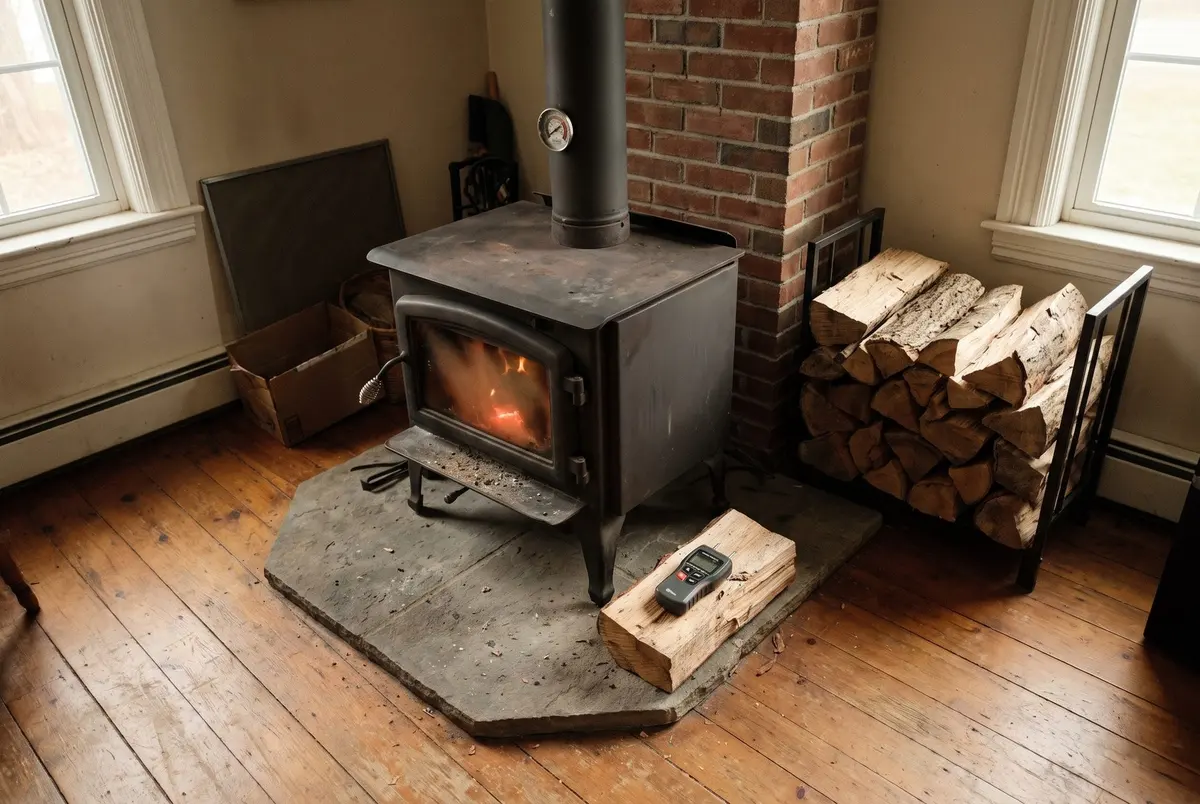
In this article
Wood stove safety comes down to four habits: have the stove and chimney professionally installed to code, burn only seasoned firewood under 20% moisture, keep anything that can burn at least 3 feet away, and have the chimney inspected and cleaned every year. Add working smoke and carbon monoxide alarms, and put ashes in a covered metal can outside, at least 10 feet from the house.
Those numbers come from the EPA and the U.S. Fire Administration (USFA). They line up with Project 55 of The Off-Grid Handbook, which calls a modern, code-installed wood stove the gold standard for grid-independent home heat.
Wood stove installation and clearance
Placement, chimney routing, clearances, the hearth pad and permits are the installer's conversation, not a weekend guess. The book calls the wood stove the one heating appliance worth doing entirely by the book, with professional installation to NFPA 211 and local code.
- Clearance to walls and ceiling: set by the stove's listing label and manual. Don't shrink it to save floor space.
- Everyday clearance: the USFA rule is to keep anything that can burn at least 3 feet from the stove, including furniture, curtains, firewood and kindling.
- Hearth: a noncombustible floor pad sized per the manual, to catch embers when you load the stove.
- The stove itself: EPA-certified, tested by a qualified laboratory and sized to the space. The book warns that oversized stoves smolder and creosote.
Already have an open fireplace instead? The book's advice is to treat it as ambiance, not heat, since most send more heat up the flue than into the room. Get it inspected before you count on it in an outage.
Seasoned firewood moisture: the 20% rule
EPA guidance is that wood burns best at a moisture content of less than 20 percent. Season split wood for at least six months, stored outdoors and off the ground with only the top covered, because covering the sides traps moisture.
A moisture meter settles arguments, which is why the handbook lists one as standard equipment. Split a piece and test the fresh inner face, not the weathered end. The EPA adds that seasoned wood is darker, weighs less and sounds hollow when two pieces are knocked together.
What not to burn
- Household trash, cardboard, plastic or foam.
- Painted, coated or pressure-treated wood, plywood or particle board.
- Wet, green, rotted or moldy wood, and ocean driftwood.
- Gasoline, kerosene or charcoal lighter fluid to get it started.
Creosote and chimney fires
Wet wood makes a cool, smoky fire, and that smoke condenses in the chimney as creosote, a tarry, flammable deposit. The book's chain is short: wet wood makes creosote, and creosote makes chimney fires. The habits that prevent it:
- Burn hot and clean per the stove manual. The EPA notes that for most appliances a smoldering fire is neither safe nor efficient.
- Use a stovepipe thermometer to stay in the clean-burn range the manual gives.
- Keep the stove door closed except when loading or stoking.
- Have the chimney inspected and cleaned by a professional at least once a year, more often with heavy use.
- Get a thorough inspection before you rely on the stove for outage heat; the book treats a Level 2 chimney inspection as a prerequisite.
A properly installed stove should make very little smoke. If you regularly see or smell smoke, the EPA says you may have a problem, and that is a call to your installer or chimney sweep.
Storing firewood for winter
Store wood the way the EPA describes for seasoning: outdoors, off the ground, with only the top covered. Stack it away from the house walls, not against them, and bring in only what you'll burn in a day or two.
Inside, keep that small supply at least 3 feet from the stove, per USFA. The handbook's field note: two cords of seasoned wood, properly stored, is stored heat with no expiry and no electronics, the heating equivalent of full rain barrels.
Buy and burn locally cut firewood where you can. The EPA notes that moving firewood long distances can spread invasive forest pests.
Ash disposal
Ashes stay live far longer than they look. Shovel them into a metal container with a lid, carry it outside and set it on noncombustible ground at least 10 feet from the house, per USFA. Per the book, leave it there for days, not hours.
A paper bag, a plastic bin or a spot against the deck or garage wall is how a cold-looking bucket of ash starts a house fire.
Wood stove safety in a power outage
A wood stove keeps working when the grid is down, which is exactly when it gets pushed hardest. Keep the household rules tight:
- Battery-backed smoke and CO alarms on every level. The book calls its alarm grid a prerequisite; see where to put CO detectors.
- An ABC fire extinguisher mounted near the room's exit.
- Put the fire out before you go to sleep or leave the house, as USFA advises, and plan to stay warm overnight with sleep systems that burn no fuel.
- Keep children and pets back from the hot surfaces.
| Rule | Number | Source |
|---|---|---|
| Firewood moisture | Under 20% | EPA |
| Seasoning time | At least 6 months | EPA |
| Clear space around the stove | 3 feet | USFA |
| Chimney inspection and cleaning | Every year | USFA, NFPA 211 |
| Ash can distance from the house | 10 feet | USFA |
A stove that heats one closed-off part of the house does far more with the same wood than one fighting a whole cold house. Pair it with a one-warm-room plan and the woodpile goes much further.
Frequently asked questions
What moisture content should firewood be for a wood stove?
Under 20 percent, per the EPA. Season split wood for at least six months, stored outdoors and off the ground with only the top covered. Check it with a moisture meter on a freshly split face. Wet wood burns cool and smoky, which builds creosote in the chimney, the main cause of chimney fires.
How far should a wood stove be from the wall?
The required clearance to walls and ceiling is set by the stove's listing label and installation manual, and a professional installer will follow it along with NFPA 211 and local code. Separately, the U.S. Fire Administration says to keep anything that can burn, such as furniture, curtains and firewood, at least 3 feet from the stove.
How often should a wood stove chimney be cleaned?
Have the chimney inspected and cleaned by a professional at least once a year, as the U.S. Fire Administration advises and NFPA 211 calls for, and more often with heavy use. Get it inspected before you rely on the stove for outage heat, and any time you see or smell smoke from a stove that used to burn clean.
What causes a chimney fire?
Most chimney fires start with creosote, a tarry, flammable deposit that builds up when smoke cools in the flue. Wet wood, smoldering fires and oversized stoves all make more of it. Burn wood under 20 percent moisture, run the stove hot and clean per its manual, and have the chimney swept every year.
Can you leave a wood stove burning overnight?
The U.S. Fire Administration advises putting the fire out before you go to sleep or leave home. Plan to stay warm overnight without it: sleeping bags rated well below your indoor temperature, pads under you, blankets over you and everyone together in one warm room, all of which burn no fuel. Keep smoke and CO alarms working either way.
Sources
- The Off-Grid Handbook, Garrett Dalton, Project 55
- EPA Burn Wise: Best Wood-Burning Practices
- U.S. Fire Administration: Heating Fire Safety
- U.S. Fire Administration: Fireplace and Wood Stove Safety (PDF)
- Ready.gov: Heating Fire Safety handout (PDF)
Safety guidance changes. Check the agency pages above for the current version, and follow your local code and manufacturer instructions.