How to insulate windows for winter: shrink film, thermal curtains and a draft snake
Three removable layers turn a cold pane of glass into a pocket of still air, and none of them needs a landlord's permission.
In this article
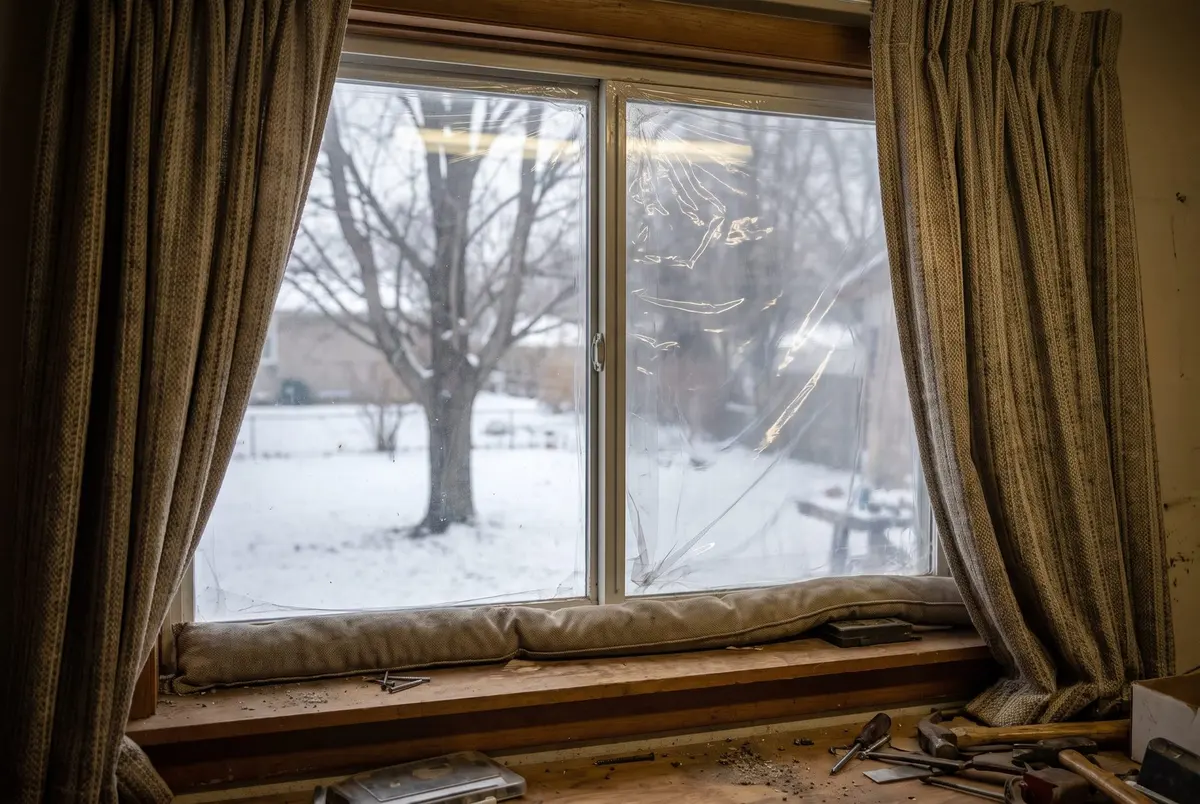
The cheapest way to insulate windows for winter is to stack three layers: clear shrink film on the frame, lined thermal curtains mounted wide and high, and a draft snake on the sill. The film and the curtain each trap a layer of still air, and the snake stops cold air from sliding in along the bottom. Done together, the job takes about two hours and roughly $60 in materials for a typical house, per The Off-Grid Handbook.
Project 48 of the book calls windows "the thermal holes in every wall" and says film plus serious curtains raise their effective insulation two- to three-fold. The kit is seasonal: it goes up in fall and comes down in spring without a mark.
Why windows feel so cold in winter
A single pane of glass, or an old double pane with tired seals, conducts heat out much faster than the wall around it. On top of that, most window frames leak air at the sash, the trim and the sill. ENERGY STAR notes that if you added up all the leaks, holes and gaps in a typical home's envelope, it would equal a window left open every day of the year.
That is why the fix comes in layers. Film stops the drafts and adds a dead-air gap, the curtain adds a second gap and blocks the cold glass from the room, and the snake handles the sill.
How to install window shrink film
Shrink film kits are sold at hardware and home stores in window-sized sheets with double-sided tape. ENERGY STAR rates the project easy: one day and under $100. Buy a kit wide enough for your widest window.
- Measure the trim around the window and cut the film a few inches larger on every side.
- Clean the frame with rubbing alcohol on a cotton ball so the tape grips. Dust and old paint flakes are the usual reason film lets go in January.
- Tape the perimeter of the trim, not the glass. Running the film over the woodwork also seals the leaks around the frame.
- Hang the film from the top edge first, pull it lightly taut, then press it onto the side and bottom tape.
- Shrink it drum-tight with a hair dryer, moving slowly from the corners inward until the wrinkles disappear. Trim the excess with a utility knife.
The book's advice is to film every window you don't need to open or look through clearly all winter. Leave one window that you open for fresh air, and keep the latches of any bedroom window that serves as an escape route easy to reach.
Do thermal curtains really work?
They work when they are hung to seal, not to decorate. The Department of Energy's guidance is that most conventional draperies, drawn in cold weather, can cut heat loss from a warm room by up to 10%, and that tightly fitted cellular shades can reduce heat loss through the window by 40% or more. The difference is the seal around the edges.
Mount the rod above the frame and wider than it, so the curtain covers the trim on both sides and reaches the sill or floor. DOE adds three upgrades: a cornice or a rod tight to the ceiling to close the top, Velcro or magnetic tape to hold the sides to the wall, and an overlap in the center. Two curtains hung together trap a tighter air space than one.
Curtain discipline
Open the curtains on south-facing windows during sunny days for free solar heat, then close every curtain in the house at dusk. The National Institute on Aging gives the same advice for older adults: keep blinds and curtains closed against the cold, and seal gaps with weatherstripping or caulk.
Draft stopper for windows: the last, movable layer
A draft snake is a fabric tube laid along the sill or the bottom rail of the sash. It costs little, moves between windows, and catches the cold air that pours down the glass and along the sill. A rolled bath towel does the same job in an emergency.
If a window still rattles when you push on the sash, the problem is the weatherstripping or the trim, not the glass. The incense smoke test for air leaks will show you exactly where, and caulk or new weatherstrip fixes it before the film goes on.
Which windows to insulate first
Start with the room you would live in during an outage. The book's warm-room plan (Project 49) gives that room's windows the full triple treatment: film, curtain and snake. The rest of the house can follow as time and kits allow.
| Layer | What it stops | Where it matters most | When it comes off |
|---|---|---|---|
| Shrink film | Drafts at the frame, heat through the glass | Windows you don't open all winter | Spring, the tape peels off the trim |
| Thermal curtain | Cold glass radiating into the room | Every window, closed at dusk | Can stay up all year |
| Draft snake | Cold air along the sill | Leaky sills and old sash windows | Whenever you like |
Windows are only part of the envelope. Once they are done, the next cheap wins are usually the attic hatch and the rim joists in the basement.
Window insulation for renters
Everything in this kit is removable, which the book points out is exactly right for rentals: full effect, no permission slips. ENERGY STAR notes that the film tape comes off the trim easily at the end of winter without damaging the finish.
The same layers pay off twice. They lower the heating bill in a normal January, and they hold heat in the house for hours longer if the power fails. For the rest of that plan, see how to stay warm without power and the winter storm preparedness checklist.
Frequently asked questions
Does window shrink film really work?
Yes, for drafty or single-pane windows it is one of the cheapest upgrades available. The film stops air leaking around the frame and traps a layer of still air in front of the glass. ENERGY STAR notes it reduces drafts, makes the room feel warmer and cuts condensation on the glass. It works best on windows you won't open until spring.
Are thermal curtains worth it for winter?
They are worth it if they are hung to seal. The Department of Energy says conventional draperies drawn in cold weather can cut heat loss from a warm room by up to 10%. Mount them above and past the frame, let them touch the sill or floor, and close them at dusk every night.
Should curtains be open or closed in winter?
Open on sunny south-facing windows during the day so the sun can warm the room, and closed everywhere else. At dusk, close every curtain in the house. Windows that never get direct sun can stay covered all day in cold weather, since they lose more heat than they gain.
Can you open a window with shrink film on it?
Not without tearing the film, so leave at least one window unfilmed for fresh air. Film is easy to tear out by hand in an emergency, but keep the latch of any bedroom escape window clear and reachable. Curtains and draft snakes should never block a window someone may need to climb out of.
Sources
- The Off-Grid Handbook, Garrett Dalton, Project 48
- ENERGY STAR: Applying Plastic Over Windows Project
- US Department of Energy, Energy Saver: Energy Efficient Window Coverings (archived January 2026)
- ENERGY STAR: Why Seal and Insulate?
- National Institute on Aging: Cold Weather Safety for Older Adults
Safety guidance changes. Check the agency pages above for the current version, and follow your local code and manufacturer instructions.