How to stay warm without power: heat one room, not the whole house
When the furnace quits in an ice storm, the households that stay comfortable are the ones that stop trying to heat the whole house.
In this article
To stay warm without power, stop trying to heat the whole house and heat one small room instead. Pick an inner room with few windows, seal its doorway with a heavy blanket, cover the floor with rugs, and bring the household, the bedding and warm layers of wool or fleece into it. Never use a gas oven, grill, camp stove or generator for heat indoors.
That is the core of Project 49 of The Off-Grid Handbook, "The One Warm Room," which puts the idea in one sentence: stop heating the house and start heating one room. The rest of this article covers how to pick the room, how to seal it and how to keep it safe.
How to heat one room without electricity
When the furnace stops, the house starts losing its stored heat through every wall and window. A small sealed room loses heat slowly, and the people in it are a heat source of their own. The book's body-heat math: four people give off about 400 watts continuously, which in a small closed room works like a heater.
The CDC's winter storm guidance points the same way: close off unneeded rooms and stuff towels or rags in the cracks under doors. You are shrinking the house to the size your heat sources, your own bodies included, can hold.
Which room to choose
The book's checklist for the warm room:
- Small, so there is less air to warm and fewer surfaces losing heat.
- South-facing, so it collects whatever winter sun there is.
- Few windows and few exterior walls.
- On the same floor as a bathroom, if possible.
Often this is not the living room, which tends to be large, open and full of glass. A bedroom or den toward the middle of the house usually wins. Choose it now, while the house is warm, because the book notes that households that pre-picked the room settle in hours faster than households that debate it cold.
Seal the room: the door is the thermostat
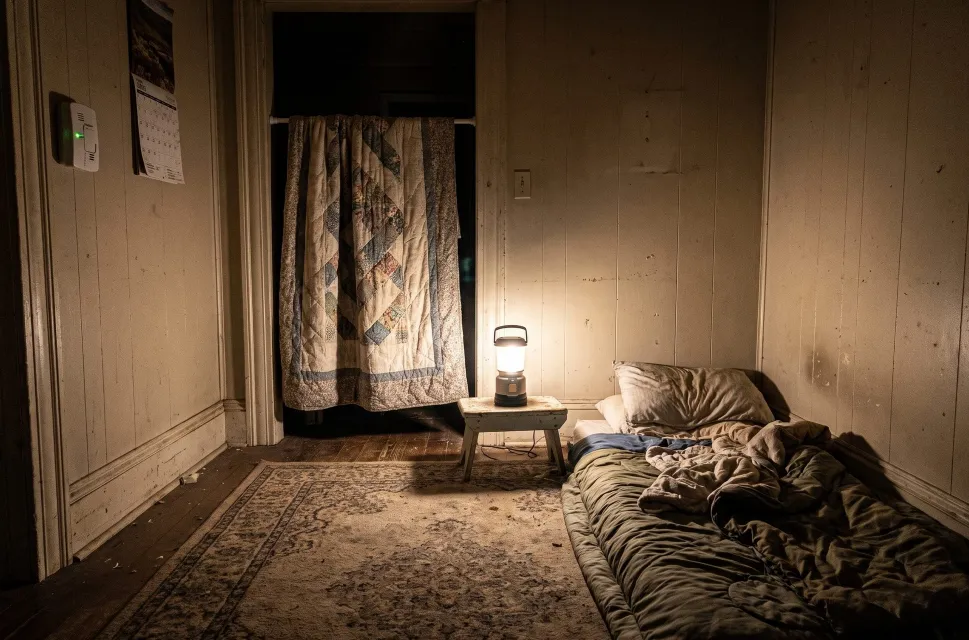
Hang a heavy blanket or quilt across the doorway on a spring tension rod, and stuff the gaps at the floor and the sides. The handbook calls the door of the warm room its thermostat, because every trip in and out lets warm air escape. Keep traffic to a minimum.
Windows come next. Window film, curtains that reach the sill and a draft snake give the room's glass what the book calls the triple treatment, covered in our guide to insulating windows for winter. Open the curtains on the sunny side during the day and close all of them at dusk.
Then cover hard floors with rugs or foam mats. Cold floors defeat warm air, and anyone sitting or sleeping low loses heat into them fast.
How to stay warm in an ice storm when the outage lasts days
An ice storm outage can run for days, so plan for the nights, not the afternoons. The riskiest hours are the middle of the night, when everyone is asleep and nothing is adding heat to the room.
- Dress in layers of wool or fleece, with a knit cap and wool socks. The CDC recommends multiple layers and extra blankets.
- Eat regular, balanced meals and drink water. The CDC advises skipping alcohol and caffeine, which make the body lose heat faster.
- Sleep in the warm room, together: pads under, sleeping bags around, blankets over. Our guide to sleeping warm in a cold house covers the setup.
- Keep the lights and the battery radio in the room instead of spread through the house.
- Check on older neighbors often, especially anyone living alone.
Know the warning signs of hypothermia, which Ready.gov lists as shivering, exhaustion, confusion, fumbling hands, memory loss, slurred speech or drowsiness. If the room can't be kept warm, Ready.gov's advice is to go to a community location with power. Local officials can tell you which warming centers are open.
Safe heat sources in a power outage
This is where outages turn deadly. Carbon monoxide is colorless and odorless, and improvised indoor heating is exactly how it builds up. The rules below come from the CDC and Ready.gov, and they match the book's.
| Heat source | Use indoors? |
|---|---|
| Gas oven or stovetop | Never for heating |
| Charcoal or gas grill, camp stove, rocket stove | Never. Outdoor use only |
| Portable generator | Never. Outdoors, at least 20 feet from windows, doors and vents |
| Wood stove or fireplace | Only if properly vented to the outside and inspected |
| Fuel-burning space heater | Only a model rated for indoor use, run exactly per its manual |
A generator never runs in a garage, even with the door open. Our article on why a generator can't go in the garage explains the distance rule. Any heater with a flame needs a working, battery-backed carbon monoxide alarm in the same room, and our guide to CO detector placement shows where it goes.
Keep anything that can burn at least 3 feet from any heater, per the CDC. If anyone in the room gets a headache, dizziness, nausea or confusion while a heater or generator is running, treat it as carbon monoxide: everyone outside to fresh air, then call 911.
Free heat from the sun
A south window is a heater with no fuel and no fumes. Open its curtains as soon as the sun hits the glass and close them before it sets. The handbook goes a step further with a solar window heater, a black collector box hung in a south window that pushes warm air into the room on sunny days, described in our guide to the DIY solar air heater.
Warm room checklist
The book's last step is an activation card kept in the household binder, so the room comes online in about fifteen minutes. A version of that card:
- Family: everyone into the room, pets included.
- Bedding: pads, sleeping bags, blankets, caps and socks.
- Water and snacks for the night.
- Lights: lanterns or flashlights and spare batteries.
- Radio: battery or hand-crank.
- Doorway blanket up, gaps stuffed, curtains closed at dusk.
- CO alarm tested and in the room.
Per the book, Project 49 takes about an hour of planning and roughly $40 in materials: spring rods, heavy blankets and floor rugs. While you are at it, protect the plumbing too, because a long cold outage can freeze pipes in the rooms you've stopped heating.
Frequently asked questions
How do you heat one room without electricity?
Pick a small room with few windows and exterior walls, hang a heavy blanket across the doorway, stuff the gaps, cover the floor with rugs and close the curtains at dusk. Bring everyone into it, since four people give off about 400 watts of body heat. Any fuel-burning heater must be rated for indoor use and paired with a working CO alarm.
Is it safe to use a gas oven to heat a room during a power outage?
No. Ready.gov and the CDC both say never to heat your home with a gas oven or stovetop, because it raises the risk of carbon monoxide poisoning. The same goes for grills, camp stoves and charcoal, which are outdoor-only, and for generators, which belong outside at least 20 feet from windows, doors and vents.
How can I stay warm in an ice storm without power?
Heat one sealed room instead of the house, dress in wool or fleece layers with a hat and socks, eat regular meals and drink water, and sleep together in the warm room on pads with sleeping bags and blankets. Watch for hypothermia signs such as shivering, confusion and slurred speech, and go to a warming center if the room can't be kept warm.
Which room should be the warm room?
The Off-Grid Handbook's criteria are small, south-facing, few windows, few exterior walls and on the same floor as a bathroom if possible. That is often a bedroom or den toward the middle of the house rather than the living room. Choose it in advance, because households that pre-pick the room settle in hours faster.
Sources
- The Off-Grid Handbook, Garrett Dalton, Project 49
- CDC: Safety Guidelines During and After a Winter Storm
- Ready.gov: Winter Weather
- Ready.gov: Power Outages
- CDC: Carbon Monoxide Poisoning Basics
Safety guidance changes. Check the agency pages above for the current version, and follow your local code and manufacturer instructions.