Running a generator in the garage with the door open: why it is never safe
Where a portable generator belongs, how far from the house, and the only safe way to connect it to your circuits.
In this article
- Is it safe to run a generator in the garage with the door open?
- How far should a generator be from the house?
- Portable generator safety checklist
- Carbon monoxide alarms: the second half of the rule
- Transfer switch vs interlock: powering house circuits safely
- Fuel, weather and the monthly test run
- Frequently asked questions
No: running a generator in the garage is never safe, even with the big door all the way up. The Consumer Product Safety Commission says opening doors or windows will not provide enough ventilation to prevent the buildup of lethal carbon monoxide. A portable generator belongs outdoors, at least 20 feet from the house, with its exhaust pointed away from doors, windows and vents.
The Off-Grid Handbook calls its first generator rule "placement is law." Project 25 of the book treats a portable generator as a fine tool wired one way and a lethal one wired another, and this guide follows its rules alongside current CDC, CPSC and Red Cross guidance.
Is it safe to run a generator in the garage with the door open?
It is not. The CPSC tells consumers never to operate a portable generator inside a home, garage, basement, crawlspace, shed or other enclosed space. The Red Cross adds that open doors, open windows and fans will not prevent CO buildup in the home.
Carbon monoxide has no color and no smell. The CPSC warns that poisoning from a portable generator can happen so quickly that people become unconscious before they notice nausea, dizziness or weakness, and it counts an average of about 100 deaths a year in the US from portable generator CO alone.
The garage feels like a sensible compromise because it keeps the machine dry, quiet and out of sight. That is exactly the problem: the exhaust collects in a space attached to the house.
How far should a generator be from the house?
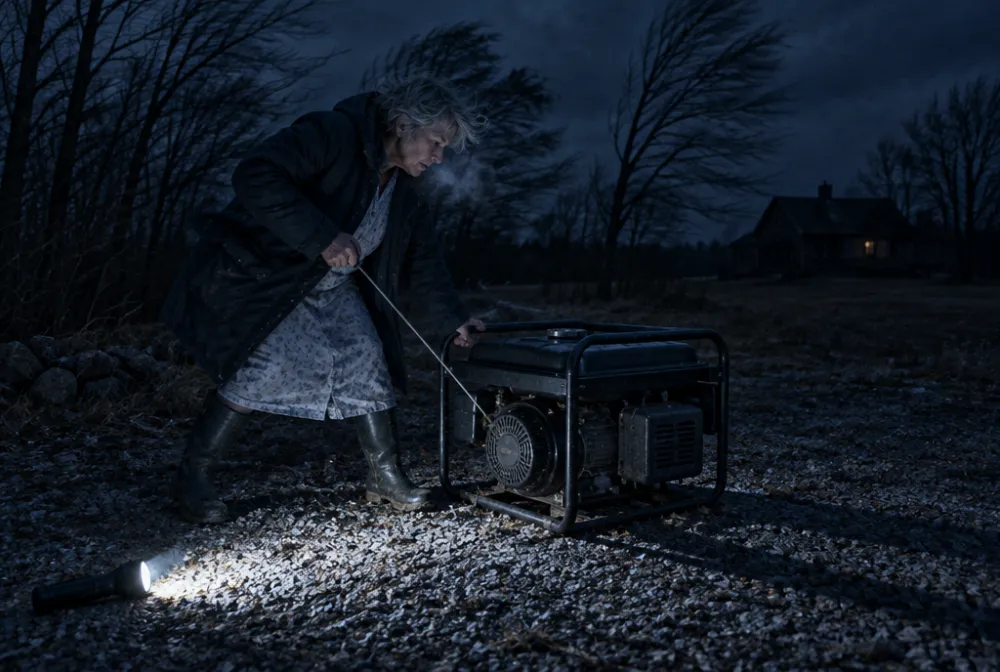
At least 20 feet, outdoors, with the exhaust aimed away from the house. The CDC measures those 20 feet from any door, window or vent. Ready.gov applies the same distance to attached garages, so an open garage door counts as an opening.
- Not on a porch or in a carport. The CPSC says both are too close to the home.
- Not near an open window. Close windows and seal off vent openings that are near the generator or in the path of its exhaust.
- Not aimed at anyone else. Direct the exhaust away from your home and from other buildings someone could enter, including a neighbor's.
Choose the spot before the storm, while it is light and dry. Buy a heavy-duty, outdoor-rated extension cord long enough to keep the full distance, so nobody is tempted to pull the generator closer to make the cord reach.
Portable generator safety checklist
- Outdoors only, 20 feet or more from doors, windows, vents and attached garages.
- Battery-operated or battery-backup CO alarms on every level and outside sleeping areas, tested monthly.
- Appliances plugged into the generator directly, or through a heavy-duty outdoor-rated cord rated at least equal to the total connected load, with all three prongs intact.
- Dry operation, following the manufacturer's instructions for rain and snow.
- Engine off and cooled down before refueling.
- Fuel kept in an approved safety can, outside living areas.
- Never plugged into a wall outlet.
When shopping, the CPSC suggests looking for a portable generator with a CO shut-off safety feature. The book prefers an inverter-type generator for electronics and fuel economy, sized to your measured load rather than to the whole electrical panel, because that is the one a household will actually use.
Carbon monoxide alarms: the second half of the rule
The distance rule is your job, and the alarm is the backup for when something goes wrong anyway. The CPSC recommends battery-operated alarms or alarms with battery backup on each level of the home and outside separate sleeping areas. It calls interconnected alarms best, because when one sounds, they all sound.
A plug-in alarm with no battery goes silent in the very outage you bought the generator for. If an alarm sounds, get everyone outside to fresh air first, then call 911 from there.
The book makes battery-backed CO alarms on every level part of the generator project itself, not an extra. Our guide to carbon monoxide detector placement covers heights and locations room by room.
Transfer switch vs interlock: powering house circuits safely
The default, and the one the book recommends for most homes, is cords: each appliance plugs into the generator. It is simple, safe and code-legal, and it fits the short list of things that matter in an outage.
If you want to run hard-wired circuits, the generator has to feed the house through a transfer switch or an interlock installed by a licensed electrician under the National Electrical Code. A transfer switch moves selected circuits from utility power to generator power. An interlock is a device on the main panel that keeps the main breaker and the generator breaker from being on at the same time.
Both exist to keep generator power from flowing back out onto the utility lines. The Red Cross gives the same advice about having an electrician install a transfer switch, and the book states it plainly: there is no DIY version of this step.
Never backfeed through a dryer or range outlet
A double-ended cord run from the generator into a dryer or range outlet energizes your house wiring from the wrong direction. The Red Cross calls this backfeeding and warns that it puts utility workers, your neighbors and your own household at risk of electrocution.
The book explains why line crews fear it: it energizes the street lines they are working on. The transfer switch is the electrician's job; the distance rule is yours.
Fuel, weather and the monthly test run
Store gasoline in an approved safety can, outside the living space, and away from fuel-burning appliances such as a gas water heater in the garage, per the Red Cross. Local rules may limit how much fuel you can keep, so ask your fire department.
The book's fuel discipline is short: use stabilized fuel, rotate it yearly, and run the generator for 15 minutes under load once a month. The monthly run is also the moment to inspect the cord for cuts and walk out to the spot where the generator will sit.
Keep it dry while it runs. The Red Cross suggests a dry surface under an open, canopy-like cover, and the CPSC says to follow the manufacturer's instructions, which may call for a rated generator tent or waiting until the rain or snow passes.
A generator is one piece of an outage plan. For the full sequence of the first hour, read what to do when the power goes out, and for quiet, fuel-free power for phones, lights and medical devices, start with how to size a solar generator. Food has its own clock too: here is how long food lasts in the fridge without power.
Frequently asked questions
Can you run a generator in the garage with the door open?
No. The CPSC and the Red Cross both say open doors, open windows and fans do not provide enough ventilation to prevent deadly carbon monoxide buildup. Run a portable generator only outdoors, at least 20 feet from the house, with the exhaust pointed away from doors, windows and vents.
How far should a generator be from the house?
At least 20 feet. The CDC measures that distance from any door, window or vent, and Ready.gov includes attached garages. The CPSC adds that porches and carports are too close. Point the exhaust away from your home and any building someone could enter, and close nearby windows.
Can I run a generator in a shed or under a carport?
No. The CPSC lists sheds, crawlspaces, basements and garages as enclosed spaces where a portable generator must never run, and it says porches and carports are too close to the house. For rain protection, follow the manufacturer's instructions, which may allow a rated generator tent.
What is the difference between a transfer switch and an interlock?
Both let a generator power house circuits without backfeeding the utility lines. A transfer switch moves selected circuits from utility power to generator power. An interlock is a device on the main panel that keeps the main breaker and the generator breaker from being on together. A licensed electrician must install either one.
Do I need a carbon monoxide alarm if my generator is outside?
Yes. The CPSC recommends battery-operated or battery-backup CO alarms on every level of the home and outside sleeping areas, interconnected if possible, and tested monthly. Exhaust can still find its way indoors, and the alarm is your warning. If one sounds, get outside first, then call 911.
Sources
- The Off-Grid Handbook, Garrett Dalton, Project 25
- CDC: Use a Generator Safely
- CPSC: Safety Tips to Help Families Prevent Carbon Monoxide Poisoning and Fires (December 2025)
- American Red Cross: Safe Generator Use
- Ready.gov: Power Outages
Safety guidance changes. Check the agency pages above for the current version, and follow your local code and manufacturer instructions.