How to find air leaks in your house with a stick of incense
Heated air escaping through gaps is the largest invisible loss in most houses. Finding it takes a windy afternoon and a little smoke.
In this article
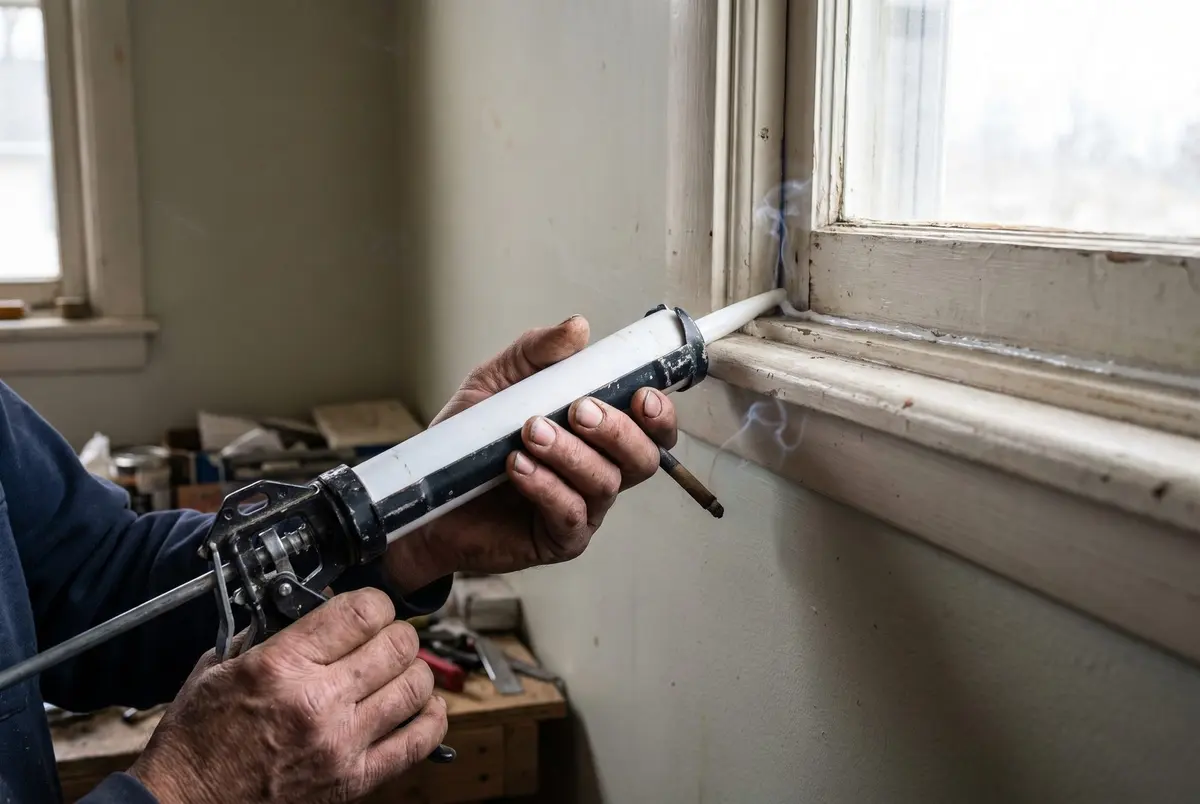
To find air leaks in your house, wait for a cool, windy day, close every window and door, and slowly pass a lit incense stick or smoke pencil around window frames, door edges, baseboards, outlets and pipe entries. Wherever the smoke wavers, gets pulled out or blows into the room, air is moving. Mark each spot with painter's tape, then seal it with caulk, foam or weatherstripping.
Project 47 of The Off-Grid Handbook turns this into a three-hour job for about $50 in materials. Its rule is simple: where the smoke dances, air moves.
Where do air leaks hide in a house?
You probably know the drafty window already. The Department of Energy's checklist covers the less obvious places, which together often leak more:
- Electrical outlets and switch plates on exterior walls
- Door and window frames, and worn weatherstripping around doors
- Baseboards, especially along outside walls
- Electrical and gas service entrances, cable and phone lines
- Gaps around pipes and wires under sinks and behind appliances
- Fireplace dampers and attic hatches
- Window or wall air conditioners, dryer vents, exhaust fans and mail slots
Outside, check every spot where two materials meet: exterior corners, outdoor faucets, where siding meets the chimney, and where the siding or brick meets the foundation. In the attic, ENERGY STAR says darkened, dirty insulation is a sign that house air has been filtering through it.
How to do the smoke pencil test
Wind pushes air through the gaps, which makes leaks easier to see. DOE describes a simple way to exaggerate the effect by pulling air out of the house with the fans you already own.
- Pick a cool, very windy day.
- Turn off gas furnaces and gas water heaters before you start. Running exhaust fans in a closed house can pull combustion gases back down their vents.
- Shut all windows, exterior doors and fireplace flues.
- Turn on every exhaust fan that blows outdoors: bathroom fans, the range hood, the clothes dryer, or a box fan in a window blowing out.
- Light the incense and pass it slowly along each likely leak, holding it an inch or two away. Keep the ember well clear of curtains.
- Mark every leak with tape and note it on a floor plan.
- Turn the fans off and the appliances back on when you finish, and check that pilot lights relit.
If you'd rather not shut off the furnace, DOE says running the exhaust fans alone still helps. Other quick checks: close a door or window on a sheet of paper or a dollar bill, and if it slides out without drag, the seal is loose. At night, a partner outside can watch for flashlight beams shining through large cracks.
Caulk vs spray foam: which goes where
The material depends on the size of the gap and whether the parts move. ENERGY STAR's guidance matches the book's numbers exactly.
| Gap or spot | Use | Typical places |
|---|---|---|
| Cracks 1/4 inch or less, parts that don't move | Silicone or acrylic latex caulk | Window and door trim, baseboards, sill plates |
| Gaps from 1/4 inch to about 3 inches | Expanding spray foam (low-expansion around window and door frames) | Plumbing and cable entries, gaps around frames |
| Holes wider than 3 inches | Fiberglass stuffed as a backer, then foam | Large pipe chases |
| Parts that move | Weatherstripping and door sweeps | Exterior doors, operable windows |
| Outlets and switches on exterior walls | Foam gaskets behind the cover plates | Every outside wall |
| Around flues and chimneys | Sheet metal and high-temperature caulk, never spray foam | Furnace and water heater vents |
Turn off the breaker before removing outlet covers to fit gaskets. The gasket goes behind the plate; nothing else inside the box needs touching.
Tips for a clean caulk line
- Remove old caulk and loose paint with a putty knife or stiff brush, and make sure the joint is dry so you don't seal moisture in.
- Hold the gun at about 45 degrees so the caulk is forced deep into the crack as it leaves the tube.
- Run one straight, continuous bead where you can, and make sure it sticks to both sides of the seam.
- Caulk outdoors in dry weather when it is above 45°F, so the bead sets and grips properly.
DOE's rule of thumb is about half a cartridge per window or door and four cartridges for the foundation sill of an average home. Buy a little extra.
Air sealing exterior doors
Doors move, so they need weatherstripping on the jambs and a sweep or a gasketed threshold at the bottom. The book's warning is that a 1/8-inch gap under a door is a permanently open window's worth of leak.
If you can see daylight around a closed door, or rattle it in its frame, the weatherstrip is worn or missing. Kits for the jambs and sweeps for the bottom are sold at any hardware store.
After sealing: test again, and keep the air safe
Re-run the smoke test once the caulk and foam have cured. The book suggests logging the stubborn leaks for the next pass, usually the attic hatch and basement rim joists, where the biggest leaks often hide.
Sealing has one real side effect. ENERGY STAR warns that in some homes a tighter envelope can make naturally venting gas or oil appliances backdraft, and suggests having them tested by a home performance contractor.
DOE adds that a house should not rely on leaks for fresh air; controlled ventilation is the safer plan. Working carbon monoxide alarms on every level are the backstop.
Is air sealing worth it?
DOE says caulking and weatherstripping usually pay back in one year or less, and EPA estimates an average 15% savings on heating and cooling when air sealing is combined with added insulation. The book puts it more simply: sealing beats heating in dollars per degree.
It also matters when the grid is down. A sealed house holds its heat for hours longer, which is the foundation of every plan in how to stay warm without power. Windows come next: the window winter kit takes another two hours.
Frequently asked questions
What is the easiest way to find air leaks in a house?
Use smoke on a windy day. Close all windows and doors, turn on exhaust fans if you can, and pass a lit incense stick slowly around frames, outlets, baseboards and pipe entries. Where the smoke wavers or gets pulled sideways, there is a leak. A sheet of paper closed in a window or door is another quick test.
Should I use caulk or spray foam to seal air leaks?
Use caulk for cracks 1/4 inch wide or less between parts that don't move, such as trim and baseboards. Use expanding spray foam for gaps from 1/4 inch to about 3 inches, like plumbing and cable entries. Moving parts such as doors need weatherstripping. Never use spray foam around hot flues; use sheet metal and high-temperature caulk.
Can air sealing make a house too tight?
It can affect gas or oil appliances that vent naturally, which may backdraft in a tighter house. ENERGY STAR suggests having them tested before and after sealing, and DOE recommends planned ventilation rather than relying on leaks. Every home with fuel-burning appliances needs working carbon monoxide alarms on every level.
Where are the biggest air leaks in a house?
Usually in the attic and basement, not the windows. ENERGY STAR says the attic is where you find some of the largest opportunities: open wall tops, wiring and plumbing holes, recessed lights, the attic hatch. In the basement, the rim joist where the framing meets the foundation is a common leak along every wall.
Sources
- The Off-Grid Handbook, Garrett Dalton, Project 47
- US Department of Energy, Energy Saver: Detecting Air Leaks (archived May 2026)
- US Department of Energy, Energy Saver: Air Sealing Your Home (archived June 2026)
- US Department of Energy, Energy Saver: Caulking (archived June 2026)
- ENERGY STAR: Attic Air Sealing Project
- ENERGY STAR: Why Seal and Insulate?
Safety guidance changes. Check the agency pages above for the current version, and follow your local code and manufacturer instructions.