Winter storm preparedness checklist: the house, the car and the calendar that gets it done
The system that has to work in January gets built in October. Here is the list, and the yearly calendar that makes it happen on time.
In this article
To prepare for a winter storm, seal and insulate the house, protect your pipes, have the chimney and heating system serviced, test smoke and carbon monoxide alarms, top off heating fuel, and stock several days of food, water, light and a battery radio. Then ready the car: an emergency kit in the trunk and a full tank. Do it in the fall, because nobody insulates in January.
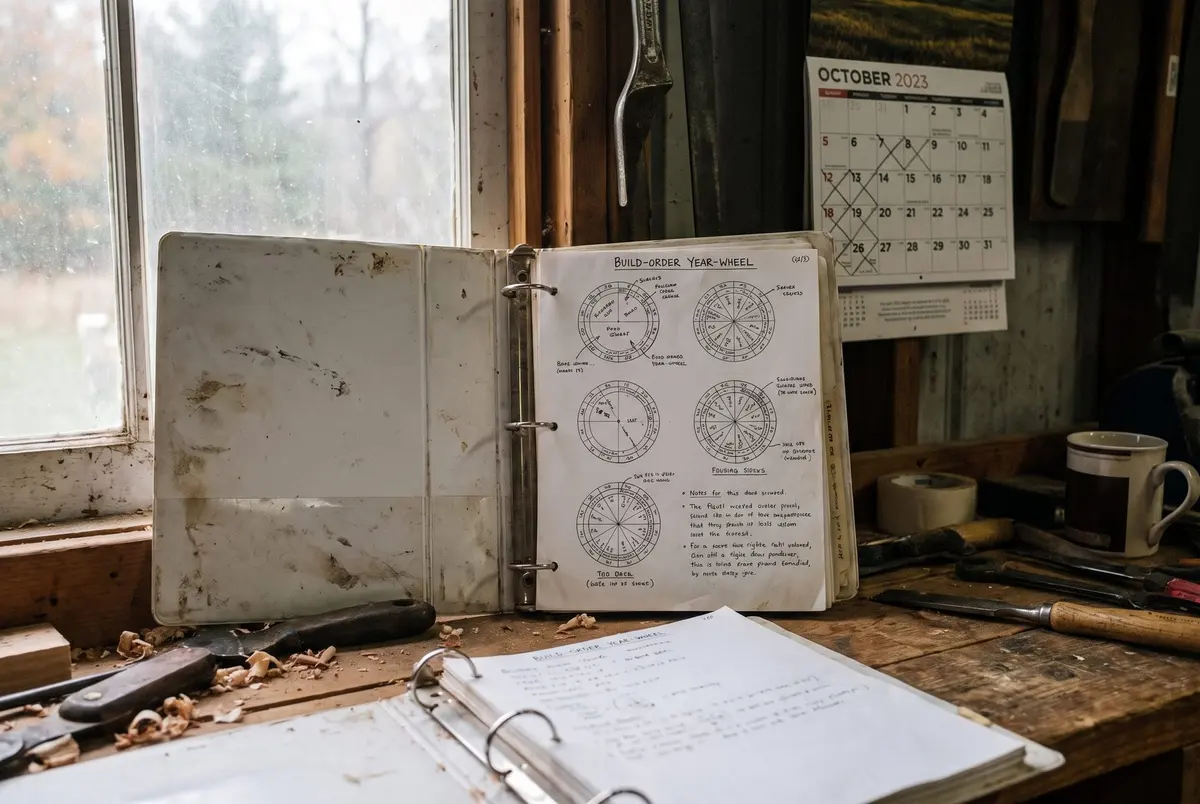
That last point is the premise of Project 72 of The Off-Grid Handbook, a one-evening, zero-cost project that sets a yearly calendar. In the book's words: schedule the work for when it is merely a chore.
Winter storm preparedness checklist
Work through this list before the first hard freeze. It combines the book's autumn block with guidance from Ready.gov and the National Weather Service.
The house
- Clean and screen gutters and check the roof.
- Seal air leaks with caulk and weather stripping, and add insulation where it is thin.
- Fit window insulation kits or heavy curtains on the worst windows.
- Insulate exposed pipes and know where your main water shutoff is.
- Drain and store outdoor hoses and rain barrels.
- Have the chimney and wood stove serviced before the first fire.
- Test smoke alarms and carbon monoxide detectors, which Ready.gov says should have battery backups.
Supplies
- Heating fuel topped off. The National Weather Service warns that fuel carriers may not reach you for days after a winter storm, so refuel before you are empty.
- Several days of food that needs no cooking or refrigeration, and water.
- Flashlights, spare batteries and a battery-powered NOAA Weather Radio.
- Extra prescription medicine, first aid supplies, baby items and pet food.
The car
- A winter emergency kit in the trunk: jumper cables, sand, a flashlight, warm clothes, blankets, water and snacks, per Ready.gov. Our car emergency kit list has the full version.
- A full tank of gas, which Ready.gov recommends and the National Weather Service says also keeps ice out of the fuel lines.
How to prepare your house for winter
Ready.gov's short version is to keep out the cold with insulation, caulking and weather stripping, and to learn how to keep pipes from freezing. The book spreads that over several weekend projects, all scheduled for autumn.
Start with the envelope, the outer shell of the house. Drafts around windows, doors, outlets and the attic hatch are the usual suspects, and our guide on how to find air leaks in your house walks through it.
Then the pipes. Insulate the ones in unheated spaces, and plan what you will do if the heat goes out in deep cold; our guide to keeping pipes from freezing in a power outage covers both.
If you heat with wood, the chimney service belongs in this block, not in December. Our wood stove safety guide covers the checks.
Fall home preparation: why the work happens in October
The book's autumn block is the heavy quarter of the year, done before winter's peak. It includes gutters and roof prep, winterizing the water system, an air-sealing pass, fuel stocks to full, chimney service, loading the root cellar, planting the cold frame, and a household drill with a cold-season focus.
The reasoning is about people, not equipment. Nobody insulates in January or fixes gutters in a storm. Work that is a pleasant Saturday in October is a dangerous one in a blizzard.
During the storm: the rules that do not bend
Preparation is most of the job, but a few rules apply once the storm arrives. These come straight from Ready.gov.
- Run generators outdoors only, at least 20 feet from windows, doors and attached garages. Never in a garage, even with the door open. Our guide on why a generator never goes in the garage explains why.
- Never heat the home with a gas stove or oven.
- Stay off the roads if at all possible. If you are trapped in your car, stay inside it.
- Limit time outside, dress in layers, and avoid overexertion when shoveling.
If the power fails, close off the rest of the house and heat one room. Our guide on how to stay warm without power shows how to pick and set up that room safely.
A seasonal maintenance calendar for the whole year
The book turns preparedness into a year wheel with four blocks. Here is a short version you can copy onto your own calendar.
| Season | Main jobs |
|---|---|
| Autumn | Gutters and roof, winterize water, air sealing and window kits, fuel to full, chimney service, load the cellar, plant the cold frame, cold-season drill |
| Winter | Indoor projects, order seeds, watch batteries and fuel levels, watch pipes in deep cold |
| Spring | Recommission the water system, change solar panel tilt, start the garden, post-winter inspection walk, check the storm kit before severe-weather season |
| Summer | Preserve the garden surplus, expand water systems in dry weather, shade the house in heat waves, hurricane-season readiness where relevant |
How to make the calendar stick
A list in a drawer is a plan; a date on the calendar with a name next to it is a habit. The book's last step is to transfer the year wheel onto the real household calendar, with a named owner for each job.
- Sit down for one evening with the family calendar and the list above.
- Put each job on a specific weekend, in the season it belongs to.
- Write one person's name next to each job.
- Set the autumn block early enough that a rained-out weekend still leaves time before the first freeze.
Do that once, and next October the reminders arrive on their own.
The spring block runs part of the autumn list in reverse. You recommission the water system, walk the property to see what winter damaged, and restock the storm kit before severe-weather season.
Frequently asked questions
How do I prepare my house for a winter storm?
Seal drafts with caulk and weather stripping, add insulation where it is thin, insulate exposed pipes, and have the chimney and heating system serviced. Test smoke and carbon monoxide alarms, top off heating fuel, and stock several days of food, water, flashlights, batteries and a battery-powered radio. Do the work in the fall.
What should be on a winter storm checklist?
House prep (air sealing, insulation, pipes, gutters, chimney service), working smoke and CO alarms with battery backups, heating fuel topped off, several days of no-cook food and water, flashlights, batteries, a NOAA Weather Radio, extra medicine, pet food, and a winter car kit with a full tank of gas.
When should I start preparing my home for winter?
In early fall. The Off-Grid Handbook schedules gutters, water winterization, air sealing, fuel, chimney service and a cold-season drill in an autumn block before winter's peak. The National Weather Service also warns that fuel deliveries may not reach you for days after a winter storm, so refuel well before you run low.
Is it safe to run a generator during a winter storm?
Only outdoors. Ready.gov says generators and fuel should always be used outdoors and at least 20 feet away from windows, doors and attached garages. Never run one in a garage, even with the door open, and keep working carbon monoxide detectors on every level of the home.
Sources
- The Off-Grid Handbook, Garrett Dalton, Project 72
- Ready.gov: Winter Weather
- National Weather Service: Before Winter Storms
- National Weather Service: Winter Weather Safety, During a Storm
Safety guidance changes. Check the agency pages above for the current version, and follow your local code and manufacturer instructions.