DIY can rotation rack: a first in, first out pantry shelf you can build in two hours
Load at the back, take from the front, and nothing in the pantry expires unseen.
In this article
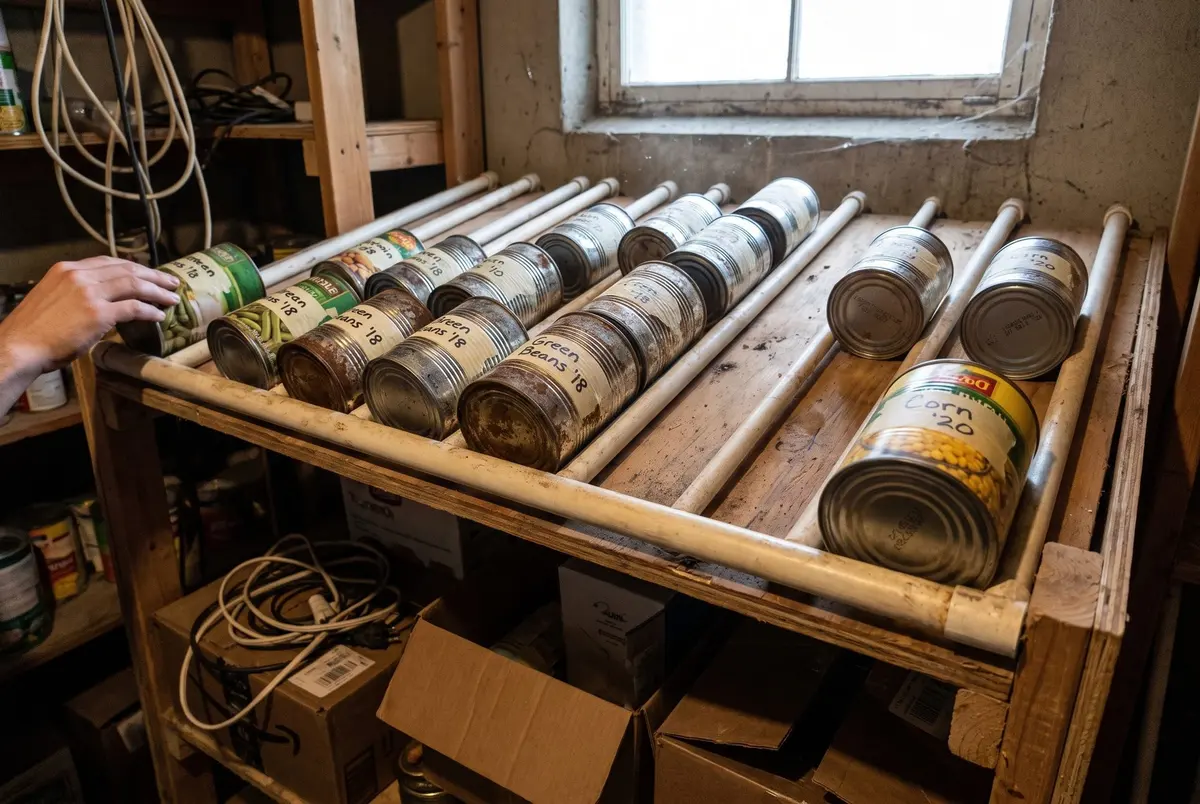
A DIY can rotation rack is a set of gently sloped runs, each one can wide and holding a single item. You load new cans at the high back end, they roll forward to a stop at the front, and the can you grab is always the oldest one. Per The Off-Grid Handbook, it takes about two hours and around $40 in materials, and with dates and par levels it becomes a complete first in, first out food storage system.
The book calls it the cheapest project in the food chapter, and says a pantry without rotation quietly becomes a museum. This is Project 36, step by step.
What is first in, first out food storage?
First in, first out, or FIFO, means the food you bought first is the food you eat first. Grocery stores do it by pushing new stock to the back of the shelf. At home, most people do the opposite and shove new cans in front of the old ones.
The USDA recommends checking your pantry every few weeks and using canned goods you have had on hand for a while. A rotation rack does that job by gravity, so the system works even on the weeks you forget.
Materials and tools
- Plywood for side panels and shelves, or purchased can-rotation racks
- 1×2 lumber for the rails and the front stops
- Wood screws
- Shelf labels and a china marker (grease pencil)
- A saw, a drill/driver and a level
Measure the cans you actually buy before cutting anything. Soup, vegetables and beans come in a few common sizes, and a run sized for one size jams with another.
How to build a can rotation rack
- Size each run to one can. The cans roll on their sides, so the lane width is the can's height plus a little clearance, and the opening height is the can's diameter plus a little clearance.
- Cut the side panels and dividers from plywood, or use the frame of an existing shelf unit.
- Fasten the 1×2 rails on a slope, high at the back and low at the front. The slope only needs to be steep enough for a full can to roll on its own.
- Add a front stop on each run, a strip of 1×2 that catches the cans without denting them.
- Test before you load. Roll a full can down every run and adjust any rail that lets it stall or bang into the stop.
- Load at the back. New cans go in at the high end; the oldest are always waiting at the front.
Store-bought racks follow the same idea. The two book rules apply either way: one run, one item, because mixed runs defeat the system.
Canned food rotation system: dates, par levels and a monthly audit
The rack moves the cans. Three habits from the book make it a system.
- Date every can on arrival. Write the month and year big and readable with the china marker, so you never squint at a printed code.
- Label each run with its item and par level. Par is the count you never drop below.
- Do a two-minute audit once a month. Anything under par goes on the shopping list, and anything near its date moves onto this week's menu.
Par levels come straight from your meal plan. If your menu uses two cans of black beans a week, a month's worth is eight or nine cans, and that is the number on the label. The 30-day food supply list turns a 7-day menu into these numbers, and the emergency supply calculator scales them to your household.
The printed dates on cans are mostly about quality, not safety, according to the USDA. Your own arrival date tells you what you actually need to know: how long the can has been in your house.
Where to put a FIFO pantry shelf
Location matters as much as the rack. The USDA recommends storing canned goods in a cool, dry place, below 85°F, and warns that temperatures over 100°F are harmful to cans.
Avoid spots next to or above the stove, under the sink, and in a damp garage or basement. If your rack goes in a basement, pick the driest wall and keep the bottom shelf off bare concrete.
Glass jars do not belong on rolling runs. Keep home-canned jars upright on a flat shelf, oldest in front, using the same date and par habits. Jars from water bath canning and pressure canning are best used within about a year, per the USDA.
How long canned food lasts, and which cans to throw out
The USDA gives these shelf lives for unopened cans in good storage:
| Type | Examples | Shelf life |
|---|---|---|
| Low-acid canned goods | Meat, poultry, stews, beans, corn, carrots, potatoes | 2 to 5 years |
| High-acid canned goods | Tomatoes, fruit, juices, pickles, sauerkraut | 12 to 18 months |
| Home-canned food | Your own jars | About 12 months |
Throw out any can that is bulging, leaking or heavily rusted. The USDA also says to discard deeply dented cans, meaning a dent you can lay your finger into, and any can with a sharp dent on a seam. Light surface rust that wipes off is not a problem.
Never taste food from a can that spurts or smells wrong. With a working rotation rack, most of those cans never happen, because nothing sits long enough to go bad. Keep a manual can opener near the rack, and pull from the same shelves when you stock a 72-hour kit.
Frequently asked questions
How does a can rotation rack work?
Each run is a gently sloped lane sized to one can and holding one item. New cans are loaded at the high back end and roll forward to a stop at the front, so the can you take is always the oldest. Adding the purchase date to each can and a par level to each run turns the rack into a full rotation system.
What is FIFO in food storage?
FIFO stands for first in, first out. It means the food you bought first is the food you eat first, so nothing sits at the back of the pantry until it expires. The USDA recommends checking the pantry every few weeks and using older canned goods first. A gravity rotation rack does this automatically.
How long do canned goods last in a pantry?
According to the USDA, low-acid canned goods such as meat, beans and most vegetables keep 2 to 5 years, while high-acid foods such as tomatoes, fruit and pickles keep 12 to 18 months. Home-canned food is best used within about 12 months. Store cans in a cool, dry place below 85°F to get the full shelf life.
Where should you store canned food?
In a cool, dry spot below 85°F, away from the stove, the space under the sink, and damp garages or basements. Heat over 100°F harms canned goods and raises the risk of spoilage. A dry interior closet or pantry wall is ideal. Keep cans off bare concrete and check them monthly for dents, rust or bulging.
Sources
- The Off-Grid Handbook, Garrett Dalton, Project 36
- USDA FSIS: Shelf-Stable Food Safety
- Ready.gov: Food
Safety guidance changes. Check the agency pages above for the current version, and follow your local code and manufacturer instructions.