How to make a zeer pot: a clay pot cooler for produce
Two terracotta pots and a bucket of sand will keep tomatoes and greens fresh for days longer in dry heat. It is not a refrigerator, and knowing the difference is the whole skill.
In this article
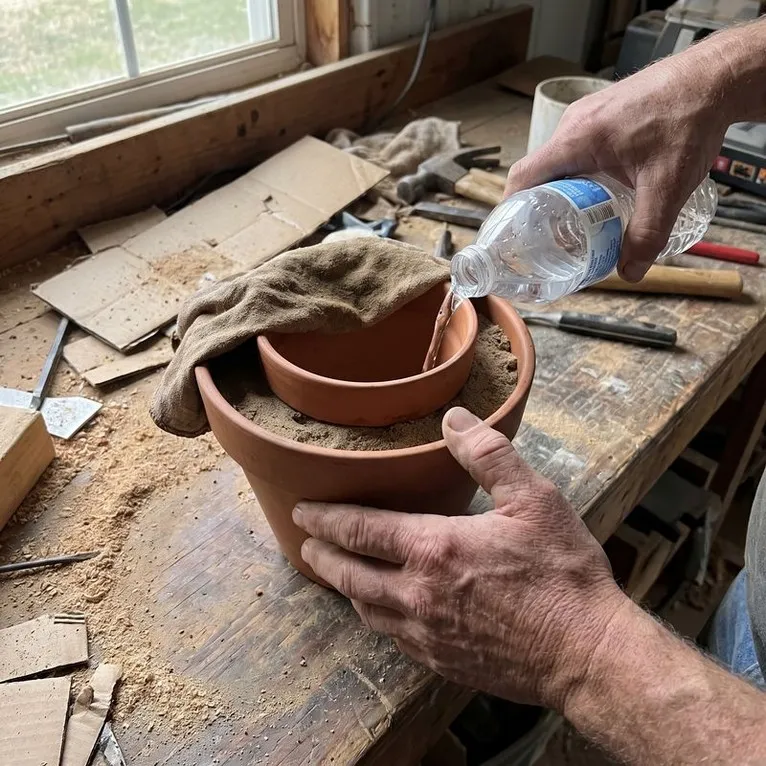
Here is how to make a zeer pot: set a small unglazed clay pot inside a larger one, fill the gap with clean sand, soak the sand with water, and cover the top with a wet cloth. As the water evaporates through the outer pot, it cools the inner chamber. In hot, dry air a zeer pot keeps fruits and vegetables fresh for days longer, but it does not get cold enough for meat, dairy or eggs.
The zeer pot is the first half of Project 43 in The Off-Grid Handbook, Powerless Cold: Zeer Pot & Ice Bank. Both builds together take about an hour and roughly $25 in materials, per the book. The other half, a cooler run on frozen water bottles, is covered in how long does food last in the fridge without power.
What you need
- Two unglazed terracotta pots in nested sizes, with an inch or two of space between them all around. Unglazed matters: glaze or paint on the outer pot blocks the evaporation that does the cooling, as MIT D-Lab's guide points out.
- Clean sand, enough to fill the bottom and sides of the gap. MIT D-Lab recommends coarse sand, sifted to remove fine clay and dust, because fine particles harden when they dry out and hold less water.
- A cotton cloth or a lid for the top.
- Water, about a daily refill.
- Something to plug the drainage hole of the inner pot, such as a cork or a dab of clay, so wet sand does not seep into the food chamber.
No tools are needed, according to the book.
How to make a zeer pot, step by step
- Pick the spot first. A filled zeer pot is heavy, so MIT D-Lab advises assembling it where it will be used: in the shade, with good airflow. Setting it on a stand exposes more surface to the air.
- Add a base layer of sand to the large pot. Adjust it so the rim of the inner pot sits at least about 3/4 inch higher than the rim of the outer pot, which keeps water out of the food chamber when you refill.
- Center the small pot inside the large one, with an even gap all the way around.
- Fill the gap with sand to about an inch below the outer rim.
- Pour water into the sand slowly until it is soaked. MIT D-Lab's test: there is enough when the water no longer sinks into the sand within a few seconds.
- Load the produce into the inner pot and cover it with a wet cloth folded several times, or a lid.
- Recharge the sand once or twice a day, as the book says, and keep the cloth damp.
How cold does a zeer pot get?
The Handbook puts the effect at 10 to 20°F below the surrounding air in dry conditions. MIT D-Lab measured pot-in-pot coolers in Mali, with outdoor humidity under 40 percent and average daily temperatures of about 84 to 99°F, and found an average drop of about 12°F (6.7°C). Inside the pot, humidity stayed between 80 and 100 percent, which keeps vegetables from wilting.
The effect depends on dry air. MIT D-Lab lists the conditions an evaporative cooler needs: low humidity, high temperature, water, and a shady, ventilated spot. In a muggy Gulf Coast summer, expect much less cooling. Indoors, a small closed room fills with moisture and the cooling fades, according to the guide. Direct sun cancels the effect entirely.
Zeer pot refrigerator? What to keep in it, and what not to
A zeer pot is sometimes called a zeer pot refrigerator, but it is a produce cooler, not a fridge. Food safety depends on staying at 40°F or below, and a zeer pot only lowers the temperature relative to the air around it.
| Good in a zeer pot | Keep out |
|---|---|
| Tomatoes, peppers, eggplant, okra | Meat, poultry, fish |
| Leafy greens and herbs | Milk, cheese and other dairy |
| Whole fruit | Eggs from the store |
| Carrots and other whole vegetables | Onions and garlic, which need dry air |
| Medicines that need refrigeration |
MIT D-Lab says evaporative coolers are not suitable for items that need to stay below about 68°F (20°C), such as medicine, meat and dairy, or for foods that need low humidity, such as onions and garlic. The vegetables that benefit most are the ones that wilt or spoil fast in heat: eggplant, tomatoes, leafy greens, peppers and okra.
Eggs need a note, because some sources put them in a zeer pot. In the United States, store-bought eggs are kept refrigerated from the farm on, and USDA says refrigerated eggs should not be left out more than 2 hours, because a cold egg left at room temperature can sweat and let bacteria move in. Keep eggs in an iced cooler at 40°F or below. The same goes for leftovers and anything perishable, under the rules in the food danger zone.
Caring for a clay pot cooler
- Keep the sand wet at all times. Cooling stops when the sand dries.
- Keep it shaded and ventilated. A breezy porch beats a sunny patio or a closed pantry.
- Keep the cover damp and the inner pot clean. MIT D-Lab advises sponging the inside off regularly, like any food storage.
- Store compatible produce together. Some fruits give off ethylene gas, which speeds ripening in nearby produce. MIT D-Lab recommends checking a storage compatibility chart before mixing.
- Check produce daily and use the ripest first.
Where a zeer pot fits in an outage plan
In a summer power outage, the Handbook's plan splits the cold: the fridge and freezer stay shut and coast on their own cold, an iced cooler holds the perishables under the 40°F rule, and the zeer pot takes the produce, freeing cooler space for what really needs it. The first hour of that plan is in what to do when the power goes out.
Outside an outage, a zeer pot is useful during a summer harvest glut, when tomatoes and greens come in faster than the household can eat them. For long-term storage of roots and squash, the better tool is a cool, dark space like a root cellar, and shelf-stable meals are covered in no-cook emergency food.
Frequently asked questions
How cold does a zeer pot get?
In hot, dry air, The Off-Grid Handbook puts the effect at 10 to 20°F below the surrounding air. MIT D-Lab measured an average drop of about 12°F in pot-in-pot coolers when outdoor humidity was under 40 percent. In humid weather the cooling is much smaller.
Can you keep meat or milk in a zeer pot?
No. MIT D-Lab says evaporative coolers are not suitable for meat, dairy or medicines that must stay cold. Perishable food needs to stay at 40°F or below, which a zeer pot cannot guarantee. Use an iced cooler with a thermometer for meat, dairy, eggs and leftovers.
Does a zeer pot work in humid climates?
Poorly. Evaporative cooling depends on dry air, so the effect shrinks as humidity rises. MIT D-Lab lists low humidity, high temperature, water and a shady, ventilated location as the conditions these coolers need. It also loses cooling in a small closed room.
What kind of pots do you need for a zeer pot?
Two unglazed terracotta pots in nested sizes, with room for sand between them. The outer pot must be unglazed and unpainted so water can evaporate through it. Plug the drainage hole in the inner pot so wet sand does not seep into the food chamber.
Sources
- The Off-Grid Handbook, Garrett Dalton, Project 43
- MIT D-Lab: Evaporative Cooling Best Practices Guide
- MIT D-Lab: Evaporative Cooling Technologies for Improved Vegetable Storage in Mali (Executive Summary)
- USDA FSIS: Shell Eggs from Farm to Table
- USDA FSIS: Food Safety in a Power Outage
Safety guidance changes. Check the agency pages above for the current version, and follow your local code and manufacturer instructions.