No cook emergency food: what to eat when the power and the stove are out
Three days of food that needs no stove, no fridge and almost no water is the most useful shelf in an outage pantry. Most of it is already in aisles you know.
In this article
- What counts as no cook emergency food
- Eat in this order: fridge, freezer, then shelf
- No cook meals for a power outage: three days of ideas
- Food to eat during a power outage when water is short
- Building the three-day set, the Handbook way
- Babies, special diets, older adults and pets
- When you do want something hot
- Frequently asked questions
No cook emergency food is food you can eat safely straight from the package: canned meats, fish, beans, fruits and vegetables, peanut butter, crackers, dry cereal, protein or fruit bars, dried fruit, nuts, shelf-stable milk and canned juice. Keep at least three days of it for everyone in the house, with a manual can opener and 3 gallons of water per person. When the power goes out, eat from the refrigerator first, then the freezer, and only then open the shelf supply.
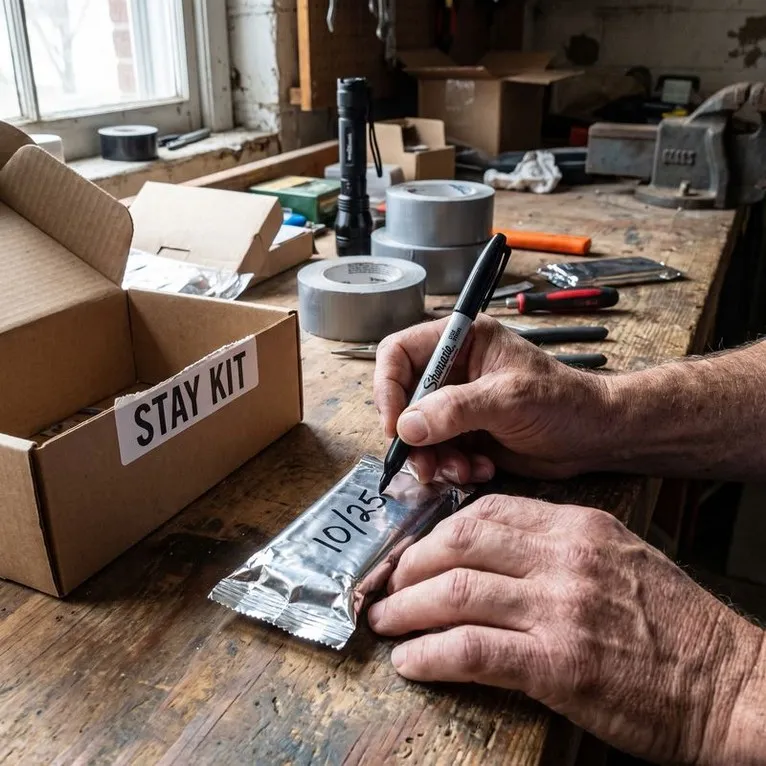
That three-day set is the food core of Project 68 in The Off-Grid Handbook, the 72-hour stay kit. Here is what to put in it, how to turn it into meals, and what to watch for.
What counts as no cook emergency food
FEMA's guide to emergency food sums up the goal: foods that need no refrigeration, water, special preparation or cooking are best. Ready.gov and FEMA suggest foods like these:
- Ready-to-eat canned meats, fish, fruits and vegetables
- Protein or fruit bars and other high-energy foods
- Dry cereal
- Peanut butter
- Dried fruit and canned nuts
- Canned juice and shelf-stable milk
- Crackers, ideally salt-free
- Comfort foods, plus food for infants and anyone on a special diet
Commercially canned food is already cooked, so it can be eaten cold. FEMA says canned food can be eaten right out of the can. Pack a manual can opener and some disposable plates and utensils, since washing up takes water you may not have.
FEMA also stresses familiar foods, because they lift morale and give a feeling of security in times of stress. Three days of something nobody likes turns into three days of skipped meals.
Eat in this order: fridge, freezer, then shelf
The shelf supply is the last line, not the first. FEMA's order for an outage is perishable food from the refrigerator first, then the freezer, and only then the non-perishables.
- Refrigerator, first. USDA says a closed refrigerator keeps food safe for about 4 hours. Plan the first meals around it, and keep the door shut in between.
- Freezer, next. A full freezer holds about 48 hours and a half-full one about 24, if the door stays closed. Food that still has ice crystals, or has stayed at 40°F or below, is safe to cook or refreeze, per USDA.
- Shelf supply, after that. This is where the no cook food earns its place.
Perishables that have been above 40°F for 2 hours or more go in the trash, and you never taste food to decide. Our guide to how long food lasts in the fridge without power has the full keep-or-toss list.
No cook meals for a power outage: three days of ideas
A list of foods is not a menu. Put the meals together before the outage, so nobody has to plan in the dark. Here is one way three days can look, using shelf food only:
| Day | Breakfast | Lunch | Dinner |
|---|---|---|---|
| 1 | Dry cereal with shelf-stable milk, canned fruit | Canned tuna or chicken on crackers | Canned chili or baked beans, eaten cold, with crackers |
| 2 | Peanut butter on crackers, dried fruit | Canned chicken with a can of three-bean salad | Ready-to-serve soup or ravioli, canned green beans |
| 3 | Protein bar, shelf-stable milk, canned fruit | Peanut butter and jelly on crackers, nuts | Canned ham or salmon, canned corn, canned peaches |
A few practical notes:
- Buy small cans. Without a working fridge, opened food has nowhere to go. A can sized for one meal leaves no leftovers to worry about.
- Choose ready-to-serve soups and pastas, not condensed ones that need water added.
- Keep a treat in the box. Hard candy or cookies help children and adults alike get through a long, dark evening.
Food to eat during a power outage when water is short
Food and water are linked. FEMA's advice is that if your water supply is limited, don't eat salty foods, since they make you thirsty. It suggests salt-free crackers, whole grain cereals and canned foods with a high liquid content instead.
Canned fruit in juice, canned vegetables and ready-to-serve soups bring their own liquid. Jerky, salted nuts, chips and instant noodles do the opposite, so save them for when water is plentiful.
The water itself comes first. Ready.gov's baseline is one gallon per person per day for drinking and sanitation, so three days means 3 gallons each. Our guide to how much water per person per day covers how to store it.
Building the three-day set, the Handbook way
Project 68 of the Handbook builds the stay kit in about two hours for roughly $100, and the book notes that most of that is consolidation, not shopping. Its first step gathers 3 gallons of water per person and 3 days of no-cook food from the household's existing stores into labeled tubs, along with lights, a radio, first aid, blankets, hygiene basics and small-bill cash.
The no-cook food comes from the 30-day pantry in Project 37, so the kit is simply a slice of food you already eat. Step 4 adds the maintenance: date the perishables and rotate them on the quarterly drill, so the kit never turns into a box of stale bars. The full packing list is in our 72-hour kit checklist, and the pantry behind it is in the 30-day food supply list.
The book's duffel rule matters for food too. If the household ever has to leave, the subset that goes includes water and food bars, because they are light and need nothing else.
Babies, special diets, older adults and pets
FEMA notes that people with special diets and allergies need particular attention, as do babies, toddlers and older adults. Canned dietetic foods, juices and soups can help someone who is ill or elderly. FEMA also suggests liquid formula for nursing mothers in case they are unable to nurse, and FSIS says never to use formula past its use-by date. If someone in the house follows a medical diet, ask their doctor or dietitian what belongs in the box.
Pets need their own three days of food and water. See pet emergency preparedness for that module.
When you do want something hot
After a day or two, a hot meal helps morale. If you cook, the rules are fixed: the CDC says never use a charcoal grill, hibachi or portable camping stove inside a home, tent or camper, and never use a gas range or oven to heat a home. Cooking happens outdoors. Our guide to how to cook without electricity covers the safe setups. If you warm food in its can, Ready.gov says to remove the label, clean the can and open it before heating.
Frequently asked questions
What is the best food to eat during a power outage?
Start with the refrigerator, which USDA says keeps food safe about 4 hours with the door closed, then the freezer. After that, eat shelf food that needs no cooking: canned meats, fish, beans, fruits and vegetables, peanut butter, crackers, cereal, bars and shelf-stable milk.
What can you eat without cooking or refrigeration?
Ready-to-eat canned meats, fish, fruits and vegetables, ready-to-serve soups, peanut butter, crackers, dry cereal, protein or fruit bars, dried fruit, nuts, canned juice and shelf-stable milk. Keep a manual can opener with them, and choose small cans so nothing needs refrigerating after opening.
How much no cook food should you keep for emergencies?
At least three days for each person, with 3 gallons of water per person, which is the core of the Handbook's 72-hour stay kit. Ready.gov recommends at least a several-day supply of non-perishable food, and a deeper pantry built from your normal groceries covers longer outages.
Can you eat canned food cold?
Yes. Commercially canned food is cooked during canning, and FEMA says it can be eaten right out of the can. Check the can first: discard any that is bulging, leaking, deeply dented or heavily rusted, or food that looks or smells wrong.
Sources
- The Off-Grid Handbook, Garrett Dalton, Project 68
- Ready.gov: Food
- FEMA: Food and Water in an Emergency (PDF)
- USDA FSIS: Keep Your Food Safe During Emergencies
- CDC: What to Do to Protect Yourself During a Power Outage
- USDA FSIS: Food Product Dating
- Ready.gov: Build a Kit
Safety guidance changes. Check the agency pages above for the current version, and follow your local code and manufacturer instructions.