Pet emergency preparedness: the kit, the water math, and where your animals will go
Animals need their own kit, their own water numbers and their own exit plan, decided before an emergency starts pulling attention elsewhere.
In this article
Pet emergency preparedness comes down to three things: a kit with two weeks of food, water and medication for each animal, a carrier or leash the animal already accepts, and a place it can stay if you have to leave home. The CDC recommends that two-week supply, and Ready.gov is direct about the rest: if officials ask you to evacuate, your pet evacuates too.
Project 74 of The Off-Grid Handbook sets this up in one evening, for about $60 in materials, per the book. Its reasoning is practical: improvising for animals in the middle of an event drains attention from everything else.
What goes in a pet emergency kit?
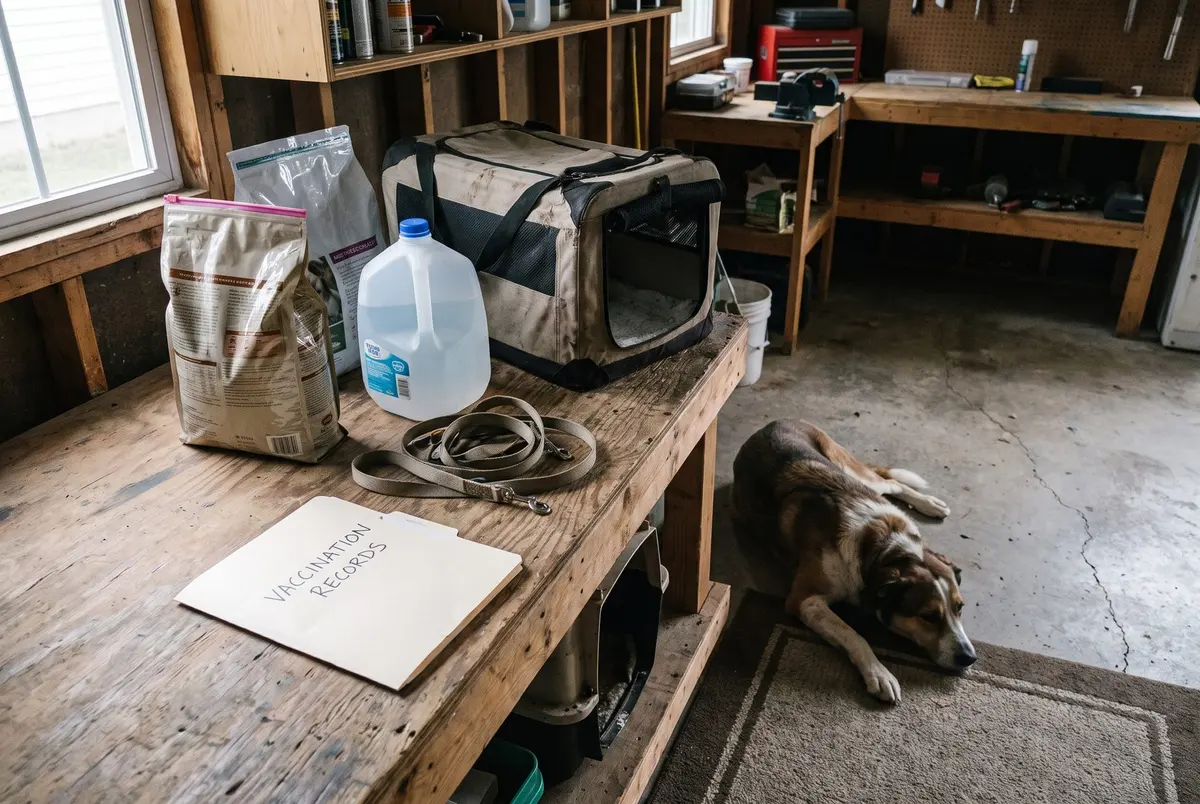
Build the pet module into your household's go-bag, one set per animal. This checklist combines the book's list with the CDC's pet disaster kit.
- Two weeks of food in an airtight, waterproof container, plus feeding instructions.
- Two weeks of water (see the math below) and non-spill bowls.
- Two weeks of any medications, with dosing instructions, and a month of flea, tick and heartworm preventative.
- A leash, collar with ID tag and harness, and a carrier sized for the animal, with a towel or blanket.
- Litter and a litter box for cats.
- Copies of vaccination and vet records, including the rabies certificate, in a waterproof sleeve.
- A recent photo of each animal with the family. Ready.gov notes it documents ownership if you are separated.
- Microchip number, your vet's phone number and a boarding contact.
- Cleanup supplies: plastic bags, paper towels, disinfectant.
- A pet first aid kit, or a few pet items added to the household one from our home first aid kit list.
The kit belongs with the human one. Our 72-hour kit checklist shows where the pet module sits in it.
How much water does a dog need per day?
A common veterinary rule of thumb, cited by the American Kennel Club, is that adult dogs need about one ounce of water per pound of body weight per day. Hot weather, exercise and dry food push that number up.
The book plans storage more generously: roughly half a gallon to one gallon per dog per day, added to the household's water table. That covers a medium or large dog with room for heat, spills and rinsing bowls; for a small dog the ounce rule is closer to real drinking needs.
| Dog's weight | Drinking water per day (1 oz per lb) | Two weeks of drinking water |
|---|---|---|
| 10 lb | 10 oz | About 1.1 gallons |
| 30 lb | 30 oz | About 3.3 gallons |
| 60 lb | 60 oz | About 6.6 gallons |
| 90 lb | 90 oz | About 9.8 gallons |
At the book's storage figure, two weeks for one dog is 7 to 14 gallons. Add it to the people math in our guide to how much water per person per day, and store it in the same rotated containers.
Evacuating with pets
An animal that has never been in its carrier will not get into it calmly with sirens outside. The book's rule is carrier discipline: every animal that might need to move has a carrier or halter it already tolerates.
- Leave the carrier out where the animal can explore it, and feed treats inside it.
- Assign a pet officer, one person whose job is the animals during an event. The book says children are good at this role.
- Practice a calm load-up once a year as part of the household drill: animals in carriers, kit in the car, timed.
- Keep ID tags and microchip registration current with your phone number and address, as Ready.gov advises.
The CDC adds a hard rule: never leave a pet chained outdoors when you evacuate.
Where will your pet stay? Shelters and pet-friendly fallbacks
Many public emergency shelters and hotels do not allow pets inside. That is the reason to decide on a place now, while phones work and you have time to call around.
Write a short fallback list and keep it in your emergency binder:
- A relative or friend outside your area who will take the animals.
- A boarding kennel or your vet's office, with the number.
- Two or three pet-friendly motels along your evacuation routes.
- Your local animal shelter or animal control office, which can tell you what is planned locally.
Pets during a power outage or shelter in place
Most emergencies do not mean leaving home. More often the household stays put through an outage or a storm, and the animals stay with it.
- Bring every pet inside before the weather turns. Ready.gov's shelter guidance says to bring your family and pets inside.
- Keep animals in the same warm room as the family during a winter outage, with their bedding and water bowl.
- Check water bowls often in a cold house, since they can freeze.
- If officials order a shelter in place, pets go into the sealed room too. Our shelter in place kit guide covers the room.
The book adds a quieter benefit: animals are often the household's earliest warning system, and for children they are a built-in reason the drill matters.
Livestock and backyard animals
Larger animals need far more water than pets, and the book says their water is the first thing to plan. Write down the daily water need per head on a livestock page in the binder.
Then size water storage to the herd, keep a week of feed under cover, and set up a manual way to get water to the animals when the pump has no power. The book's elevated tank, covered in our guide to a gravity-fed water system, is built for exactly that job.
Add a backup for containment, such as spare fencing or a secure pen, because storms take down fences as often as power lines.
Frequently asked questions
What should be in a pet emergency kit?
Pack two weeks of food in a waterproof container, two weeks of water, two weeks of medications, bowls, a leash, collar with ID, a carrier, litter for cats, copies of vaccination and vet records, a recent photo of you with your pet, microchip details, your vet's number, and cleanup supplies. The CDC recommends the two-week supply of food, water and medicine.
How much water does a dog need per day?
A common rule of thumb cited by the American Kennel Club is about one ounce of water per pound of body weight per day for adult dogs, more in heat or after exercise. For emergency storage, The Off-Grid Handbook budgets roughly half a gallon to a gallon per dog per day, which leaves margin for a medium or large dog.
Can I bring my pet to an emergency shelter?
Often not. Ready.gov notes that many public shelters and hotels do not allow pets inside, so identify a pet-friendly fallback before you need it: a relative outside the area, a boarding kennel or vet, pet-friendly motels on your route, or your local animal shelter. Keep the list with your emergency papers.
What should I do with my pet if I have to evacuate?
Take your pet with you. Ready.gov says that if officials ask you to evacuate, your pet should evacuate too, and the CDC says never to leave a pet chained outdoors. Use a carrier the animal already accepts, bring its kit and records, and head to the pet-friendly place you chose in advance.
Sources
- The Off-Grid Handbook, Garrett Dalton, Project 74
- Ready.gov: Prepare Your Pets for Disasters
- CDC: Build a Pet Disaster Preparedness Kit
- American Kennel Club: Is Your Puppy Drinking Enough Water?
Safety guidance changes. Check the agency pages above for the current version, and follow your local code and manufacturer instructions.