How much water per person per day in an emergency, and how to store it
The number is smaller than people fear, and the container choice matters more than the size of the stockpile.
In this article
Plan on one gallon of water per person per day, for drinking and sanitation. CDC recommends storing at least a three-day supply and, if you can, a two-week supply. For a household of four, that is 12 gallons for three days and 56 gallons for two weeks.
Store more for pets, for hot climates, and for anyone pregnant or sick. Then keep it fresh: CDC and Ready.gov both say to replace water you bottled yourself every six months.
Emergency water per person: the numbers
The Off-Grid Handbook's threshold table, built on the same one-gallon baseline, gives these totals:
| Household | 3-day minimum | 2-week target |
|---|---|---|
| 1 person | 3 gallons | 14 gallons |
| 2 people | 6 gallons | 28 gallons |
| 4 people | 12 gallons | 56 gallons |
| 6 people | 18 gallons | 84 gallons |
A gallon a day is a working minimum, not a comfortable allowance. It covers drinking, a little cooking and basic hygiene, so plan to flush toilets with other water, such as a filled bathtub or the used wash water in a greywater loop.
For a quick total that includes pets and other supplies, use the emergency supply calculator. A grab-and-go bag needs its own three days of water, covered in the 72-hour kit checklist.
Best water storage containers
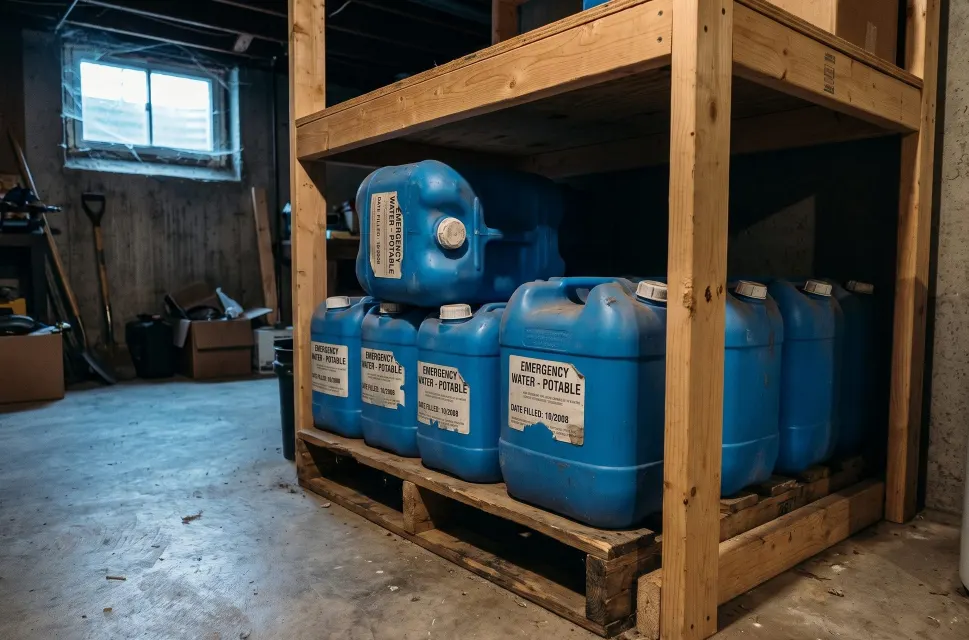
CDC recommends food-grade containers with tight-closing tops, made of durable, unbreakable material rather than glass. Never reuse a container that held toxic chemicals, such as bleach or pesticides.
The book is direct about size: stacked 5-gallon containers beat one big drum for most homes. They fit closets, one person can carry them, and a single failed container costs you five gallons, not fifty-five.
Weight is the hidden reason. Water weighs about 8.3 pounds per gallon, so a 5-gallon container is around 42 pounds and a full 55-gallon drum is several hundred pounds that cannot be moved once filled.
| Container | Good for | Watch out for |
|---|---|---|
| 5 to 7 gallon stackable jugs | Most homes; easy to carry, rotate and spread around the house | Buy food-grade, with tight caps |
| Sealed store-bought bottled water | Zero prep; long shelf life unopened | Keep sealed, cool and dark |
| 55-gallon drum | Large reserve in one place | Needs a pump or siphon; one leak loses it all |
| Glass jars or old chemical jugs | Not recommended | Breakage; chemical residue |
How to store water for an emergency, long term
Project 5 of the book sets up a dated, rotating store in about an hour, for $40 to $100 in containers and supplies, per the book. The steps, with CDC's container instructions:
- Calculate your number from the table above and buy containers to match.
- Clean each container. Wash it with soap and rinse it. Then sanitize it with 1 teaspoon of unscented liquid household bleach (5 to 9 percent sodium hypochlorite) in 1 quart of water: cover, shake well, wait at least 30 seconds, pour it out, and let the container air-dry.
- Fill from the tap. Municipal tap water stores as it comes. The book says well water should be treated before storage.
- Label every container with the fill date.
- Store it right. CDC says keep containers cool (50 to 70°F), out of direct sunlight, and away from toxic substances such as gasoline and pesticides. The book adds: off bare concrete.
Keep a bottle of plain, unscented bleach with the water so you can disinfect it later if needed. The book recommends dating the bottle and replacing it yearly, because bleach loses strength; the drop counts are in how to purify water with bleach.
Where to keep stored water at home
Choose a cool, dark spot inside the living space: a closet floor, under a bed, or a basement shelf off the slab. The garage is usually the wrong place, because it is where most homes keep gasoline, pesticides and paint, and it swings hot and cold with the seasons.
Spread the containers out if you can. A few jugs in two or three places means one leak, one flooded basement or one blocked room cannot take the whole supply.
Remember the water you already have, too. EPA lists melting ice cubes and draining the water heater or pipes as emergency sources inside the home. If you drain the water heater, shut off its electricity or gas first and let the water cool.
How often to rotate stored water
Replace water you filled yourself every six months, the interval given by both CDC and Ready.gov. Ready.gov's advice for commercially bottled water is to keep it sealed in its original container in a cool, dark place.
The book turns rotation into a habit with no waste: every six months, water the garden with the old supply, refill the containers, and write the new date. Tie it to two dates you already remember, such as the spring and fall clock changes.
If a container leaks, smells off or has been opened, empty it, clean it and refill it on the spot rather than waiting for the next rotation.
Where stored water fits in a bigger plan
Stored water is the buffer that makes every other water project optional in the first 48 hours. If the power goes out, it is what you drink while the tap water is uncertain; our guide to water during a power outage covers what to fill in the first minutes.
For longer events, rainwater adds volume for washing and flushing, and with filtering and disinfection, for drinking. A chain of three barrels holds 165 gallons, as described in how to connect rain barrels together.
Frequently asked questions
How much water per person per day in an emergency?
One gallon per person per day, for drinking and basic sanitation. CDC recommends at least a three-day supply and, if possible, a two-week supply. Store extra for pets, hot weather, and anyone who is pregnant or sick. A household of four needs 12 gallons for three days and 56 gallons for two weeks.
How long can you store tap water for an emergency?
CDC and Ready.gov say to replace water you have stored yourself every six months. Use clean, food-grade containers, fill them from a treated municipal supply, label each one with the date, and keep them cool, dark and away from chemicals. When the six months are up, use the old water on the garden and refill.
What are the best containers for storing emergency water?
Food-grade containers with tight caps, made of sturdy material that will not break, not glass. Stackable 5-to-7-gallon jugs work best for most homes because one person can carry them and a single leak loses only a few gallons. Never reuse jugs that held bleach, pesticides or other chemicals.
How much water do you need for a 72-hour kit?
At least three gallons per person, based on the one-gallon-per-day baseline, plus extra for pets. Smaller sealed bottles or a few 1-gallon jugs are easier to carry than one large container. Rotate self-filled water every six months, and keep commercially bottled water sealed until you need it.
Sources
- The Off-Grid Handbook, Garrett Dalton, Project 5
- CDC: How to Create and Store an Emergency Water Supply
- Ready.gov: Water
- EPA: Emergency Disinfection of Drinking Water
Safety guidance changes. Check the agency pages above for the current version, and follow your local code and manufacturer instructions.