How to winterize a rain barrel before the first hard freeze
Ice needs somewhere to go. One fall afternoon decides whether your barrels see spring.
In this article
To winterize a rain barrel, empty it before your area's first hard freeze, open the spigot so trapped water can't push against the fittings, disconnect it from the downspout, and store it upside down or indoors until the last hard freeze of spring has passed. Water expands about 9% when it freezes, which is enough to split a full plastic barrel.
Project 12 of The Off-Grid Handbook, Winterizing the Water System, handles the whole outdoor water setup in one afternoon: about 2 hours and $30 in materials, per the book. Its warning is the reason to put it on the calendar: ice bursts barrels, splits spigots, and deletes a season of preparation overnight.
Can you leave a rain barrel outside in winter?
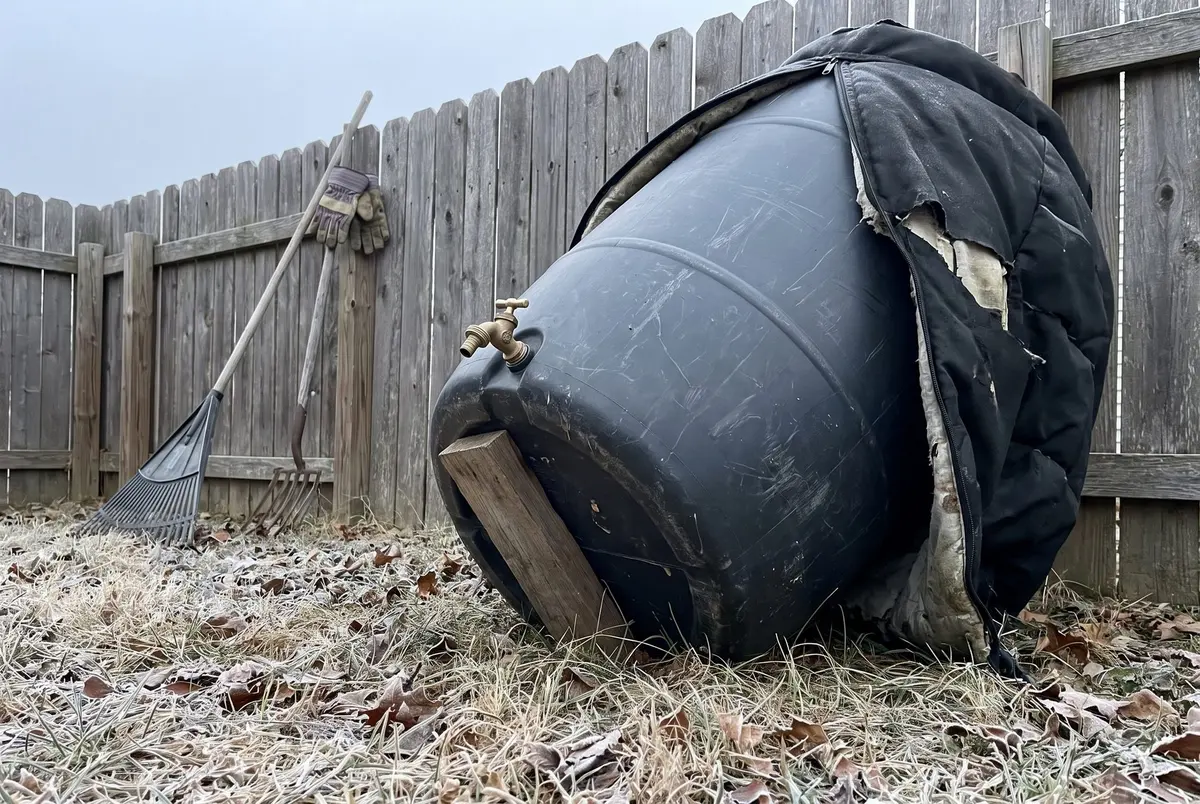
Yes, if it is empty. Penn State Extension notes that it is very common to leave barrels outside all winter, turned upside down so they don't fill with rain or snowmelt, and weighted or strapped so the wind can't move them.
What can't stay out is the water. A full barrel is the one that cracks, and ice that forms inside can stay frozen for weeks, leaving you with a barrel you can neither drain nor use.
Empty or a quarter full?
The book allows draining "to one-quarter or empty, per your climate," on the logic that ice in a partly full barrel has room to expand. Its field note: a quarter-full barrel survives most freezes; a full one splits.
Penn State Extension's advice is simpler: empty and disconnect before the first hard freeze. Where hard freezes are normal, follow the extension rule and drain it completely, because a dry barrel can't crack from ice at all.
Draining rain barrels: step by step
- Find your date. Look up the median first hard freeze date for your area; your county extension office can tell you. Finish before it.
- Use the water. Drain it through the spigot onto the garden or a bed, then tip the barrel on its side and upside down to get the last gallons out.
- Open the spigots and low points and leave them open, so trapped water cannot expand against the fittings.
- Disconnect the diverter and reroute the downspout to its winter path, so roof water runs away from the house instead of into the barrel.
- Remove hoses and screens, drain them, and store them in a shed or garage. Cold hoses split easily.
- Store the barrel indoors, or upside down outside and secured against wind.
- Write down the dates: freeze-down in fall, recommission in spring.
If your barrels are linked, every barrel in the chain and every connector hose needs draining, not just the one with the spigot. Our guide to connecting rain barrels shows where the low points are, and the first-flush diverter guide covers the part that holds water in its chamber.
What if the barrel has already frozen?
Don't hammer or chip at the ice, and don't force a frozen spigot. Let the barrel thaw on its own, then drain it and check the shell and the spigot fitting for cracks before you put it away.
A split shell means a new barrel. A barrel that held chemicals is never the replacement; use food-grade only, as in the original build.
Freeze protection for the rest of the water system
The barrel is the obvious casualty, but fittings and short lines often fail first. The book wraps whatever has to stay outside:
- Insulating wrap on exposed spigots
- Foam pipe sleeves on any hard lines
- Plywood or lid covers over what can't be moved
The house side follows the same logic. The American Red Cross advises removing, draining and storing outdoor hoses, closing the indoor valves that supply outdoor hose bibs, then opening the outside bibs and leaving them open so any water left in the pipe can expand without breaking it.
The Red Cross also recommends draining sprinkler supply lines following the manufacturer's or installer's directions, and warns against putting antifreeze in them unless directed. For pipes inside the house during a winter outage, see our guide to keeping pipes from freezing in a power outage.
Fall checklist
- Barrels empty, spigots open
- Diverters disconnected, downspouts rerouted
- Hoses and screens drained and stored
- Indoor shutoffs to hose bibs closed, outdoor bibs open
- Exposed spigots wrapped, hard lines sleeved
- Barrels stored inside or upside down and secured
- Dates written in the household calendar
Where does your water come from in winter?
A drained barrel means no rain storage until spring, so the winter load moves indoors. In the book, the indoor containers of Project 5 carry it: stacked, dated 5-gallon containers stored cool, dark and off bare concrete.
That reserve matters most in winter storms, when outages and frozen lines arrive together. Size it with our guide to how much water per person per day, and add it to your winter storm preparedness checklist.
When to reconnect the rain barrel in spring
Penn State Extension recommends waiting until the median last hard freeze date for your area has passed before hooking the barrel back up. A late cold snap on a freshly filled barrel undoes the whole job.
Before you reconnect, rinse the barrel, check the spigot washers and the inlet screen, and clean the gutters that feed it. Then reinstall the diverter, close the spigot, and let the first spring rain fill it.
The book files both dates, freeze-down and recommission, in its seasonal build order, so the job comes around every year without anyone having to remember it. If you are setting up a barrel for the first time, start with how to set up a rain barrel.
Frequently asked questions
When should I drain my rain barrel for winter?
Before the first hard freeze in your area. Penn State Extension recommends emptying and disconnecting the barrel before the median first hard freeze date for your locality. Your county extension office can give you that date. Drain it, open the spigot and store it upside down or indoors.
Will a rain barrel crack if it freezes?
A full one often will. Water expands by about 9% when it freezes, with enough force to crack plastic or wooden barrels, especially when they are full or nearly full. An empty barrel has nothing to freeze, which is why extension services recommend draining it completely before winter.
Can I leave my rain barrel outside in winter?
Yes, once it is empty. Turn it upside down so rain and snowmelt can't collect inside, and weight or strap it so the wind can't move it. Remove and store hoses and screens indoors. If you have room in a garage or shed, storing it inside protects it better.
Should I leave the rain barrel spigot open in winter?
Yes. Open spigots and low points let any water left in the fittings drain or expand without cracking them. The same rule applies to outdoor hose bibs on the house: close the indoor supply valve, then open the outside bib and leave it open, as the American Red Cross advises.
When can I reconnect my rain barrel in spring?
After the median last hard freeze date for your area has passed, per Penn State Extension. Rinse the barrel, check the spigot washers and screen, clean the gutters, reinstall the diverter and close the spigot. Reconnecting too early risks a late freeze cracking a freshly filled barrel.
Sources
- The Off-Grid Handbook, Garrett Dalton, Project 12
- Penn State Extension: Rain Barrel Winter Maintenance, Don't Forget to Disconnect
- American Red Cross: Preventing and Thawing Frozen Pipes
Safety guidance changes. Check the agency pages above for the current version, and follow your local code and manufacturer instructions.