How to test well water: what to test, how often, and how to keep a log
You can't see bacteria, lead or nitrates. A test turns "probably fine" into a number, and a log tells you when the number moves.
In this article
To test well water properly, send a sample to a state-certified laboratory at least once a year for total coliform bacteria, nitrates, total dissolved solids and pH, the baseline both the EPA and the CDC recommend. Use home test strips in between for quick screening. Test again after flooding, well repairs, or any change in taste, color or smell.
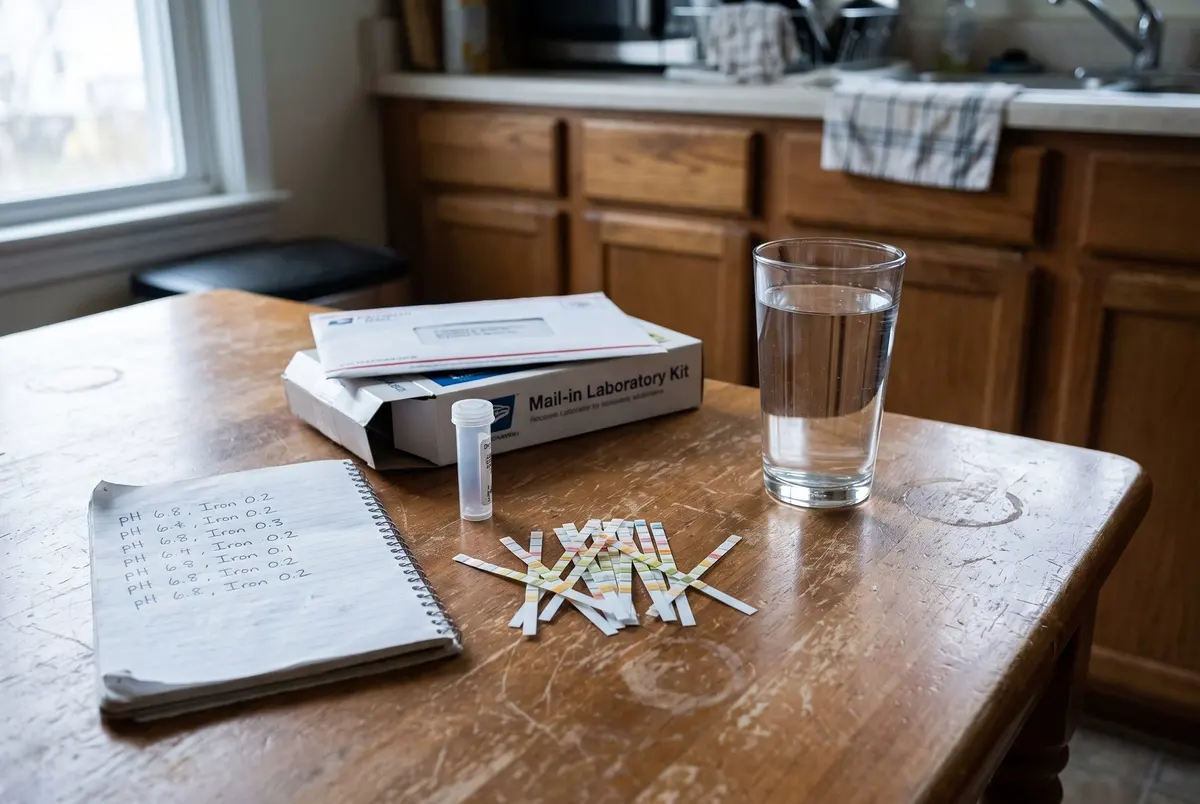
Project 13 of The Off-Grid Handbook, Water Test & Log, turns this into a 30-minute habit for about $25 in materials, per the book: test strips, a mail-in lab kit and a dedicated log page in the household binder. Its safety note is the reason to bother: no filter replaces knowing what is in your water.
When to test drinking water
Private wells are the owner's responsibility; no utility tests them for you. The CDC and EPA list the times to test:
- Every year, for coliform bacteria, nitrates, total dissolved solids and pH
- After flooding or land disturbance near the well
- After repairing or replacing any part of the well system
- When the water's taste, color or smell changes
- When someone in the home becomes pregnant, or a child comes to live with you
- When you hear of well water problems in your area
The EPA adds that homes with small children, elderly adults, or pregnant or nursing members should consider testing more often than once a year. The book adds one more trigger: nearby construction.
What should you test well water for?
The four annual tests cover the most common problems. Local conditions decide what else belongs on the list.
| Test | What it tells you |
|---|---|
| Total coliform bacteria | An indicator that surface water or waste may be reaching the well |
| Nitrates | Fertilizer, manure or septic influence; the EPA drinking water limit is 10 mg/L (as nitrogen) |
| Total dissolved solids | The overall load of dissolved minerals and salts; a jump flags something new |
| pH | How acidic or alkaline the water is, which affects plumbing and taste |
Nitrates matter most for babies. The EPA warns that infants under six months who drink water above the nitrate limit can become seriously ill, with shortness of breath and blue-baby syndrome.
The EPA also gives examples of local add-ons: bacteria near livestock operations, radon in radon-rich regions, volatile organic compounds near gas stations, and metals near mining. Your local health department can tell you which apply where you live.
Home water test kit or certified lab?
Home strips covering bacteria, nitrates, pH, hardness and chlorine are cheap and fast, and they are good at spotting change. But in the book's words they are screening tools, not certifications.
For drinking-water decisions that matter, and always for wells and homes with infants, use a state-certified laboratory. Your local health or environmental department keeps a list of certified labs, and the EPA notes that some health departments test for free.
Follow the lab's own sampling instructions exactly, including the bottle they supply and any shipping deadline. A careless sample gives a result that means nothing.
How to test your water, step by step
- Take a baseline today, while everything works. Record every value.
- Test each stage of your chain once: the source, after the filter, and after disinfection. Now you know what each stage actually does.
- Send a sample to a certified lab every year for bacteria, nitrates, total dissolved solids and pH.
- Retest after floods, nearby construction, well work, or any change in taste, odor or color.
- Log everything with dates.
Step two is the one most people skip. If you run a bucket filter or a biosand filter, a before-and-after test shows what it really removes, and what it doesn't.
A clean result before treatment doesn't make treatment pointless in an emergency. After a flood, follow local health guidance and disinfect as needed; our guide to purifying water with bleach has the dosing chart.
What to do if a result comes back high
Your lab report should show whether each result is above the EPA's national drinking water standards. If anything is, call your local health department before you change anything; it can tell you what the result means for your well and what the next step should be.
Until you have that advice, use another source of drinking water or treat it. Boiling and bleach deal with germs, but they do nothing for nitrates, metals or other chemicals, so a high chemical result needs a different answer.
After any fix, whether a well repair or new treatment equipment, retest and log the result. That second number is the proof the fix worked.
Keeping a water testing log
A single result is a snapshot. The log is what catches slow drift, such as nitrates creeping up after spring fertilizing or a pH that shifts after a repair. As the book puts it, trends catch problems single tests miss.
A simple log page needs only a few columns:
- Date and who took the sample
- Sample point: well, after filter, after disinfection, rain tank
- Test type: home strip or certified lab
- Every value, written out
- Notes: heavy rain, flooding, repairs, changes in taste or smell
Keep the page in the household binder with the lab reports clipped behind it. Our emergency binder checklist shows where it fits.
Testing rainwater and other sources
Wells aren't the only source that needs numbers. The CDC says rainwater is not necessarily safe to drink without first removing germs and chemicals, and recommends testing it regularly if you drink, cook or bathe with it.
The book applies the same rule to its rain-to-tap line: after a full storm cycle, the tap output is tested before anyone drinks a drop. See our guide to the gravity fed water system for how that line is built.
Frequently asked questions
How often should well water be tested?
At least once a year, according to the CDC and EPA, for total coliform bacteria, nitrates, total dissolved solids and pH. Test more often after flooding, well repairs, or changes in taste, color or smell, and when someone becomes pregnant or a child joins the household. Use a state-certified laboratory.
What should I test my well water for?
The annual baseline is total coliform bacteria, nitrates, total dissolved solids and pH. Add tests based on local conditions: bacteria near livestock, radon in radon-rich areas, volatile organic compounds near gas stations, and metals near mining. Your local health department can tell you which apply to your area.
Are home water test kits accurate enough?
Home strips are useful for screening and for noticing change between lab tests, but they are not certifications. For drinking-water decisions that matter, and always for private wells and homes with infants, The Off-Grid Handbook and the CDC point to a state-certified laboratory. Keep the strips for quick checks and trends.
Where can I get my well water tested?
Use a state-certified laboratory. Your local health or environmental department can give you a list of certified labs in your area, and the EPA notes that some health departments offer free testing. The lab supplies the sample bottle and instructions; follow them exactly, including any shipping deadline.
Should I test my well after a flood?
Yes. Flooding and land disturbance near the well are on both the CDC and EPA lists of reasons to test beyond the annual check. Until results come back, follow local health department advice and treat drinking water by boiling or disinfection. Record the flood and the results in your log.
Sources
- The Off-Grid Handbook, Garrett Dalton, Project 13
- EPA: Protect Your Home's Water (Private Wells)
- CDC: Guidelines for Testing Well Water
- EPA: National Primary Drinking Water Regulations
- CDC: Collecting Rainwater and Your Health
Safety guidance changes. Check the agency pages above for the current version, and follow your local code and manufacturer instructions.