What foods can be water bath canned? The high-acid list, and the foods that need acid added
The boiling-water canner handles a long list of foods, as long as each one is acidic enough. Here is the list, the borderline cases, and the foods that never belong in it.
In this article
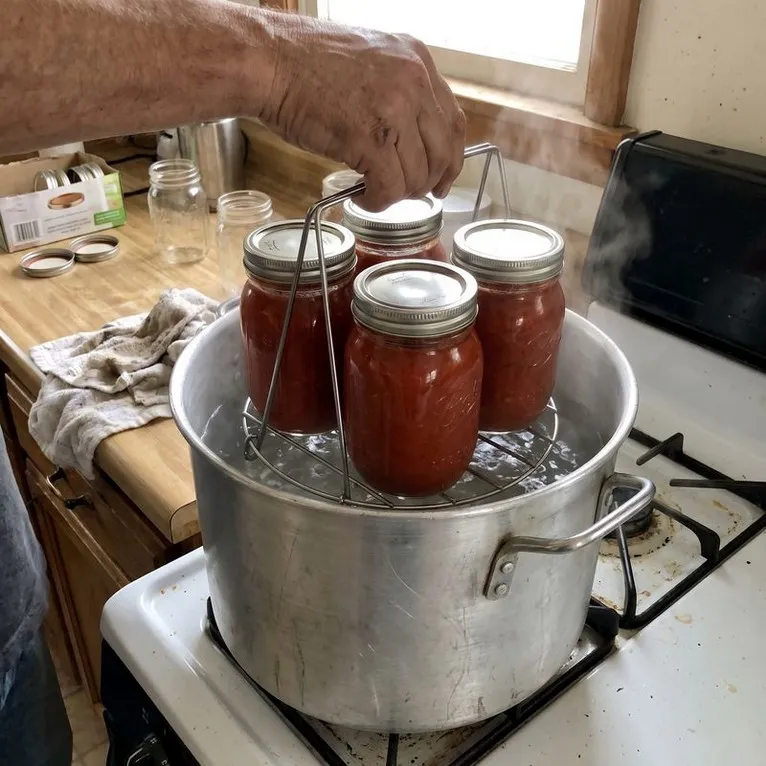
What foods can be water bath canned? Acid foods with a pH of 4.6 or lower: fruits and fruit juices, jams, jellies, marmalades and fruit butters, pickles and relishes made with vinegar, sauerkraut, and tested salsas. Tomatoes, figs and Asian pears also qualify once you add the bottled lemon juice or citric acid the tested recipe calls for. Plain vegetables, beans, meat, poultry, fish and soups are low-acid and need a pressure canner.
The Off-Grid Handbook keeps Project 31 to that list. Step 1 reads: high-acid only in a water bath, fruits, jams, jellies, pickles and tomatoes with the acid the recipe specifies. Nothing else.
What foods can be water bath canned: the list
Every item below needs a tested recipe from the National Center for Home Food Preservation (NCHFP) or the USDA, followed exactly.
| Group | Examples with tested recipes | Note |
|---|---|---|
| Fruits | Apples, applesauce, peaches, pears, cherries, berries, plums, apricots | Naturally acid |
| Fruit juices | Apple, grape | Naturally acid |
| Sweet spreads | Jams, jellies, marmalades, fruit butters | Follow the pectin and sugar directions |
| Pickles and relishes | Cucumber pickles, pickled beets, relishes | Acid comes from 5% vinegar |
| Fermented | Sauerkraut | Use a tested canning process |
| Salsas | Tested tomato, tomatillo and fruit salsas | Do not change the proportions |
| Acidified foods | Tomatoes, figs, Asian pears | Lemon juice or citric acid required |
High acid foods for canning: why the line is pH 4.6
The concern is botulism. NCHFP explains that acid foods contain enough acid to block the growth of Clostridium botulinum, or to destroy it more quickly when heated. Low-acid foods do not, and the spores survive the 212°F of a boiling-water canner.
NCHFP's definitions are short. Acid foods include fruits, pickles, sauerkraut, jams, jellies, marmalades and fruit butters. Low-acid foods include red meats, seafood, poultry, milk and all fresh vegetables except most tomatoes. Mixtures of the two are usually low-acid unless a tested recipe adds enough lemon juice, citric acid or vinegar. The full comparison is in pressure canning vs water bath.
Foods that need acid added
A few foods sit right on the line, so tested recipes add acid to every jar:
- Tomatoes. NCHFP says some tomatoes have a pH slightly above 4.6. Add 2 tablespoons of bottled lemon juice or 1/2 teaspoon of citric acid per quart, or 1 tablespoon or 1/4 teaspoon per pint. Four tablespoons of 5% vinegar per quart also works but may change the flavor. Do not can tomatoes from dead or frost-killed vines.
- Figs. The same amounts of bottled lemon juice or citric acid as tomatoes.
- Asian pears. 1 tablespoon of bottled lemon juice per pint or 2 per quart, per NCHFP.
Use bottled lemon juice, not fresh. The Handbook lists it alongside 5% vinegar in Project 31's materials because its acidity is standardized.
Can you can without a pressure canner?
Yes, but only acid and properly acidified foods. A boiling-water canner, or a deep pot with a rack, handles everything in the table above. For low-acid foods there is no safe shortcut. NCHFP says processing them safely in boiling water would take 7 to 11 hours, and no tested home recipe does that.
Without a pressure canner, preserve low-acid foods another way:
- Pickle them with a tested recipe, which makes them acid foods.
- Dry them. See dehydrating food for beginners.
- Ferment them, as in how to make sauerkraut, or store roots in a cool root cellar.
- Freeze them, if the power is reliable.
Atmospheric steam canners are also acceptable for acid foods under NCHFP's conditions, with a processing time of 45 minutes or less including any altitude adjustment. Oven canning, open-kettle canning and dishwasher processing are never safe substitutes.
Foods that never go in a water bath
- Plain vegetables: green beans, corn, carrots, peas, beets, potatoes
- Dry beans and peas
- Meat, poultry and fish
- Soups, stocks and broths
- Tomatoes without added acid
Some foods have no tested home canning method at all. NCHFP says its fruit puree directions should not be used for bananas, dates, figs, Asian pears, tomatoes, melons, papaya, persimmons, ripe mango or coconut, because no home canning recommendations exist for purees of these. Freeze those instead. Pumpkin and winter squash are a related case: they are low-acid, and the tested pressure recipe is for cubes, not mashed or pureed squash. For storing whole squash without canning, see how to store winter squash.
How to tell a tested recipe from a risky one
Being on the list is not enough if the recipe is wrong. A tested recipe from NCHFP, the USDA Complete Guide to Home Canning or a university extension service gives you all of these:
- The canner type, and the jar size the time was tested for
- The headspace, in fractions of an inch
- Hot pack or raw pack directions
- A processing time, with a column for your elevation
- The exact amount of any lemon juice, citric acid or vinegar
Be wary of a recipe that skips processing entirely, tells you to turn jars upside down to seal them, or uses an oven. NCHFP lists inverting jars after processing as a cause of failed seals, and oven canning as a method that does not prevent spoilage. Family recipe cards are worth keeping for flavor ideas; match them to a tested recipe for the canning steps.
Using the list safely
Being on the list is only the first test. The Handbook's Project 31 steps cover the rest: work from a tested recipe exactly, including jar size, headspace, processing time and altitude adjustment; fill hot jars with hot food; wipe rims; keep jars fully submerged at a rolling boil for the full time; then cool them 12 to 24 hours untouched and check every lid.
The book prices the station at about $50 and 30 minutes of active work per batch. The full method is in water bath canning for beginners, and the gear is in the canning supplies list. Above 1,000 feet, read canning at high altitude. If a lid fails, see why canning jars don't seal.
Frequently asked questions
What foods can be water bath canned?
Acid foods with a pH of 4.6 or lower: fruits and fruit juices, jams, jellies, marmalades and fruit butters, pickles and relishes made with vinegar, sauerkraut and tested salsas. Tomatoes, figs and Asian pears qualify once you add the bottled lemon juice or citric acid the tested recipe calls for.
Can you water bath can green beans?
No. Green beans are a low-acid vegetable and must be pressure canned. NCHFP says there is no safe option for processing green beans in a boiling-water canner. Pickled green beans made from a tested recipe with enough vinegar are a different product and can be water bath canned.
Can you can without a pressure canner?
Only acid and properly acidified foods, such as fruits, jams, pickles and tomatoes with added acid. Low-acid foods such as vegetables, beans and meat need a pressure canner. Without one, preserve them by tested pickling, drying, fermenting or freezing instead.
Do you have to add lemon juice when canning tomatoes?
Yes. Some tomatoes have a pH slightly above 4.6. NCHFP says to add 2 tablespoons of bottled lemon juice or 1/2 teaspoon of citric acid per quart, or half that per pint, even when a recipe offers a pressure canning option.
Sources
- The Off-Grid Handbook, Garrett Dalton, Project 31
- NCHFP: Ensuring Safe Canned Foods
- NCHFP: Canning Tomatoes, Introduction
- NCHFP: Pumpkins and Winter Squash, Cubed
- NCHFP: Asian Pears
- NCHFP: Fruit Purees
- NCHFP: Using Atmospheric Steam Canners
Safety guidance changes. Check the agency pages above for the current version, and follow your local code and manufacturer instructions.