How long do smoke detectors last? Ten years, and how to tell
A smoke alarm can sit on the ceiling looking fine long after it should have been replaced. The date on the back is the only way to know.
In this article
How long do smoke detectors last? Ten years from the date of manufacture. The U.S. Fire Administration (USFA) and NFPA both say to replace the entire smoke alarm 10 years after the date it was made, even if it still beeps when you press the button. Replace it sooner if it fails a test with a fresh battery or keeps chirping after a battery change.
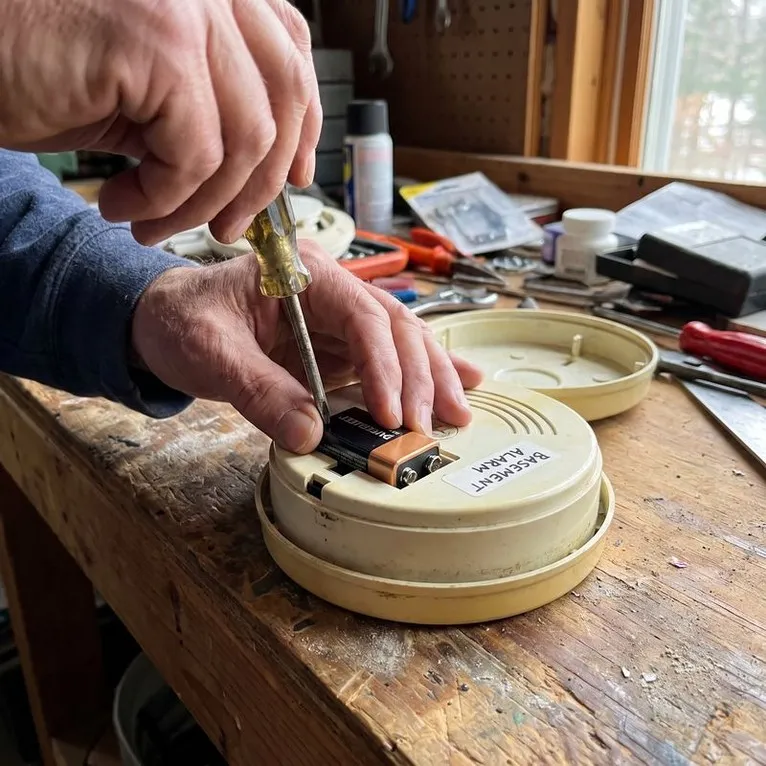
Changing the battery is not the same as replacing the alarm. The old, yellowed unit in the photo above may still take a new battery, but if it is past its date, the whole alarm goes.
How long do smoke detectors last, and how to find the date
Every listed smoke alarm has a date printed on it. To find it:
- Twist the alarm off its mounting plate, following the instructions for your model.
- Look on the back for a label marked "date of manufacture," "manufactured on" or "replace by."
- Add 10 years to the manufacture date, or use the replace-by date if one is printed.
- Write that year on the base with a marker so you can see it next time.
If you can't find a date at all, treat the alarm as old and replace it. A missing date usually means it was installed long ago.
The Off-Grid Handbook builds this into Project 52, its CO and smoke alarm grid: test monthly by button, and replace units at their stamped expiry, typically 10 years. The book calls the grid the highest life-safety-per-dollar project it contains, at about an hour of work and roughly $90.
Working at the ceiling
Use a sturdy step ladder on a level floor, keep three points of contact as the Handbook advises for any ladder work, and have someone nearby to hand things up. If ladders are hard for you, ask a family member or neighbor, or ask whether your local fire department helps with alarm checks.
When to replace smoke detectors
- At 10 years from the manufacture date, no matter how it tests.
- When it fails the monthly test and a new battery doesn't fix it. NFPA's rule: if it doesn't sound, change the battery, or replace the unit if it is over 10 years old.
- When it keeps chirping after a new battery. NFPA says that chirp means the alarm is at the end of its life.
- When a 10-year sealed alarm starts its end-of-life chirp. There is no battery to change; the whole unit is replaced.
When you replace, consider an upgrade. USFA recommends having both ionization and photoelectric alarms, or dual-sensor alarms that contain both, because each type detects different kinds of fires. NFPA and USFA both recommend interconnected alarms, so when one sounds, they all sound.
If an alarm near the kitchen keeps going off when you cook, don't take its battery out. NFPA advises keeping smoke alarms at least 10 feet from the stove, notes that photoelectric alarms are the better choice near kitchens and bathrooms, and suggests newer multi-criteria alarms, labeled as helping reduce cooking nuisance alarms, when it's time to replace.
10-year smoke detector or replaceable battery?
| Type | Battery care | Replace the alarm |
|---|---|---|
| Replaceable 9-volt or AA battery | New battery at least once a year (USFA) | 10 years from manufacture |
| 10-year sealed lithium battery | None; the battery lasts the life of the alarm | 10 years, or at the end-of-life signal |
| Hardwired with battery backup | New backup battery at least once a year (USFA) | 10 years, by a qualified electrician |
The Handbook prefers 10-year sealed-battery models, and it insists on battery backup for every alarm, because alarms must work exactly when the grid doesn't. A sealed unit removes the yearly battery chore and the temptation to borrow its battery for a flashlight in the middle of an outage.
Hardwired alarms go to an electrician
Alarms wired into the house's 120-volt circuits are a different job. USFA and NFPA both say only qualified electricians should install hardwired smoke alarms. Changing the backup battery is a household task; replacing the unit itself is the electrician's.
What the beeps and chirps mean
NFPA's guide to the sounds:
- Three loud beeps, repeating: smoke or fire. Get out, call 911 and stay out.
- A single chirp every 30 or 60 seconds: the battery is low and must be changed.
- Chirping that continues after a new battery: the alarm is at the end of its life. Replace it.
Learn your own model's sounds from its user guide. The Handbook's last step in Project 52 is to brief the whole household on what each alarm means and what to do: smoke means out by the planned routes; a CO alarm means everyone out to fresh air first, then a call for help from outside.
CO alarms have their own lifespan
Carbon monoxide alarms and combination smoke and CO units don't always follow the 10-year smoke rule. NFPA says to test CO alarms at least once a month and replace them according to the manufacturer's instructions, so check the label for the CO sensor's end-of-life date. If a CO alarm's trouble signal keeps sounding after you replace a low battery, NFPA says to call the fire department.
CO alarms belong on every level and outside sleeping areas; see CO detector placement. They matter most during outages, when generators and fuel-burning heaters come out. Read carbon monoxide poisoning symptoms and the rules in can you use a propane heater indoors before winter.
Make it a household routine
NFPA reports that roughly three out of five home fire deaths happen in homes with no smoke alarms or no working ones, and that working alarms cut the risk of dying in a home fire in half. The routine that keeps alarms working is short:
- Monthly: press the test button on every alarm.
- Yearly: replace replaceable batteries, check every manufacture date and walk the coverage. NFPA calls for alarms inside each bedroom, outside sleeping areas and on every level; see where to put smoke detectors.
- Every 10 years: replace each smoke alarm.
For anyone who is deaf or hard of hearing, USFA notes there are alarms with strobe lights and vibrating devices. Pair the alarms with a mounted extinguisher, as in the best fire extinguisher for home use, and a meeting spot outside from your family emergency communication plan.
Frequently asked questions
How long do smoke detectors last?
Ten years from the date of manufacture. USFA and NFPA both say to replace the entire smoke alarm 10 years after it was made, even if it still sounds when tested. Replace it sooner if it fails a test with a new battery or keeps chirping after a battery change.
How do I know how old my smoke detector is?
Twist the alarm off its mounting plate and look on the back for a date of manufacture or a replace-by date. Add 10 years to the manufacture date. If there is no date at all, treat the alarm as old and replace it.
Do 10-year smoke detectors really last 10 years?
They are designed to. The sealed lithium battery is meant to power the alarm for its whole service life, so there is no yearly battery change. When it reaches the end of its life, it gives an end-of-life chirp and the entire unit is replaced. Keep testing it monthly.
Why is my smoke detector chirping with a new battery?
NFPA says chirping that continues after the battery has been replaced means the alarm is at the end of its life and must be replaced. Check the manufacture date on the back. Hardwired alarms should be replaced by a qualified electrician.
Do carbon monoxide detectors expire too?
Yes. NFPA says to test CO alarms monthly and replace them according to the manufacturer's instructions. CO sensors may have a different lifespan than smoke sensors, so check the label on each CO or combination alarm for its end-of-life date.
Sources
- The Off-Grid Handbook, Garrett Dalton, Project 52
- U.S. Fire Administration: Smoke Alarms
- NFPA: Smoke Alarm Information
- NFPA: Carbon Monoxide Safety
Safety guidance changes. Check the agency pages above for the current version, and follow your local code and manufacturer instructions.