Root cellar temperature and humidity: the numbers and how to hold them
Building the cellar is a weekend. Keeping it at the right temperature and humidity is a weekly habit that takes a few minutes.
In this article
The right root cellar temperature and humidity for most root crops is 32 to 40°F with about 85 to 95% relative humidity. That is the target in Project 34 of The Off-Grid Handbook, and it matches the University of Alaska Fairbanks Cooperative Extension, which puts the optimum for most vegetables between 32 and 40°F with 80 to 95% humidity. A few crops break the rule: potatoes want the warm end of the range, and onions and winter squash want drier air.
This guide is about running a cellar once it exists. For construction, see how to build a root cellar.
Root cellar temperature and humidity chart
| Crop | Temperature | Humidity | Average storage life |
|---|---|---|---|
| Carrots | 32 to 35°F | 98 to 100% | 4 to 6 months |
| Beets | 32 to 35°F | About 95% | 1 to 3 months |
| Cabbage | 38°F | 90 to 95% | About 4 months |
| Potatoes | 40°F | 90 to 95% | 5 to 8 months |
| Onions | 32 to 40°F | 65 to 70% | 5 to 8 months |
| Winter squash | 50 to 55°F | Dry | 2 to 3 months (butternut) to 5 to 6 months (Hubbard) |
Figures are from Iowa State University Extension, with cabbage from the University of Alaska Fairbanks. The pattern is what matters: most roots want cold and very damp, onions want cold and dry, and squash wants cool and dry.
Ideal root cellar temperature
Cold slows sprouting and decay, which is why the whole cellar aims for the low end of the scale. Project 34's last step is to manage by thermometer: read it and adjust the vent dampers once a week.
Two limits frame the range. Below 32°F, stored roots can freeze and turn soft. At the other end, potatoes are the crop to watch: the University of Alaska Fairbanks says they begin to sprout above 40°F, and Iowa State says they turn sugary below it. In practice, put potatoes in the part of the cellar that holds closest to 40°F and the carrots and beets in the coldest part. Our guide to how to store potatoes covers them in detail.
Timing matters too. A cellar is at its warmest at harvest time and cools as the ground and the outside air cool, so the first weeks of fall are when the dampers need the most attention. Project 72, the Handbook's seasonal calendar, puts cellar loading in the autumn block, alongside the other work that has to be done before winter peak. Load the cold-hardy roots once the room is reliably near 40°F.
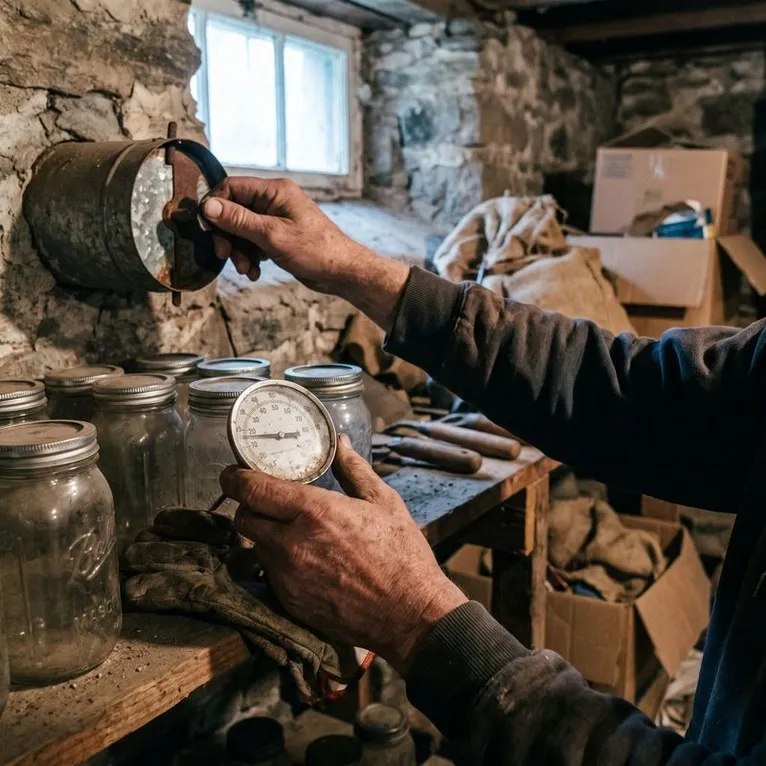
Hang the thermometer and hygrometer at shelf height in the middle of the room, away from the vents and the door, so the reading reflects where the food sits. The Handbook lists a combined thermometer and hygrometer among the materials for Project 34.
How to raise or lower root cellar humidity
Dry air is the more common problem, and it shows up as shriveled carrots and soft, wrinkled beets.
- Floor. The University of Alaska Fairbanks says the easiest way to keep moisture high is a dirt floor. On concrete or wood, it suggests several pans of water on the floor.
- Damp sand. Project 34 layers carrots and beets in damp sand in a bin or crate, which holds humidity right around the roots.
- Wrapping. UAF suggests wrapping strong-smelling crops such as cabbage and turnips individually in newspaper, which keeps them from drying out and contains the smell.
Too much moisture shows up as condensation on walls and mold on crates. UAF notes that ventilation is how excess moisture that encourages mold is exhausted. Open the exhaust damper, space the crates so air can move, and keep everything on slatted shelves, never on bare concrete.
Root cellar ventilation: two vents and two dampers
Project 34 uses two 4-inch vents with adjustable dampers: cold air in low, warm air out high. Cold air sinks and warm air rises, so the pair sets up a slow, natural flow, and the dampers let you steer it.
The principle for adjusting them is simple. Open the vents when the outside air is colder than the cellar but not far below freezing, which in fall usually means at night. Close them when it is warmer outside than in, or when a deep cold snap threatens to freeze the room. In midwinter the dampers may stay nearly shut for weeks.
The weekly check takes a few minutes: read the thermometer and hygrometer, move one damper a little, look over the crates. The book's field note sums up the payoff: zero watt-hours, decades of service.
Using the cold zone and the warm zone
Every cellar has a colder, damper bottom and a warmer, drier top, and Project 34 uses that on purpose. Its loading rules:
- Carrots and beets in damp sand, low in the room.
- Potatoes in the dark, and never beside apples.
- Onions and squash in the drier, warmer top zone.
The apple rule has a reason. Iowa State says ripening fruit gives off ethylene gas, and Utah State University Extension advises against storing fruits and vegetables together for the same reason. Keep apples in their own crates on the far side of the room.
One adjustment to the book for squash: Iowa State recommends 50 to 55°F for winter squash, which is warmer than the top shelf of most cellars. If yours stays near 40°F, a cool spare room or closet is a better home for squash and pumpkins.
Root cellar troubleshooting
| Problem | Likely cause | Fix |
|---|---|---|
| Above 40°F in fall | Vents open on warm days | Close vents by day, open them on cold nights |
| Near or below 32°F | Deep cold, intake wide open | Close the intake, check the door seal |
| Shriveled carrots or beets | Air too dry | Damp sand, pans of water on the floor |
| Condensation or mold | Too damp, poor airflow | Open the exhaust, space crates, use slatted shelves |
| Potatoes sprouting | Too warm, light, or near apples | Move them to a dark spot near 40°F, away from fruit |
No basement? A buried barrel root cellar holds the same cold, damp conditions in the ground. And if you are growing the crop, potatoes in grow bags refill the cellar every fall.
Frequently asked questions
What is the ideal humidity for a root cellar?
For most root crops, about 85 to 95% relative humidity. The University of Alaska Fairbanks gives 80 to 95% for most vegetables, and Iowa State recommends 95% or more for carrots and beets. The exceptions are onions, at 65 to 70%, and winter squash, which needs dry storage. Use a hygrometer to check, not guesswork.
What temperature is too cold for a root cellar?
Below 32°F, stored vegetables can freeze and turn soft, so close the intake vent during deep cold snaps. Potatoes are more sensitive: Iowa State says they develop a sugary, sweet taste when stored below 40°F. Keep potatoes in the warmest part of the cellar and the carrots and beets in the coldest.
How do I add humidity to a root cellar?
A dirt floor holds moisture best. On a concrete or wood floor, the University of Alaska Fairbanks suggests several pans of water. Layering carrots and beets in damp sand keeps humidity high around the roots, and wrapping cabbage and turnips in newspaper keeps them from drying out. Recheck the hygrometer after a week.
Does a root cellar need ventilation?
Yes. Ventilation controls both temperature and humidity and lets out excess moisture that causes mold. The Off-Grid Handbook's Project 34 uses two 4-inch vents with dampers, a low intake for cold air and a high exhaust for warm air. Open them on cold nights in fall and close them on warm days or in deep cold.
Sources
- The Off-Grid Handbook, Garrett Dalton, Project 34
- University of Alaska Fairbanks Cooperative Extension: Vegetable Storage in Root Cellars
- Iowa State University Extension: Storing Winter Storage Vegetables
- Utah State University Extension: Harvest and Storage of Vegetables and Fruits
- Nebraska Extension: Storing Fruits and Vegetables From the Home Garden (G1264)
Safety guidance changes. Check the agency pages above for the current version, and follow your local code and manufacturer instructions.