Generator interlock kit: what it does, what it includes and who installs it
A small metal plate on the breaker panel is what stands between a portable generator and the power lines on your street.
In this article
A generator interlock kit is a mechanical device on your main breaker panel that makes it impossible to have the main breaker and the generator breaker on at the same time. That one rule lets a portable generator feed chosen house circuits without sending power back out onto the utility lines. The kit has to match your panel, and a licensed electrician installs it.
The Off-Grid Handbook covers this in Project 25, "Generator Interface, Done Right." The book's position is short: house-circuit use exists only through a transfer switch or an interlock installed by a licensed electrician under the National Electrical Code, and there is no DIY version of this step. This guide explains what the kit is and what to ask for, not how to install it.
What is a generator interlock kit?
Purdue Extension describes it as a device added to the existing breaker panel that allows either the main breaker or a designated generator breaker to be on, but never both. You may also see it sold as a generator lockout kit. Most are a sliding or pivoting metal plate fitted to the panel cover.
When the grid is up, the plate keeps the generator breaker off. During an outage, the main breaker goes off first, and only then can the plate move to let the generator breaker on. The house is fed from one source at a time.
A typical setup includes several parts, all chosen by the electrician:
- The interlock plate, made for your panel. Purdue notes there are many configurations, so the kit must match your breaker box.
- A two-pole generator breaker added to the panel. Purdue lists 30, 60 or 100 amps depending on the size of the generator.
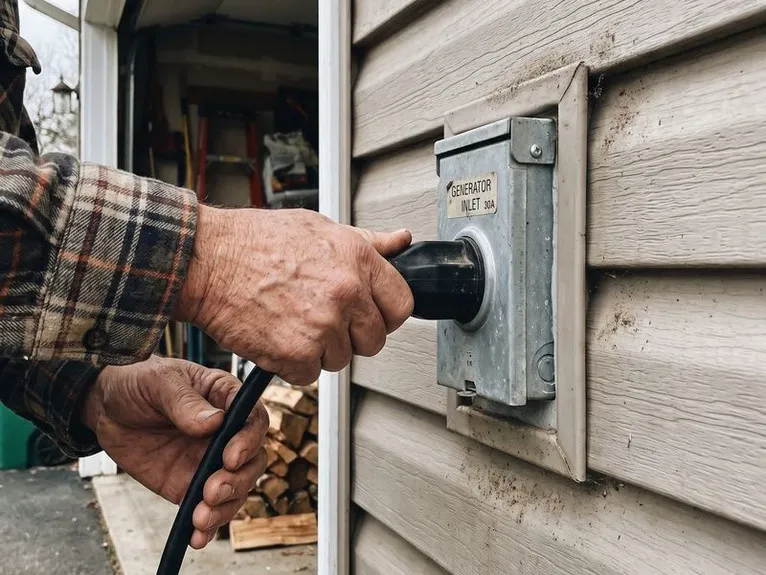
- An outdoor power inlet box on the wall of the house, where the generator cord plugs in, like the one in the photo above.
- A heavy-duty generator cord with plugs that match the generator and the inlet.
Why an interlock kit for a generator matters: backfeeding
OSHA warns that a generator connected to a building's wiring without proper transfer equipment can energize wiring systems for great distances, which puts utility workers and others in the area at risk of electrocution. Purdue adds that if both breakers are on together, the "dead" power lines can carry deadly high voltage, and the generator can be damaged when utility power comes back.
The Handbook puts it in plain terms: backfeeding through a dryer or range outlet with a double-ended cord energizes street lines and can kill a utility worker. The interlock exists so that can never happen by mistake. Our guide on plugging a generator into a wall outlet explains why that shortcut is never safe.
Do you need one, or are cords enough?
The book's default is cords. In Project 25, step 2, appliances plug straight into the generator through outdoor-rated cords sized to the load: simple, safe and code-legal. For a refrigerator, a few lamps and phone chargers, that is often all a household needs.
An interlock starts to make sense when the things you want to run are hard-wired: a furnace blower, a well pump, or a ceiling light circuit. Those cannot plug into a cord. If that is your situation, the next decision is interlock or transfer switch, which we compare in interlock vs transfer switch.
Make the list before you call anyone: the refrigerator, the furnace blower, the well pump, a few lights and an outlet for chargers. Purdue notes that a small generator may have trouble starting a water pump motor, so mention the pump early. The list tells the electrician which circuits matter and tells you how big a generator you really need.
Either way, start by sizing. The Handbook's field note is that an inverter generator sized to your measured load, not to the whole panel, runs quieter, uses less fuel and is the one the household will actually use. Our guide on what size generator runs a refrigerator shows the math.
Why a licensed electrician installs it
Installing an interlock means working inside the main panel: adding a breaker, sometimes moving others, and fitting a plate that must match the panel exactly. Purdue notes other breakers may need to be relocated. This is live-panel work under the electrical code, and many areas require a permit and an inspection. Your electrician will know the local rules.
Before you book the job, write down what you want the generator to run. Then bring these questions:
- Is this interlock kit made and listed for my exact panel?
- Which circuits can my generator carry at the same time, and which should stay off?
- Where will the inlet box go, so the generator can sit at least 20 feet from doors, windows and vents with the cord reaching it?
- Will you label the panel and walk me through the switch-over once, in daylight?
- Is a permit needed here, and who arranges the inspection?
Ask the electrician to tape a short, written switch-over sequence inside the panel door. In an outage at night, nobody should be working it out from memory.
Using it safely once it is installed
An interlock solves the backfeed problem. It does nothing about carbon monoxide. The generator still runs outdoors only, at least 20 feet from the house, with the exhaust pointed away from doors, windows and vents, per the CDC. Never in a garage, even with the door open; our guide on running a generator in the garage explains why.
- Battery-backed CO alarms on every level and outside sleeping areas, as the CPSC recommends and the Handbook requires in Project 52. See carbon monoxide detector placement.
- Run only the circuits you need. Purdue advises turning off large loads and switching on only the breakers you need when the generator is small.
- Keep the book's fuel discipline: stabilized fuel rotated yearly, stored outside the living space, and a 15-minute test run under load once a month.
Practice the switch-over once a season with the electrician's written steps, in daylight, so the first time is not during a storm. When the grid comes back, the steps run in reverse, and the interlock makes sure the two sources never overlap.
The interlock is the electrician's job. The distance rule and the alarms are yours. For the rest of the outage plan, start with how to prepare for a power outage.
Frequently asked questions
What does a generator interlock kit do?
It is a mechanical plate on the main breaker panel that lets either the main breaker or the generator breaker be on, never both. That allows a portable generator to power chosen house circuits without sending electricity back onto the utility lines, which can electrocute line workers.
Is a generator lockout kit the same as an interlock kit?
Yes, the two names are used for the same kind of device: a slide or plate on the breaker panel that locks out the main breaker while the generator breaker is on. Whatever the name, it has to be made for your specific panel and installed by a licensed electrician.
Can I install a generator interlock kit myself?
The Off-Grid Handbook is clear that there is no DIY version of this step. It means working inside the main panel, adding a breaker and fitting a plate that must match the panel, and many areas require a permit and inspection. Hire a licensed electrician.
Do I still need CO alarms with an interlock kit?
Yes. The interlock only prevents backfeeding. The generator still produces carbon monoxide, so it runs outdoors at least 20 feet from the house, and the CPSC recommends battery-operated or battery-backup CO alarms on every level and outside sleeping areas.
Sources
- The Off-Grid Handbook, Garrett Dalton, Project 25
- Purdue Extension: Generator Interlocking Circuit Breaker Kit
- OSHA Fact Sheet: Using Portable Generators Safely
- CDC: Use a Generator Safely
- CPSC: Safety Tips to Help Families Prevent Carbon Monoxide Poisoning and Fires
Safety guidance changes. Check the agency pages above for the current version, and follow your local code and manufacturer instructions.