Can you plug a generator into a wall outlet? No, and here is the safe way instead
The shortcut looks harmless from inside the house. Down the street, it can put live voltage on lines a repair crew believes are dead.
In this article
Can you plug a generator into a wall outlet? No, never safely. Running a cord from a generator into a household outlet, a dryer outlet or a range outlet is called backfeeding. It pushes power backward through your panel and out onto the utility lines, where it can electrocute line workers and neighbors, start a fire in your wiring, and damage the generator when the grid comes back. There are only two safe ways: plug appliances into the generator, or have a licensed electrician install a transfer switch or interlock.
The Off-Grid Handbook lists this as a never in Project 25, step 4: never backfeed through a dryer or range outlet with a double-ended cord, because it energizes street lines and can kill a utility worker.
Can you plug a generator into a wall outlet if the main breaker is off?
Still no. The idea that switching off the main breaker makes it safe is the most common version of this mistake. It relies on a person remembering a step, in the dark, every single time, with nothing to stop them if they forget or if someone else flips the breaker back.
That is exactly what code-approved equipment exists to remove. A safe system should not depend on anyone having a perfect night. OSHA's rule is direct: never attach a generator to the electrical system of a home unless a qualified electrician has installed it with a transfer switch. An interlock, also installed by an electrician, does the same job with a plate that physically blocks the main breaker. The book is just as plain: there is no DIY version of this step.
What backfeeding a generator does
OSHA warns that connecting a generator to building wiring without a properly installed transfer switch can energize wiring systems for great distances, creating a risk of electrocution for utility workers and others in the area. Purdue Extension explains the mechanism in its interlock guidance: with both the main and the generator feeding the panel, deadly high voltage can appear on the "dead" power lines.
The American Red Cross uses the same word, backfeeding, and warns that it puts utility workers, your neighbors and your own household at risk of electrocution. The danger is not limited to the people at the far end of the line.
Line crews restoring power after a storm work on lines they expect to be off. A backfed generator turns that assumption into a hazard, which is why the Handbook singles it out.
The risk also comes back to the house. Purdue notes that if utility power returns while the generator is connected, the generator can be damaged. And the cord itself is a hazard, as the next section explains.
Why a double male extension cord is never the answer
A double male extension cord has a plug at both ends. Once one end is plugged into a running generator, the metal prongs at the other end are live and exposed, at full household voltage, in someone's hand.
That cord also bypasses the safety devices built into the system. OSHA notes that generator users often bypass circuit breakers and similar protections, which is part of what makes generator shocks so dangerous. If a cord like this is in your garage, take it out of service so nobody reaches for it during an outage.
The same rule applies to inverters and cars
Backfeeding is not only a gas generator problem. Project 22 of the Handbook, on inverters, carries the same warning: inverter output is real 120-volt AC that can kill exactly like a wall outlet, and it must never be wired into household wiring or an outlet. Loads plug into the inverter directly, full stop.
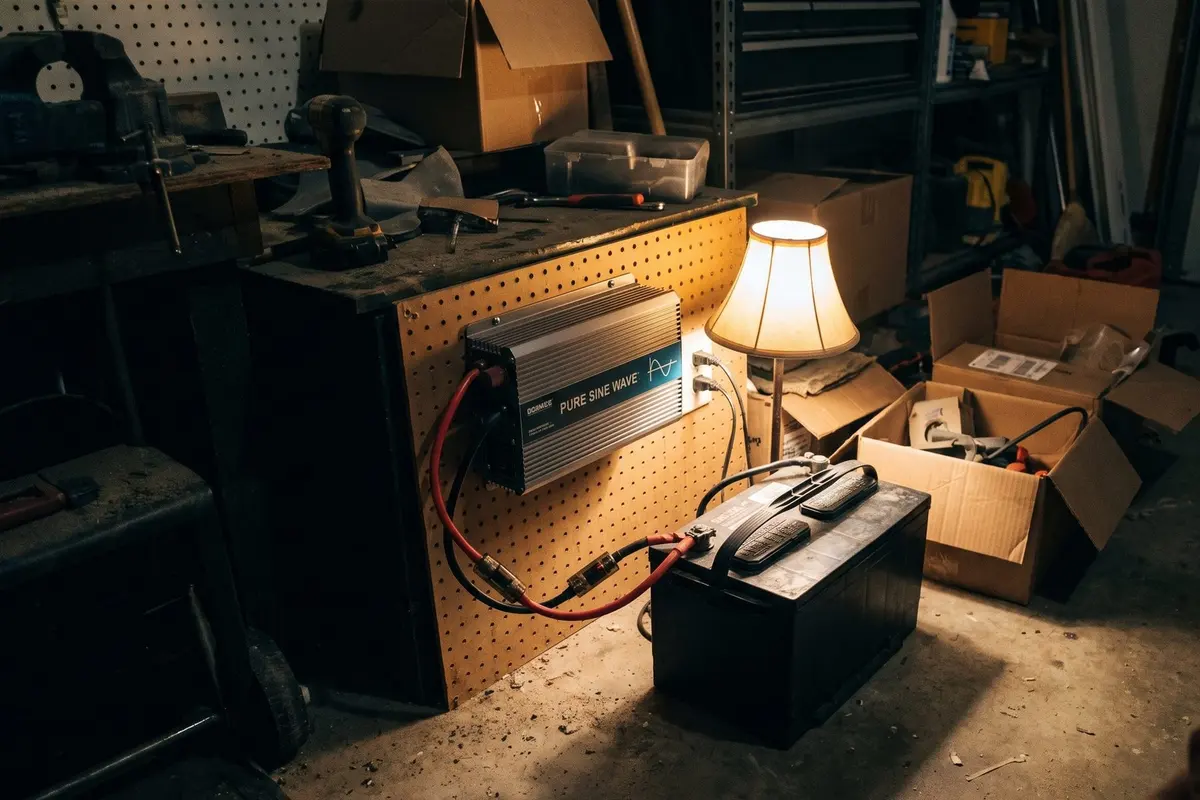
The same goes for a car with an inverter or a battery power station. Lamps, chargers and small appliances plug into the device, as in the photo above. See what size inverter you need and using your car as a generator for the safe setups.
The two safe ways to use generator power
1. Cords, straight from the generator. This is the Handbook's default: appliances plug into the generator through outdoor-rated extension cords sized to the load. It needs no electrician and covers a refrigerator, lamps and chargers. Our guide to choosing a generator extension cord covers gauge and length.
2. An inlet with an interlock or transfer switch. If you want hard-wired circuits such as a furnace blower or well pump, a licensed electrician installs an outdoor inlet box and either an interlock on the main panel or a transfer switch. Compare the two in interlock vs transfer switch, or read about the generator interlock kit on its own.
A third option for small loads: a battery power station. For phones, lights, a radio, a CPAP or a laptop, a battery power station recharged by solar or by the generator avoids house wiring entirely and makes no exhaust. See what size solar generator you need.
In both cases the generator itself stays outdoors, at least 20 feet from the house with the exhaust aimed away from doors, windows and vents, per the CDC. Never in a garage, even with the door open; see running a generator in the garage.
If it has already happened
People try the outlet shortcut for understandable reasons. The furnace blower and the well pump are hard-wired, the cord route is awkward, and a video makes it look easy. The honest answer to each of those is the inlet and interlock described above, which an electrician can often install before the season starts.
If someone in your house has powered the home through an outlet, stop: turn the generator off and unplug the cord from both ends. Then have a licensed electrician look at the panel and the outlet before the setup is used again, and talk through a proper inlet. It is a common mistake, usually made by people trying to keep their family warm and fed during a long, cold outage. The fix is a phone call, not a lecture.
Frequently asked questions
Can you plug a generator into a wall outlet?
No. Plugging a generator into any household outlet, including a dryer or range outlet, is backfeeding. It sends power out onto the utility lines, where it can electrocute line workers and others, and it can damage your wiring and the generator. Plug appliances into the generator directly instead.
Is backfeeding OK if I turn off the main breaker?
No. It depends on a person remembering the step every time, with nothing stopping a mistake. OSHA says never attach a generator to a home's wiring unless a qualified electrician has installed it with a transfer switch. An interlock, also installed by an electrician, enforces the same rule mechanically.
What is a double male extension cord?
It is a cord with a plug on both ends, used to backfeed a house through an outlet. When one end is plugged into a running generator, the bare prongs on the other end carry full household voltage. It should never be used; take it out of service.
How can I safely power my house with a generator?
Either plug appliances into the generator with outdoor-rated, three-prong cords sized to the load, or have a licensed electrician install an inlet box with an interlock or transfer switch for hard-wired circuits. In both cases the generator runs outdoors, at least 20 feet from the house.
Sources
- The Off-Grid Handbook, Garrett Dalton, Project 25
- OSHA Fact Sheet: Using Portable Generators Safely
- Purdue Extension: Generator Interlocking Circuit Breaker Kit
- American Red Cross: Safe Generator Use
- CDC: Use a Generator Safely
Safety guidance changes. Check the agency pages above for the current version, and follow your local code and manufacturer instructions.