Using your car as a generator during a power outage: what it can run and how to stay safe
A car with fuel is a generator you already own. A 12 V socket, a small inverter and ten minutes of setup make it the household's mobile backup.
In this article
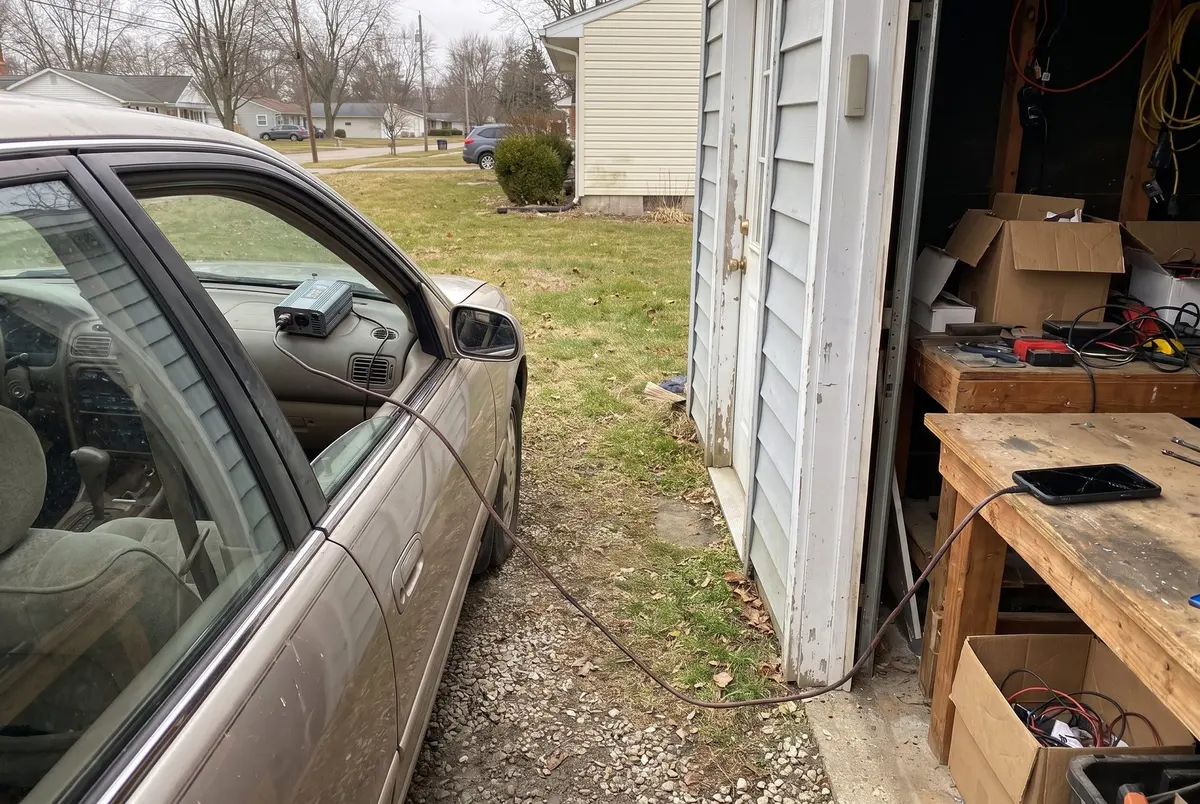
Yes, you can use your car as a small generator during a power outage. With the engine running and the car outdoors, a 150 to 300 watt pure sine inverter or a 12 V USB adapter will charge phones, radios and power a router, with the cord passed through a barely cracked window into the house. Never run the car in a garage, even with the door open, and expect it to burn a quarter to half a gallon of fuel per hour of idling.
The Off-Grid Handbook sets this up as Project 28, the vehicle as a power node. The kit costs about $40 in materials, per the book, and the setup takes about 30 minutes.
What can a car inverter power during an outage?
Think small. A car is a good charger and a poor substitute for a whole-house generator.
- Phones, tablets and power banks: a 12 V USB multi-port adapter in the socket is enough, with no inverter needed.
- Radio and Wi-Fi router: small loads that run fine from a socket inverter.
- Anything over about 150 watts: per the book, it needs an inverter clamped directly to the battery with the engine running, following the inverter manual.
Choose pure sine wave. The book's inverter project explains that electronics and anything with a motor dislike modified sine output. To size one properly, see our guide on what size inverter you need.
How to set it up, step by step
- Park outdoors, in the open. Never in a garage, and never nose-in against a wall where exhaust can pool.
- Start the engine. Charge only with the engine running, so you do not drain the battery you need to start the car.
- Plug the USB adapter or the small inverter into the 12 V socket for small loads.
- For larger loads, connect a clamp-lead inverter to the battery as its manual describes.
- Run a short outdoor extension cord from the inverter through a barely cracked window into the house. Devices charge inside, and the exhaust stays outside.
- Keep working carbon monoxide alarms on in the house the whole time.
Why the car never runs in the garage
Vehicle exhaust carries carbon monoxide exactly like generator exhaust. The CDC is unambiguous: never run a car or truck inside a garage attached to a house, even with the garage door open. The book is stricter still and allows no garage exception at all.
The same logic that keeps a portable generator out of the garage applies here; our article on running a generator in the garage with the door open explains why an open door does not clear the gas. Keep the tailpipe away from windows, doors and vents, and place alarms as described in our carbon monoxide detector placement guide.
Two more rules from the book and the CDC. Never sleep in a running vehicle to stay warm, and after snow, check that the tailpipe is clear, because a blocked tailpipe lets carbon monoxide build up quickly inside the car.
How long can a car idle, and how much gas does it use?
The limit you plan around is fuel. The Department of Energy says idling uses a quarter to a half gallon of fuel per hour, depending on engine size and air conditioner use, and the book gives the same figure for a typical sedan.
| Charging plan | Idle time | Fuel used |
|---|---|---|
| One run a day | 1 hour | 0.25 to 0.5 gallon |
| Two runs a day | 2 hours | 0.5 to 1 gallon |
| Two runs a day for a week | 14 hours | 3.5 to 7 gallons |
That is why the book says to batch the charging into one or two runs a day instead of idling for hours. Gather every phone, power bank and radio, charge them together, then shut the engine off.
The book's standing policy is to keep the tank at least half full, and the American Red Cross gives the same advice for power outage readiness.
How to charge a phone in the car safely
For one or two phones, skip the inverter. Plug them into a 12 V USB adapter, let them charge with the engine running outdoors, and do not sit in the parked car with the engine running and the windows shut.
- Engine on, car outdoors, tailpipe clear.
- Phones in low-power mode first, so each charge lasts longer.
- Do not leave the engine running unattended near the house.
- Shut the engine off when the batch is done.
A car works best as one layer of backup. Phones charged in the morning from the car, and a quiet DIY solar charging station for the rest of the day, mean the engine runs less and the tank lasts longer.
What goes in the vehicle power kit
The book's kit is small enough to live in the car year-round. These are the pieces.
- A 150 to 300 W pure sine inverter, with a 12 V plug for small loads or clamp leads for larger ones.
- A 12 V USB multi-port adapter, so several phones charge at once.
- A short outdoor-rated extension cord, long enough to reach a cracked window.
- The charging cables your household actually uses.
- A note with the fuel math and the idle rule, kept with the rest of your car emergency kit.
Test the kit once before you need it: start the engine outdoors, plug in a phone through the adapter, run the inverter for a few minutes, and confirm everything works.
Car or portable generator?
For a few small loads, the car is often the better tool, because you already own it and it needs no extra fuel storage. For bigger loads, such as a refrigerator, a properly sized generator or battery system is the better answer.
Either way, the carbon monoxide rules are the same. Outdoors, away from openings, alarms on inside, and nobody sleeping near running exhaust.
Frequently asked questions
Can I use my car to charge my phone during a power outage?
Yes. With the engine running and the car outdoors, a 12 V USB adapter in the socket charges phones without an inverter. Never run the car in a garage, even with the door open, because exhaust contains carbon monoxide. Batch charging into one or two short runs a day saves fuel and keeps the battery healthy.
How long can a car idle during a power outage?
Fuel is the practical limit. The Department of Energy says idling uses about a quarter to a half gallon of fuel per hour, depending on engine size and air conditioning use. Two one-hour charging runs a day use roughly half a gallon to a gallon, so batching charges stretches a half tank over many days.
Is it safe to run a car inverter with the engine off?
The Off-Grid Handbook says to charge only with the engine running. Running loads with the engine off drains the same battery you need to start the car. Small loads go through the 12 V socket, while anything above about 150 watts should use an inverter clamped to the battery, engine running, as the inverter manual describes.
Can I run my car in the garage with the door open during an outage?
No. The CDC says never to run a car or truck inside a garage attached to a house, even with the garage door open, because carbon monoxide can build up and enter the home. Park in the open, away from windows and doors, and keep carbon monoxide alarms working inside.
Sources
- The Off-Grid Handbook, Garrett Dalton, Project 28
- CDC: Carbon Monoxide Poisoning Basics
- U.S. Department of Energy, FuelEconomy.gov: Driving More Efficiently
- CDC: Clear Snow from Tailpipes
- American Red Cross: Power Outage Safety
Safety guidance changes. Check the agency pages above for the current version, and follow your local code and manufacturer instructions.