How long does gasoline last? Storage times, stabilizer and safe gas cans
Generator fuel bought for an emergency has a clock on it. Here is how long it keeps, how to stretch it and where it belongs.
In this article
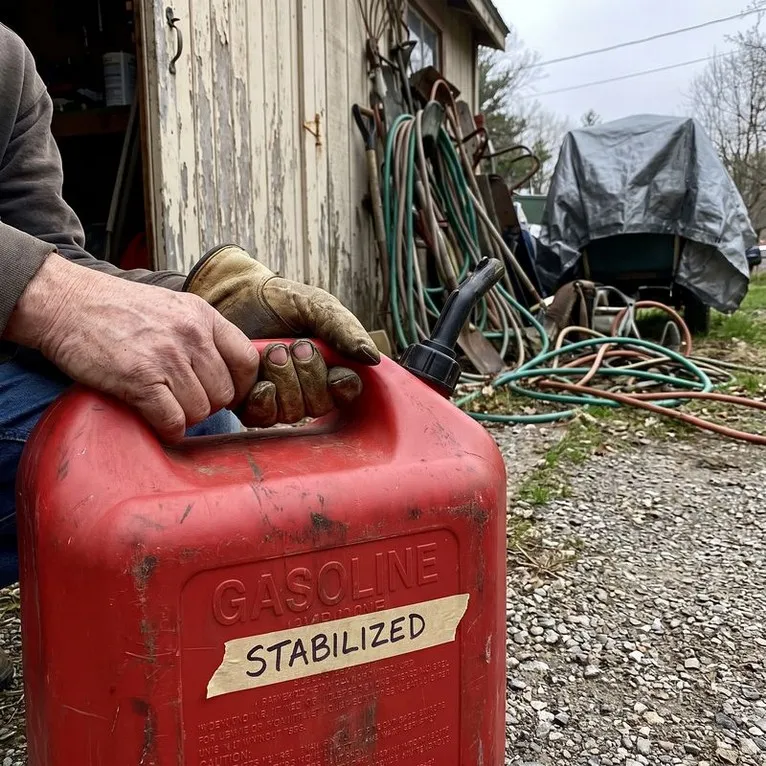
How long does gasoline last? In a sealed can it can stay usable for months, but official guidance is cautious: plan on 30 to 60 days without a fuel stabilizer. Maine's Department of Environmental Protection advises against storing gasoline longer than 30 days unless a stabilizer has been added, and Oklahoma State University Extension says even straight gasoline should not be stored more than 60 days without one. With a stabilizer, follow the product label and rotate the fuel.
The Off-Grid Handbook's rule for generator fuel, in Project 25, is short: stabilized fuel, rotated yearly, stored outside living space, with a 15-minute test run under load every month. Here is why gasoline goes stale, how long it keeps and how to store it safely.
Does gasoline go bad?
Yes, slowly. Over time gasoline reacts with oxygen and can form gums, the sticky deposits that clog the small passages of a generator's carburetor. Oklahoma State University Extension notes that old deposits can clog fuel filters and small passageways in small engines.
Water is the second problem. Ethanol blends such as E10 attract water. Oklahoma State explains that small amounts, up to about 0.5% by volume at 60°F, stay mixed in and burn off harmlessly. Beyond that, the water separates and pools at the bottom of the container, which is called phase separation, and it can cause rust and engine damage. E10 cannot pull enough moisture from the air alone to separate, but condensation or splashed water can do it. Keep containers sealed.
There is good news in the research, too. In a 2022 study at Oak Ridge National Laboratory, sealed gasoline samples stayed within fuel specifications for at least 12 months without any stabilizer, at both room and refrigerated temperatures. Real storage is rougher than a sealed lab sample: a can gets opened, a shed heats and cools, and many small-engine fuel tanks are vented. That is why the agencies set shorter limits.
How long does gasoline last? Storage times at a glance
How long gas lasts in a can depends mostly on two things: whether it was stabilized while fresh, and how well the can stays sealed.
| Situation | Plan on | Source |
|---|---|---|
| No stabilizer, approved sealed can | 30 to 60 days | Maine DEP; Oklahoma State University Extension |
| Stabilizer added while the fuel is fresh | Follow the stabilizer label; rotate at least yearly | Product label; The Off-Grid Handbook |
| In a generator's tank, stored more than 60 days | Drain the fuel system, or follow the manual | Oklahoma State University Extension |
| Sealed laboratory samples, no stabilizer | Stayed in spec for 12 months or more | Oak Ridge National Laboratory |
For E10, Maine DEP says to use a stabilizer made for gasoline that contains ethanol. Stabilizer is sold at most hardware and small-engine shops. Add it when the gas is fresh, the day you fill the can, and write the date on the can.
How to store gasoline safely
- Use an approved can. The Red Cross says to store generator fuel in an approved safety can. Maine DEP specifies UL-approved containers, red for gasoline, and never glass jars or milk jugs.
- Buy a can with a flame arrestor. The CPSC says to look for one when buying a new or used container. A mandatory federal safety standard requiring them took effect on July 12, 2023. Choose child-resistant containers made for fuel.
- Store it outside the living space. The CPSC says cool, well-ventilated areas outside the home, with the cap secured. The Red Cross suggests a locked shed or other protected area, and never near a fuel-burning appliance such as a gas water heater in a garage. Maine DEP prefers a well-ventilated shed or detached garage, away from children and downslope from a drinking water well.
- Fill it on the ground. The CPSC says to place the container on the ground when adding fuel, and the Unified Fire Authority in Utah adds never to fill a can inside a vehicle, trunk or truck bed.
- Leave room to expand. For long storage, Maine DEP suggests keeping the container about 95% full, which allows for expansion and limits air space.
Refueling has its own rule. The Red Cross says to turn the generator off and let it cool before adding fuel, because gasoline spilled on hot engine parts can ignite. The generator itself runs outdoors only, at least 20 feet from the house, and never in a garage, as our generator safety guide explains.
How much gasoline can you store at home?
It depends on where you live. The Red Cross notes that local laws may restrict the amount of fuel you may store and where, and suggests asking your local fire department. Fire codes such as NFPA 30 and the International Fire Code set the framework, and each city or county adopts them in its own way.
One example: the Unified Fire Authority in Salt Lake County, Utah, citing the International Fire Code, caps gasoline in a residence at 30 gallons, approves only containers of 5 gallons or less and says never to store gasoline in the house. Your local rules may be stricter, so check before you stock up.
Rotate it: the yearly fuel routine
Fuel discipline is one of the five steps in Project 25, and rotation is what keeps it simple. Once a year, pour the oldest stabilized fuel into the family car, refill the cans with fresh gasoline and add stabilizer the same day. The book's seasonal calendar in Project 72 puts "fuel stocks to full" in the autumn block, before winter storms arrive.
If you find old, untreated gas, Maine DEP says it can be diluted in a car at one part old fuel to five parts new. Otherwise take it to a household hazardous waste collection. Never pour it on the ground or down a drain.
The monthly 15-minute run under load keeps the engine and the fuel system exercised and proves the generator starts before you need it. Before an outage, size the generator to what you will actually run; our guide to what size generator runs a refrigerator does the math. For long outages, read whether it is safe to run a generator overnight, and put fuel on your list in how to prepare for a power outage.
Frequently asked questions
How long does gasoline last?
Official guidance is cautious. Maine's environmental agency says not to store gasoline more than 30 days without a stabilizer, and Oklahoma State University Extension says 60 days. With a stabilizer added while the fuel is fresh, follow the product label. The Off-Grid Handbook rotates stabilized generator fuel every year.
Does gasoline go bad in a gas can?
Slowly. It oxidizes and can form gums that clog small engines, and ethanol blends can separate if water gets in through condensation or an open cap. In a 2022 Oak Ridge National Laboratory study, sealed samples stayed within spec for 12 months, but real cans get opened and heated, so agencies set shorter limits.
Does fuel stabilizer really work?
In the Oak Ridge study, two of the three stabilizers tested improved the fuel's oxidation stability, though plain gasoline sealed for 12 months also stayed within spec. State agencies and extension services still recommend a stabilizer for gasoline stored longer than 30 to 60 days. For E10, use one made for ethanol blends.
Can I store gasoline in my garage?
Many local codes allow small amounts in approved cans, but rules vary, so ask your fire department. The CPSC says to store fuel in a cool, well-ventilated area outside the home. The Red Cross says to keep it away from fuel-burning appliances such as a gas water heater, and a detached shed is better.
What should I do with old gasoline?
Maine's environmental agency says old fuel can be diluted in a car at one part old to five parts new. Otherwise, take it to a household hazardous waste collection day. Never pour gasoline on the ground, into a drain or into the trash.
Sources
- The Off-Grid Handbook, Garrett Dalton, Project 25
- Maine DEP: Tips for Handling Gasoline
- Oklahoma State University Extension: Ethanol Gasoline Blends and Small Engines (BAE-1746)
- Oak Ridge National Laboratory (OSTI): Assessment of the Effectiveness of Three Aftermarket Gasoline Fuel Stabilizers
- CPSC: Fuel Container and Liquid Fuel Safety
- American Red Cross: Safe Generator Use
- Unified Fire Authority: Allowable Home Storage for Flammable and Combustible Liquids
Safety guidance changes. Check the agency pages above for the current version, and follow your local code and manufacturer instructions.