Solar generator vs gas generator: which one fits your household
One is a quiet battery that can sit in the living room. The other makes far more power but lives outdoors and drinks fuel. Your watt-hour number decides.
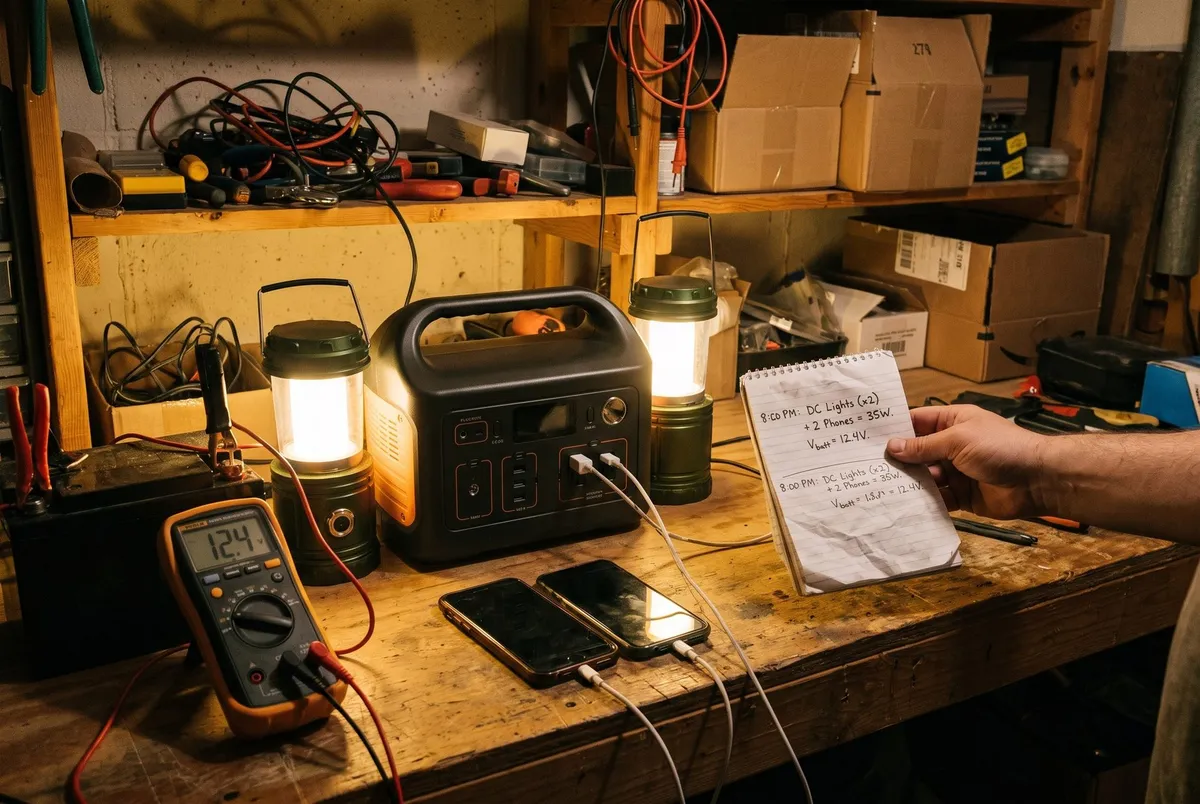
In this article
- Solar generator vs gas generator at a glance
- What a solar generator really is
- Power station vs generator: start from your watt-hour number
- What a gas generator does better, and what it asks of you
- Generator vs battery backup for home: safety and upkeep
- When it makes sense to own both
- Frequently asked questions
In the solar generator vs gas generator choice, the short answer is this: a solar generator is a battery, and a gas generator is an engine. A solar generator (also sold as a portable power station) is silent, makes no exhaust, can sit indoors and carries small critical loads for a day or two, then refills from a wall outlet or solar panels. A gas generator makes much more power for as long as you feed it fuel, but it must run outdoors, at least 20 feet from the house, and the gasoline has to be stored and rotated.
For most households the loads that really matter during an outage are smaller than people expect, which is why the comparison starts with a number, not a product.
Solar generator vs gas generator at a glance
| Solar generator (power station) | Gas generator | |
|---|---|---|
| What it is | Battery, inverter, charge controller and outlets in one box | Small engine turning an alternator |
| Where it runs | Indoors or out: no combustion, no carbon monoxide | Outdoors only, 20+ feet from the house |
| Noise | Silent or a quiet fan | Engine noise |
| How long it runs | Until the stored watt-hours are used | As long as there is fuel |
| Refilling | Wall outlet, solar panels, car | Gasoline, stored and rotated |
| Best at | Phones, lights, radio, router, medical devices | Refrigerator, freezer, bigger loads, long outages |
What a solar generator really is
The Off-Grid Handbook calls commercial power stations "a legitimate shortcut": battery, inverter, controller and outlets in one sealed box. Project 27, Power Station Integration, takes about an hour and its cost depends on the unit you choose. The book's first step is to buy on four numbers only: usable watt-hours, continuous inverter watts, solar input watts and battery chemistry, with LiFePO4 preferred. Marketing names carry none of them.
The word "solar" is a little misleading. The box stores energy; it doesn't make any. Panels make it. The Handbook's own math in Project 16 is a useful yardstick: a single 100-watt panel in decent sun returns 300 to 500 watt-hours a day. That refills a small station in a day, while a large one takes several panels or a wall outlet.
A caution for homes with rooftop solar: the Department of Energy notes that grid-tied systems are designed to switch off when grid power cuts out. Panels on the roof don't power the house in an outage unless the system was built with storage and the right inverter.
Power station vs generator: start from your watt-hour number
Project 17 of the Handbook, the Watt-Hour Audit, takes an hour and a plug-in meter of about $20. You list only critical loads, multiply each one's watts by its hours per day, and add them up. The book's figures:
- A typical critical load without the refrigerator lands between 150 and 400 watt-hours a day.
- Adding a modern fridge adds 1,000 to 1,500 watt-hours a day.
Project 27 sizes a power station to cover one to two days of that critical load. A household using 300 watt-hours a day is well served by a station with 600 or more usable watt-hours, and it can stretch further with a panel. Carrying a fridge for several days is where batteries get large and expensive, and where a gas generator starts to make sense. Our guides on what size solar generator you need and how long a power station runs a refrigerator walk through the math.
What a gas generator does better, and what it asks of you
A gas generator keeps going as long as there is fuel, and it handles loads a battery box can't sustain for long. The Handbook's Project 25 prefers an inverter-type generator for electronics and fuel economy, sized to the audit rather than to the whole electrical panel. See inverter generator vs regular generator for the difference.
The cost is responsibility. The Consumer Product Safety Commission says an average of about 100 people die in the U.S. each year from carbon monoxide poisoning from portable generators. Its rules, and the book's, are fixed:
- Outdoors only, at least 20 feet from the house, exhaust pointed away from doors, windows and vents.
- Never in a garage, even with the door open. Our article on why a generator can't go in the garage explains why.
- Battery-backed CO alarms on every level of the home.
- Appliances plug into the generator with outdoor-rated cords. House circuits only through a transfer switch or interlock installed by a licensed electrician.
CPSC also suggests choosing a generator with a CO shut-off safety feature. Then there is fuel: Maine's Department of Environmental Protection advises against storing gasoline more than 30 days without a stabilizer, so a generator comes with a rotation routine. Our guide to how long gasoline lasts covers it.
Generator vs battery backup for home: safety and upkeep
A battery has no exhaust, so carbon monoxide is off the table. It has its own rules, which the National Fire Protection Association lists for lithium-ion products: buy units listed by a nationally recognized testing laboratory, follow the manufacturer's instructions, keep batteries at room temperature when possible and don't charge below 32°F or above 105°F. The Handbook's Gear Guide says large power stations, 500 watt-hours and up, are a buy rather than a build, because commercial units with the inverter and battery management built in beat the parts bin on price and safety.
Upkeep is lighter too. Project 27 asks you to cycle the station fully when it arrives, then store it at the manufacturer's recommended level with a quarterly top-up. A generator asks for a monthly test run and fuel rotation, covered in our generator maintenance guide.
When it makes sense to own both
Many households end up with both, each with one job. Project 27's rule is "one box, one job": a station assigned to the fridge, or a portable station that serves the medical device and communications. The generator, outdoors and at a safe distance, can carry the refrigerator in daytime runs and recharge the station through an outdoor-rated cord.
If you are choosing only one:
- Choose a power station if your critical load is phones, lights, radio, internet and a medical device, if you live in an apartment or have no safe spot 20 feet from the house, or if nobody in the house wants to handle gasoline.
- Choose a gas generator if you need to carry a refrigerator or freezer through outages that last days, and you have a safe outdoor place to run it.
Either way, do the audit first. As the Handbook puts it, the loads that keep a family functioning usually fit in a box you can carry.
Frequently asked questions
Is a solar generator better than a gas generator?
It depends on the load. A solar generator, or power station, is silent, makes no exhaust and can be used indoors, which makes it better for phones, lights, radio and medical devices. A gas generator is better for a refrigerator or freezer through long outages, but it must run outdoors, at least 20 feet from the house.
Can a solar generator power a whole house?
Not a portable one. Portable power stations are sized for critical loads. The Off-Grid Handbook puts a typical critical load at 150 to 400 watt-hours a day without the refrigerator, and a modern fridge adds 1,000 to 1,500. Size the station to one or two days of your own measured load.
Can you use a solar generator indoors?
Yes. A power station burns no fuel, so it makes no carbon monoxide. Follow the manufacturer's instructions, buy a unit listed by a recognized testing laboratory, keep it at room temperature and away from anything that can burn. A gas generator never runs indoors or in a garage.
Do rooftop solar panels work during a power outage?
Usually not on their own. The Department of Energy notes that grid-tied solar systems are designed to switch off when grid power cuts out. They need storage and a properly configured inverter to supply power during an outage.
Sources
- The Off-Grid Handbook, Garrett Dalton, Project 27
- CPSC: Winter Storm Safety Tips on Carbon Monoxide and Fires (December 2025)
- CDC: Use a Generator Safely
- U.S. Department of Energy: Solar and Resilience Basics
- NFPA: Lithium-Ion Battery Safety Tip Sheet
- Maine DEP: Tips for Handling Gasoline
- Ready.gov: Power Outages
Safety guidance changes. Check the agency pages above for the current version, and follow your local code and manufacturer instructions.