What size power station for CPAP? How to work it out for your machine
A power station can carry a sleep machine through an outage. The right size comes from your own device's numbers and your manufacturer's guidance, not from a box label.
In this article
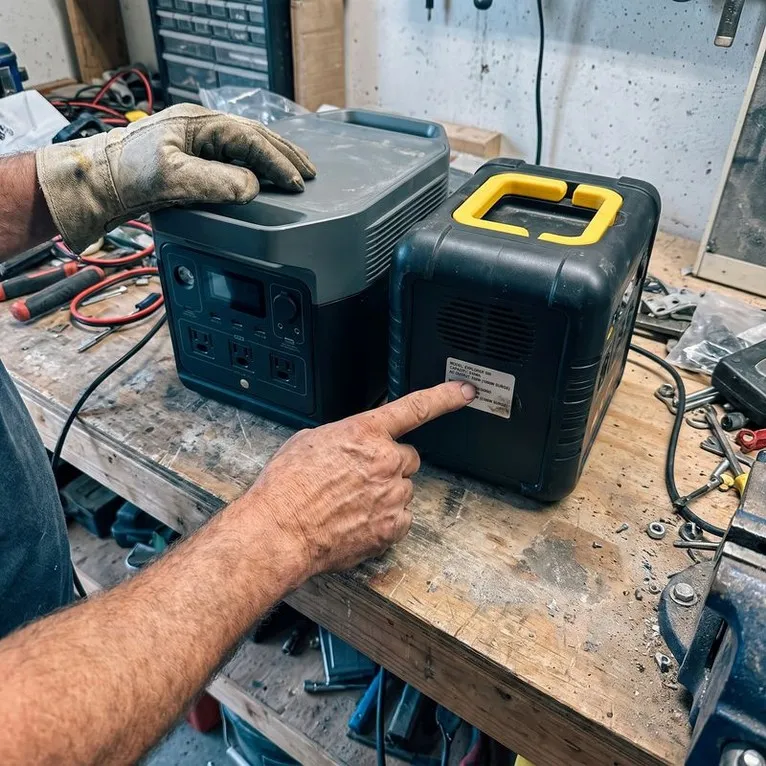
What size power station for CPAP? Take your machine's average power draw in watts, multiply by the hours you use it each night, add a margin for conversion losses if you run it from the AC outlet, and buy a station whose usable watt-hours cover at least one night and ideally two. The numbers come from your device's manual or manufacturer, or from measuring it. Before relying on any battery, the FDA advises checking with your device manufacturer or distributor that your device can be used with batteries or a generator.
This guide covers the electrical sizing only. Questions about your therapy, settings or what to do without your machine belong with your doctor.
Why a CPAP belongs in the critical load
The introduction to Chapter 2 of The Off-Grid Handbook names four things that define a household's real emergency load: communications, light, refrigeration triage and medical devices. Ready.gov makes the same point from the other side: have alternate plans for power-dependent medical devices, and talk to your medical provider about a power outage plan.
The Handbook's Project 27, Power Station Integration, gives the station a specific role for exactly this case: a portable node for the medical device and communications. One box, one job. A station shared with the refrigerator may be empty by bedtime.
What size power station for CPAP: the math
The formula is short:
- Find the average watts your machine draws with your usual settings (see the next section).
- Multiply by hours per night. That's watt-hours per night.
- Divide by about 0.9 if you'll run it through the station's AC outlet, to allow for the inverter. Penn State's energy courses rate high-quality sine wave inverters at 90 to 95 percent efficient, so 0.9 is a cautious figure.
- Multiply by the nights you want covered. The Handbook sizes stations to one to two days of critical load.
- Add the other things the station will carry, such as a phone and a small light.
An example with made-up numbers, only to show the arithmetic: if a machine averaged 40 watts over an 8-hour night, that's 320 watt-hours; divided by 0.9, about 356; for two nights, about 710 watt-hours. Your machine's figure may be very different, which is why step one matters.
Then check the station's continuous inverter watts. It must be higher than the machine's power supply rating. Our guide to what size inverter you need explains how to read it.
Find your machine's real numbers
- The manual and the manufacturer. Many manufacturers publish battery guidance for their machines. Ask for figures with your settings.
- The humidifier. If your machine has a heated humidifier or heated tubing, ask the manufacturer for figures with them on and off. Heating uses extra power.
- A plug-in energy meter. The Handbook's Project 17 uses one, about $20, to measure real watt-hours. Plug the machine into the meter for a normal night and read the total in the morning. That is your number.
- The power supply label. It shows the maximum the power supply can draw, which is useful for checking inverter size but usually higher than the average use.
Ask too whether the manufacturer offers an approved DC power cord or converter. Running from a station's 12-volt outlet through the maker's own cable skips the inverter step. Use only accessories the manufacturer approves.
CPAP battery backup for a power outage: the plan
The FDA's power outage tips for home medical devices add steps beyond the battery:
- Notify your electric company and fire department that you have a medical device that needs power.
- Read your user instructions or call the manufacturer to find out whether your device can be used with batteries or a generator.
- Check for water before plugging in a device, and never plug in a wet cord or device.
- When power returns, check the settings. The FDA notes that devices often reset to a default mode when power is interrupted.
Keep the station at the bedside on outage nights, with the cable already connected, so nobody is hunting for adapters in the dark. A small battery lantern on the same table helps. Keep spare filters and supplies where you always keep them; the battery plan doesn't replace the rest of your routine.
Write the plan on one page in the household binder: the station's capacity, how many nights it covers, where the cables are and the manufacturer's phone number. Our guide to how long power outages last helps decide how many nights to plan for.
Solar generator for CPAP: recharging by day
A station sized for two nights buys time, and a solar panel can stretch it further. The Handbook's Project 16 gives the yardstick: a 100-watt panel in decent sun returns 300 to 500 watt-hours a day. On a good day, that can put back a meaningful share of a night's use. Cloudy winter days return far less.
Before connecting a panel, Project 27's second step applies: confirm the panel falls inside the station's solar input voltage window. Our guides on sizing a solar generator and building a solar charging station go further. If the outage runs long and the battery can't keep up, follow your doctor's guidance and local officials' advice on places with power.
Keep it ready for the night you need it
- Cycle it fully on arrival, then run one real night on the station while the grid is up. The Handbook's Project 30 calls an untested system a hypothesis.
- Store it at the manufacturer's recommended level, with a quarterly top-up, per Project 27. See how to store lithium batteries long term.
- Before storm season, charge it to full and keep the cables with it.
- Test its capacity once a year. Our guide on how to load test a battery shows how.
Safety rules still apply: buy a station listed by a recognized testing laboratory, keep it at room temperature and away from anything that can burn, as the NFPA advises. Never run a gasoline generator indoors to power a medical device; it goes outdoors, at least 20 feet from the house.
Frequently asked questions
What size power station do I need for a CPAP?
Multiply your machine's average watts by your hours of use per night, divide by about 0.9 if running through the AC outlet, and cover one to two nights. Get the watts from the manufacturer or measure a normal night with a plug-in energy meter, and confirm with the manufacturer that your device can run on battery power.
Does the CPAP humidifier affect battery life?
It can. Heating water and tubing takes extra power. Ask your manufacturer for power figures with the humidifier on and off, and measure your own machine with a plug-in meter. Decisions about therapy settings belong with your doctor.
Can a solar generator run a CPAP during a power outage?
Yes, if the station's usable watt-hours cover your nightly use and its inverter covers the machine's power supply. A 100-watt panel returns about 300 to 500 watt-hours a day in decent sun, per The Off-Grid Handbook, which can help recharge it during the day.
What should CPAP users do to prepare for power outages?
Ready.gov advises talking to your medical provider about a power outage plan. The FDA suggests notifying your electric company and fire department, confirming with the manufacturer that your device can use batteries or a generator, and checking settings after power returns.
Sources
- The Off-Grid Handbook, Garrett Dalton, Chapter 2 intro
- FDA: Tips About Medical Devices and Natural Disasters
- Ready.gov: Power Outages
- Penn State EME 812: Efficiency of Inverters
- NFPA: Lithium-Ion Battery Safety Tip Sheet
Safety guidance changes. Check the agency pages above for the current version, and follow your local code and manufacturer instructions.