How much does a transfer switch cost to install? 2026 price ranges
This is the one piece of the generator job that belongs to a licensed electrician. Knowing the usual price range helps you read a quote with confidence.
In this article
How much does a transfer switch cost to install? According to HomeGuide's 2026 cost guide, a manual transfer switch for a portable generator typically costs $400 to $1,300 installed, and a generator interlock kit, the common alternative, costs $400 to $850 installed. Angi's guide, updated in July 2026, puts the typical transfer switch installation at $1,200 to $1,600, with an average of $1,450. Permits add roughly $50 to $350 in both guides. Your local price depends on your panel, the number of circuits and electrician rates in your area.
The Off-Grid Handbook doesn't print a price for this step. Its Project 25 lists the time and cost as "guidance + pro install," because the switch is installed by a licensed electrician under the National Electrical Code, and there is no DIY version of this step.
How much does a transfer switch cost to install? The ranges
| Item | Typical cost | Source |
|---|---|---|
| Manual transfer switch, installed | $400 to $1,300 | HomeGuide, 2026 |
| Manual transfer switch, unit only | $200 to $800 | HomeGuide, 2026 |
| Transfer switch installation, typical | $1,200 to $1,600 (average $1,450) | Angi, updated July 2026 |
| Interlock kit, installed | $400 to $850 | HomeGuide, 2026 |
| Interlock kit, parts only | $50 to $150 | HomeGuide, 2026 |
| Permit and inspection | $50 to $350 | HomeGuide and Angi, 2026 |
The two guides don't agree exactly because they draw on different jobs and regions, so treat both as a sanity check, not a quote. Prices change, and these are the figures the guides published in 2026.
What you are paying for
A transfer switch lets a portable generator feed selected house circuits without sending power back out onto the utility lines. HomeGuide breaks a typical job into these parts:
- The switch itself, sized in amps and in number of circuits.
- A power inlet box on the outside wall, $20 to $100, where the generator cord plugs in. Not every installation needs one.
- Labor, $200 to $500 for a straightforward job. HomeGuide lists electricians at $50 to $130 an hour, plus a call-out fee of about $75.
- The permit and inspection. HomeGuide notes that most areas require a permit and inspection for any change to a home's electrical system.
The inspection is worth paying for. It is an independent check that the work keeps the generator and the utility lines apart, which protects your family and the line workers restoring power on your street.
Generator interlock installation cost
An interlock kit is a sliding plate on your existing main panel that makes it impossible to have the main breaker and the generator breaker on at the same time. Because it uses the panel you already have, HomeGuide puts it at $400 to $850 installed, with the kit itself at $50 to $150. It requires a panel that accepts a matching kit and a free space for a generator breaker. A transfer switch is separate equipment that handles a set list of circuits.
Both are safe when a licensed electrician installs them. Our guides on interlock vs transfer switch and generator interlock kits explain how each works and which homes suit which.
What moves the price up or down
- Amperage. HomeGuide notes that higher-amp switches cost more than lower-amp models.
- Manual or automatic. A manual switch costs less and takes less time to install. Automatic switches are mostly used with permanently installed standby generators.
- Number of circuits. A 6-circuit switch is cheaper than a 10-circuit one, with fewer connections.
- Your panel and your walls. The distance from the panel to the inlet, the type of wall and the condition of an older panel all change the labor.
- Where you live. Electrician rates and permit fees vary widely by region.
Generator hookup cost without a switch
You may not need a switch at all. The Handbook's default for generators is simple: appliances plug into the generator through outdoor-rated cords sized to the load. It calls that mode "simple, safe, code-legal." The cost is a couple of good cords, which you'd want anyway.
A switch earns its price when you need things that can't plug in, such as a furnace blower, a well pump or hard-wired lights, or when running cords through a door isn't practical. For a fridge, a lamp, phone chargers and a fan, cords do the job. See our guide to generator extension cords.
What doesn't count as a cheap alternative: a double-ended cord into a dryer or range outlet. The Handbook's rule is never to backfeed. It energizes street lines and can kill a utility worker. Our article on plugging a generator into a wall outlet explains why.
How to get a fair quote
A little preparation makes quotes faster and easier to compare:
- Know your generator. Running watts and the type of outlet it has for a heavy-duty cord.
- Bring your list of circuits. Start from your critical loads, as in the Handbook's Project 17 watt-hour audit, and choose the circuits that serve them.
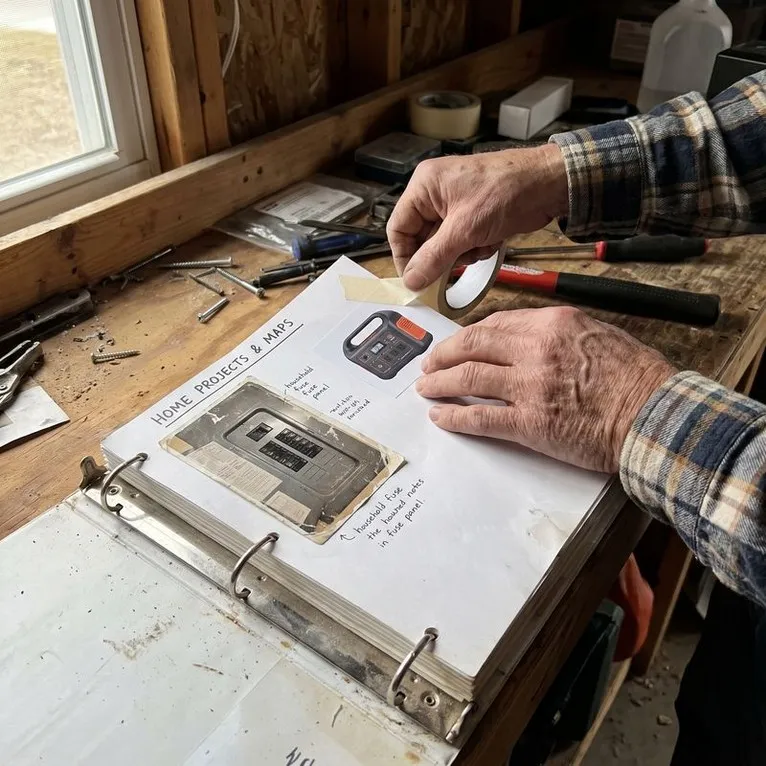
- Take a clear photo of the open panel door and its labels, and keep a copy in the household binder.
- Ask each electrician whether the price includes the permit, the inspection and the inlet box, and confirm their license.
- Get two or three quotes and compare them with the ranges above.
Read each quote line by line. A low price can leave out the permit, the inspection or the inlet box, and those come back as extras. Ask which plug the inlet takes, so the generator cord you buy matches both the inlet and your generator. If one quote is far below the others, ask what it doesn't include before you choose it, and make sure the electrician is licensed where you live. A good electrician will also tell you whether your panel can take an interlock, which is often the less expensive route.
Once it's installed, the rest of the job is yours. As Project 25 puts it, the transfer switch is the electrician's job; the distance rule is yours. The generator still runs outdoors, at least 20 feet from the house, never in a garage. See why a generator can't go in the garage.
Frequently asked questions
How much does it cost to install a manual transfer switch for a portable generator?
HomeGuide's 2026 cost guide puts a manual transfer switch at $400 to $1,300 installed, with the switch itself at $200 to $800. Angi, updated in July 2026, puts typical transfer switch installations at $1,200 to $1,600. Get local quotes, since panels and labor rates vary.
Is an interlock kit cheaper than a transfer switch?
Usually. HomeGuide's 2026 guide puts an interlock kit at $400 to $850 installed, with the kit at $50 to $150. It needs a compatible main panel with room for a generator breaker. A licensed electrician installs either option.
Do you need a permit to install a transfer switch?
In most areas, yes. HomeGuide notes that most areas require a permit and inspection for any change to a home's electrical system, and both HomeGuide and Angi put permit costs at roughly $50 to $350. Your electrician usually pulls the permit.
Can I install a transfer switch myself to save money?
No. The Off-Grid Handbook is explicit that house-circuit connection exists only through a transfer switch or interlock installed by a licensed electrician, and that there is no DIY version of this step. OSHA also says never to attach a generator to a building's wiring without a properly installed transfer switch.
Sources
- The Off-Grid Handbook, Garrett Dalton, Project 25
- HomeGuide: 2026 Generator Transfer Switch Installation Cost
- Angi: How Much Does It Cost to Install a Generator Transfer Switch? (updated July 2026)
- OSHA Fact Sheet: Using Portable Generators Safely
- Purdue Extension: Generator Interlocking Circuit Breaker Kit
- CDC: Use a Generator Safely
Safety guidance changes. Check the agency pages above for the current version, and follow your local code and manufacturer instructions.