How often to clean chimney flues: the yearly inspection and when to sweep
A chimney can look fine from the yard and still be lined with creosote. The yearly inspection is how you find out before winter, not during it.
In this article
How often to clean chimney flues comes down to one fixed date and one judgment call. Have the chimney inspected by a qualified professional at least once a year, and have it swept whenever that inspection finds creosote or soot building up. If you burn wood heavily all winter, check more often. The Consumer Product Safety Commission (CPSC) says at least once a year, more frequently with heavy use.
The U.S. Fire Administration (USFA) puts it the simple way: have your chimney inspected and cleaned each year by a professional. The Off-Grid Handbook says the same in Project 55, Wood Stove Readiness: sweep and inspect at least annually per NFPA 211, the national standard for chimneys, and more with heavy use.
How often to clean chimney flues: the short answer
| Your situation | What to do |
|---|---|
| Fireplace used now and then | Yearly inspection, sweep if the inspector finds buildup |
| Wood stove as main heat all winter | Yearly inspection and sweep, plus checks during the season |
| Creosote builds up quickly | CPSC says as often as twice a month in that case, and find out why |
| New stove, changed fuel or a house you just bought | A more thorough inspection before you use it |
| After a chimney fire | Stop using it and get a complete safety inspection |
Fast buildup is a symptom. It usually points back to wet wood or a smoldering fire, which is covered in our guide on how to prevent creosote buildup.
Chimney inspection before winter: what the sweep looks at
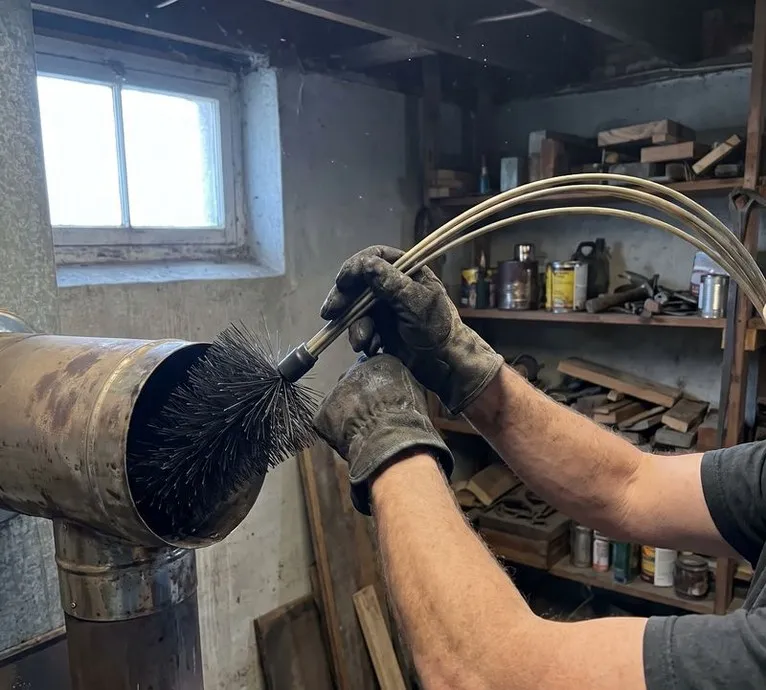
CPSC describes the job as checking for deposits of creosote and soot, other obstructions such as nests, and signs of physical damage, like cracked or separated liners and masonry. NFPA 211 sorts inspections into three levels:
- Level 1 covers the readily accessible parts of the chimney, for a system that has been in regular use with no changes.
- Level 2 goes further, including a camera or video scan of the inside of the flue. It applies when something changes: a new stove, a different fuel, the sale of a house, or an event such as a chimney fire that may have caused damage.
- Level 3 is for suspected hidden damage and may involve opening up parts of the structure.
The Handbook's safety box for Project 55 calls a Level 2 chimney inspection a prerequisite, not a suggestion, before you rely on a wood stove for outage heat. That makes sense. An outage is when the stove runs hardest, for the longest stretches, with the least room for a problem.
Book it before the cold
Schedule the visit for late summer or early fall, before the first cold night. If the inspection finds a cracked liner or a missing cap, there is still time to fix it before you need the heat.
Before the sweep arrives, write down what they will want to know: the stove or fireplace model, roughly how much wood you burned last winter, the date of the last cleaning, and any smoke or odor problems you noticed. Keep the written report afterward with your house papers, such as in the folder described in our emergency binder checklist, so next year's visit starts from a record instead of memory.
Signs your chimney needs attention sooner
- Smoke drifting into the room instead of going up the flue.
- A strong smoky or tarry smell from the fireplace or stove.
- Black, flaky or shiny tar-like deposits you can see inside the firebox or at the damper.
- Cracks or crumbling in the chimney, or pieces of liner falling into the firebox.
The EPA adds that a properly working stove should make very little smoke. If you regularly see or smell smoke, something is wrong, and that is a call to the installer or a sweep. If you ever suspect a chimney fire, get everyone out and call 911 from outside. Don't use the fireplace or stove again until a professional has inspected it.
Chimney sweep cost: what you are paying for
Prices vary by region and by chimney, so the useful step is a written quote that spells out what is included. Ask:
- Which inspection level is included, and whether a camera scan is part of it.
- Whether the sweeping is included or priced separately after the inspection.
- Whether you get a written report with photos of anything that needs repair.
- Whether the company is insured and holds a recognized chimney certification.
Things that can raise the price: more than one flue, a tall or steep roof, heavy buildup, and a Level 2 inspection instead of a basic one. Repairs to the chimney or a new stove installation are the installer's conversation, often with a permit. The Handbook is firm on this: placement, clearances, the hearth and the chimney are not a weekend guess. That is why the book lists the stove's cost as an assessment plus professional installation rather than a dollar figure.
Between visits: habits that keep the chimney clean
The yearly visit catches problems. Daily habits decide how many there are. Project 55 lists the household tools for it, a moisture meter and a chimney thermometer, alongside seasoned cordwood:
- Burn dry wood. The EPA and the Handbook both set the line at under 20% moisture. Wet wood makes creosote, and creosote makes chimney fires. See how long firewood takes to season.
- Burn hot and clean per the stove manual, with the chimney thermometer in the range it gives.
- Keep anything that can burn at least 3 feet away from the stove or fireplace, per USFA.
- Put the fire out before you go to sleep or leave the house, as USFA advises.
- Keep CO and smoke alarms working on every level. The book treats its alarm grid, Project 52, as a prerequisite for any wood heat; see CO detector placement.
If you have a fireplace, not a stove
Step 6 of Project 55 says to treat an open fireplace as ambiance, not heating, because most send more heat up the flue than into the room. It still needs the same NFPA 211 inspection before you count on it in an outage. Our comparison of wood stove vs fireplace explains the difference, and wood stove safety covers the rest of the routine, including how to dispose of the ashes.
Frequently asked questions
How often should a chimney be cleaned?
Have it inspected by a qualified professional at least once a year and swept whenever the inspection finds creosote or soot buildup. CPSC says to check more often with heavy use, and as often as twice a month if creosote builds up rapidly. USFA's simple rule is to have it inspected and cleaned every year.
Do I need a chimney inspection if I rarely use my fireplace?
Yes. An unused chimney can still have nests, debris, cracked liners or old deposits. A yearly inspection catches those before you light a fire, and it matters most before you plan to rely on the fireplace or stove during a winter power outage.
What is a Level 2 chimney inspection?
Under NFPA 211, a Level 2 inspection goes beyond the readily accessible parts and includes a camera or video scan inside the flue. It applies when something changes, such as a new stove, a different fuel, the sale of a house or a possible chimney fire. The Off-Grid Handbook treats it as a prerequisite before relying on a wood stove.
How much does a chimney sweep cost?
It varies by region, the number of flues, roof access, how much buildup there is and the inspection level. Get a written quote that says which inspection level is included, whether sweeping is part of the price, and whether you'll receive a written report with photos.
Sources
- The Off-Grid Handbook, Garrett Dalton, Project 55
- CPSC: Consumer Safety Alert on chimneys and creosote
- U.S. Fire Administration: Fireplace and Wood Stove Safety (PDF)
- NFPA 211: Standard for Chimneys, Fireplaces, Vents, and Solid Fuel-Burning Appliances
- EPA Burn Wise: Best Wood-Burning Practices
- New York State DHSES: Home Heating Fire Safety
Safety guidance changes. Check the agency pages above for the current version, and follow your local code and manufacturer instructions.