Outdoor cooking station: how to set one up before the power goes out
A camp stove in a box is not a plan. A station you can set up in five minutes, in a spot you've already chosen, is.
In this article
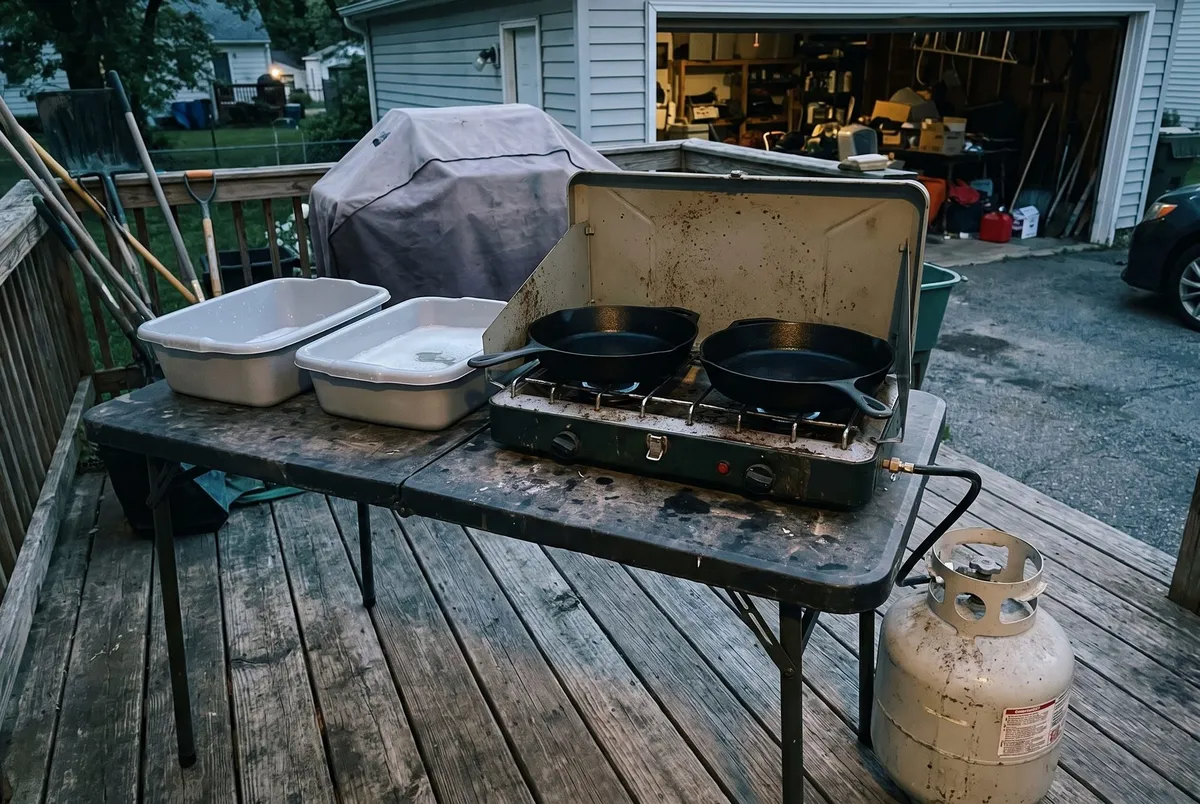
An outdoor cooking station is a spot outside the house, chosen in advance, where a camp stove or grill, cast iron cookware, a prep table, wash bins and fuel come together in about five minutes. The Off-Grid Handbook builds one in Project 56 for about $80 and two hours, and its reason is simple: when the range is down, meals move outside, and a prepared station turns that into a routine instead of a scramble.
This guide covers the station itself: where to put it, how to lay it out, and how to use it in bad weather. For menus and fuel math, see how to cook without electricity.
Where to put an outdoor cooking station
Location is the safety decision. NFPA's grilling guidance says to place the grill well away from the home and deck railings, and out from under eaves and overhanging branches, and to keep it away from play areas and foot traffic. NFPA research found that nearly a quarter of grill structure fires started on an exterior balcony or open porch.
- Outdoors, in open air. The CDC says never to use a portable gas camp stove indoors, and never to burn charcoal indoors. A garage, tent, shed or enclosed porch counts as indoors.
- Clear overhead. No roof edge, awning or tree limbs above the burner.
- Away from the generator. If you run one, keep the station clear of its exhaust and the generator 20 feet from the house, as in why a generator never goes in the garage.
- A short, level walk from the kitchen door, so carrying pots and food is easy and safe in the dark.
- A 3-foot kid-free zone around the stove, as NFPA recommends for grills.
About covering it
The Handbook suggests a covered spot if possible. Fire safety guidance is stricter about the flame, so split the difference: a cover can keep rain off the prep table, the wash bins and the fuel, but the burner itself stays under open sky, away from roofs and overhangs. Never put a tarp or canopy directly over a lit stove.
What goes on the station
Project 56's materials list is short on purpose:
| Item | Why it's there |
|---|---|
| Two-burner propane camp stove and/or the existing grill | The heat source; two burners let you cook and boil water at once |
| Cast iron skillet and Dutch oven | Work on the grill, camp stove, rocket stove and solar oven alike |
| Folding table | A stable, waist-high surface for the stove and prep |
| Pair of wash bins and a utensil roll | Washing up without a working sink; tools in one place |
| One or two 20 lb propane tanks plus canisters | Fuel, stored outdoors by the rules |
Add what the rest of the book pairs with it. Project 51 puts a fire blanket beside the outdoor cooking station, because smothering beats spraying on grease, and an ABC extinguisher you can carry out completes it; see our guide to the best fire extinguisher for home use. A battery headlamp or lantern, long-handled tongs, oven mitts and a food thermometer round out the kit.
Outdoor cooking station ideas: lay it out in three zones
A simple left-to-right layout keeps raw food, flame and dishes from crowding each other:
- Prep zone. Cutting board, utensil roll, food in covered containers, a trash bag clipped to the table.
- Cook zone. The stove on the sturdiest part of the table, windscreens up, with nothing that can burn within reach of the flame.
- Wash zone. One bin of hot soapy water, one bin of rinse water, a towel. Heat the water on the stove after dinner.
Keep the propane tank on the ground, upright, beside the stove end of the table, with the hose clear of your feet. Store the spare tank a few steps away, not under the table. Our guide to how to store propane tanks covers where the fuel lives between meals.
If you'd rather cook on twigs and scrap wood than propane, a brick rocket stove (Project 50) can be part of the same station. Per the book, it needs its own pad, 10 or more feet from structures, with water or an extinguisher at hand.
Cooking outside during a power outage
The station is easy on a mild evening. The real test is a cold, wet night in the second day of an outage.
- Rain: keep the stove in open air and cook short, one-pot meals between showers. If the weather won't allow it, eat from the no-cook shelf; see no-cook emergency food. The answer is never the garage or the kitchen.
- Wind: use the stove's windscreens and turn the stove so they face the wind. Keep paper towels and packaging weighted down or put away.
- Dark: set up before sunset when you can, and wear a headlamp so both hands stay free.
- Cold: keep food covered, eat promptly and use a thermometer. USDA's safe cooking temperatures still apply; see the food danger zone.
- Never leave the stove unattended while it's lit, as NFPA advises for grills.
The Handbook's safety box for Project 56 is blunt: camp stoves and grills are outdoors only, full stop. The station exists so the temptation to move them inside never comes up.
Practice: one ordinary dinner a month
Step 5 of Project 56 is the part most people skip: cook one normal-week dinner at the station every month. Familiar gear in calm conditions is the whole trick, per the book. Each practice dinner tells you something: the lighter that won't spark, the missing pot holder, the table that wobbles on the deck boards.
Use it to check fuel too. Per the book, a 20-pound tank runs a two-burner stove for roughly 18 to 20 hours at full burn, and our guide to how long a propane canister lasts covers the small cylinders. Season the cast iron after each use; the book says it will outlive you. Write down what ran short, and restock it before the next storm.
Keep the small items together in one lidded bin that lives by the back door: lighter and spare matches, headlamp, utensil roll, dish soap, towels, trash bags and the thermometer. Tape a checklist inside the lid. On the night you need the station, you carry out one bin, the stove and the table, and dinner can start.
Outdoors in open air, well away from the house and deck railings, and out from under eaves and overhanging branches, as NFPA advises for grills. Keep it away from foot traffic and play areas, keep children and pets 3 feet back, and never move it into a garage, shed or enclosed porch. Keep the burner itself under open sky, away from roofs and overhangs. A cover can protect the prep table, wash bins and fuel from rain, but a flame under a roof or canopy is a fire risk, and the CDC says never to use a camp stove indoors. The Off-Grid Handbook's list: a two-burner propane camp stove and/or the grill, a cast iron skillet and Dutch oven, a folding table, two wash bins, a utensil roll, and one or two 20-pound propane tanks plus canisters. Add a fire blanket, an ABC extinguisher, a headlamp and a food thermometer. Keep the stove outdoors in open air and cook short, one-pot meals between showers, or eat from your no-cook food supply. Never move a camp stove or grill into the garage or house, even with the door open, because both produce carbon monoxide. Safety guidance changes. Check the agency pages above for the current version, and follow your local code and manufacturer instructions.Frequently asked questions
Where should an outdoor cooking station go?
Can I put my camp stove under a covered patio?
What do I need for an outdoor cooking station?
How do I cook outside during a power outage when it rains?
Sources