How to cure potatoes: two weeks that decide how long the harvest keeps
Fresh-dug potatoes have thin skins and tiny wounds. A short rest in the dark heals both, and the crop keeps for months instead of weeks.
In this article
How to cure potatoes: after harvest, brush off the soil without washing, then keep the potatoes in the dark at about 50 to 60°F and high humidity for roughly two weeks. Iowa State University Extension gives 50 to 60°F at 85 to 90 percent relative humidity for two weeks. Curing heals small cuts and thickens the skin, so the potatoes lose less water and resist rot in storage.
The Off-Grid Handbook keeps it to one line in Project 39: cure two weeks dark and ventilated, then into the root cellar. This guide covers the details that make those two weeks work.
What curing potatoes does
A potato fresh out of the soil is still a living thing with a thin, easily scuffed skin. Every nick from a fork, a fingernail or a rough tumble into a bucket is an open door for rot. During curing, the potato seals those wounds and its skin toughens.
Iowa State says curing lets wounds heal and the skin thicken, and that the result is a potato that keeps longer. Skip it and you can still store potatoes, but more of them will shrivel or spoil before spring.
Before you cure: harvest at the right time
Curing starts with the harvest. For storage potatoes, the skin needs to set while the tubers are still in the soil. Oregon State also suggests cutting back on watering in mid-August so the vines die back completely before you harvest, which helps the skins firm up.
- Wait for the vines. Project 39 harvests the full crop two weeks after the vines die back. University of Maryland Extension gives the same two weeks, saying it lets the tubers develop a thicker skin.
- Test one. Oregon State University Extension suggests digging a sample potato. If the skin rubs off easily, wait another week.
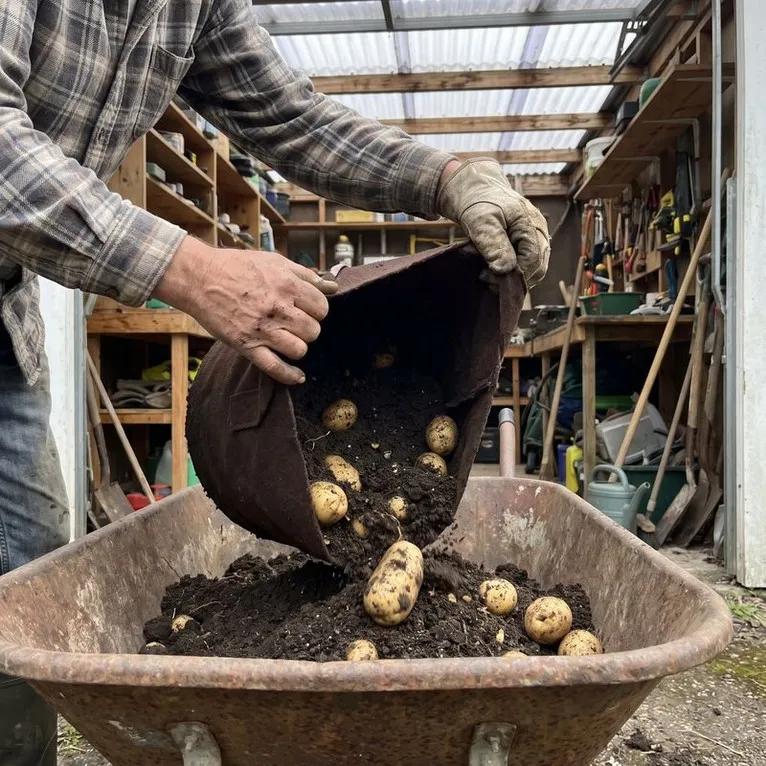
- Dig gently. The Handbook's grow bags make this easy: tip the bag into a wheelbarrow, no digging and no fork tines through the crop. In the ground, dig wide of the plant.
- Leave the new potatoes out of it. Small new potatoes picked at flowering have tender skins and are meant for eating soon, not for curing and storing.
How to cure potatoes, step by step
- Don't wash them. University of Maryland Extension says to knock off attached soil gently but not to wash tubers before storage. Let damp soil dry, then brush it off.
- Sort. Set aside any cut, bruised, green or forked potatoes to eat first. Oregon State says damaged tubers don't store well.
- Spread them out. One or two layers deep in shallow boxes, crates or on newspaper, so air reaches every potato.
- Keep them dark. Light turns potato skins green. A closet, a dark corner of the basement or crates loosely covered with a cloth or paper all work.
- Hold the right conditions. About 50 to 60°F with high humidity and some air movement, for about two weeks.
- Then cool them down. Move the cured potatoes to cold storage, as Project 39 says, into the root cellar.
How long to cure potatoes, and at what temperature
Extension sources land close together but not on one number:
| Source | Temperature | Humidity | Time |
|---|---|---|---|
| Iowa State | 50 to 60°F | 85 to 90% | Two weeks |
| University of Maryland | 50 to 60°F | High | 10 to 14 days |
| Utah State | 45 to 60°F | Dark location | About two weeks |
| Oregon State | Moderate | High | 7 to 10 days |
| The Off-Grid Handbook | Dark and ventilated | Two weeks |
In practice: about two weeks at 50 to 60°F, in the dark, with damp air. An early-fall basement or spare room is often in that range. If your spot runs warmer, curing goes faster but the risk of rot rises, so check the potatoes every few days.
Keeping the humidity up
Dry air pulls water out of potatoes. A concrete basement floor is often drier than potatoes like. The University of Alaska Fairbanks suggests pans of water on a concrete or wood floor to raise cellar humidity, and the same trick helps during curing. A cheap hygrometer tells you whether it is working.
After curing: storing potatoes
Once cured, potatoes go cold and dark. Iowa State recommends 40°F and 90 to 95 percent humidity, with an average storage life of 5 to 8 months. Oregon State says to lower the temperature gradually to 40 to 46°F, and warns that above 46°F potatoes keep only two to three months.
One adjustment to the book: Project 34 runs its root cellar at 32 to 40°F for roots. Potatoes belong at the top of that range. Utah State notes that potatoes stored very cold begin to taste sweet. Keep them near 40°F, in the dark, and never beside apples, which give off ethylene gas that sprouts them, a rule the Handbook and Iowa State share.
Oregon State adds that thick-skinned varieties like russets store better than thin-skinned red potatoes, so eat the reds first. Our full guide on how to store potatoes covers containers, the refrigerator question and green spots, and root cellar temperature and humidity explains how to hold the cellar near 40°F.
Common curing mistakes
- Washing before storage. Wet skins invite rot.
- Curing in the sun. Light greens the skin. Cure in the dark.
- Piling them deep. Potatoes at the bottom of a heap stay damp and bruised.
- Skipping the sort. One rotting potato spreads to its neighbors. Pull damaged ones before curing and check again before storage.
- Putting them straight into the cellar. Fresh, uncured potatoes in cold storage keep less well than cured ones.
- Forgetting to check. Look the potatoes over every few days while they cure. A soft or smelly one comes out right away.
Project 39 expects 5 to 10 pounds per grow bag, per the book, so six bags make a real winter supply worth curing properly. Our guide to growing potatoes in containers covers the growing side, and how to build a root cellar or a buried barrel root cellar gives the crop a cold place to wait. Winter squash cures very differently, warm and dry; see how to store winter squash.
Frequently asked questions
How long do you cure potatoes?
About two weeks. Iowa State University Extension recommends two weeks at 50 to 60°F and 85 to 90 percent humidity, University of Maryland Extension gives 10 to 14 days, and The Off-Grid Handbook calls for two weeks in a dark, ventilated spot before the potatoes go into the root cellar.
Do you wash potatoes before curing them?
No. University of Maryland Extension says to knock off soil gently but not to wash tubers before storage. Let damp soil dry, brush it off, and wash the potatoes only when you are ready to cook them.
Can you cure potatoes in the sun?
No. Light turns potato skins green, and green areas should be cut away before eating. Cure potatoes in the dark, in a cool spot around 50 to 60°F with high humidity.
Do new potatoes need to be cured?
New potatoes, the small ones picked around flowering time, have thin, tender skins and are meant to be eaten soon. Curing is for the main crop, harvested about two weeks after the vines die back, that you plan to store for months.
Sources
- The Off-Grid Handbook, Garrett Dalton, Project 39
- Iowa State University Extension: Storing Winter Storage Vegetables
- University of Maryland Extension: Growing Potatoes in a Home Garden
- Oregon State University Extension: Best practices for harvesting and storing homegrown potatoes
- Utah State University Extension: Harvest and Storage of Vegetables and Fruits
- University of Alaska Fairbanks Cooperative Extension: Vegetable Storage in Root Cellars
Safety guidance changes. Check the agency pages above for the current version, and follow your local code and manufacturer instructions.