Is it safe to use a kerosene heater indoors? What CPSC says, and what to know first
A kerosene heater burns its fuel in the room you are sitting in. Federal guidance allows it with strict rules, and some towns don't allow it at all.
In this article
Is it safe to use a kerosene heater indoors? Only under strict conditions, because it carries real risks of carbon monoxide and fire. The Consumer Product Safety Commission (CPSC) says to burn only water-clear 1-K kerosene, run the heater with the room's door open to the rest of the house, refuel it outdoors only after it has cooled, and keep it 3 feet from anything that can burn. The CDC adds a step before any of that: check with your local fire department on whether kerosene heaters are allowed where you live.
Kerosene heaters are unvented, so their exhaust stays in the room. That is why The Off-Grid Handbook does not plan around them, and why we don't either.
Is it safe to use a kerosene heater indoors? The short answer
Federal guidance treats a kerosene heater as something you can use indoors only with care. CPSC notes that even a heater burning efficiently produces low levels of carbon monoxide and nitrogen dioxide, which may be harmful, especially to people with chronic breathing or circulation problems.
The Handbook's Chapter 4 introduction sets the household rule: combustion belongs outdoors or inside code-compliant, vented appliances, and nowhere else. A portable kerosene heater is not vented. If you already own one and decide to use it, the CPSC rules below are the minimum.
Check the local rules first
Some states and cities restrict or ban unvented kerosene heaters in homes, and rules for apartments and rentals can be stricter. The CDC's winter storm guidance says to check with your local fire department on the legality of kerosene heaters in your community. They are the right people to ask; this article is not legal advice.
Kerosene heater carbon monoxide: how to limit it
CPSC's rules for keeping pollutants down are specific:
- Run it in a room with the door open to the rest of the house.
- Open an outside window about one inch if the door has to stay closed, or if the house is new and tight, or older but winterized against drafts.
- Set the wick where the manufacturer says. Don't run it below the minimum setting or above the recommended flame height.
- Keep the wick clean and in good condition, following the manual.
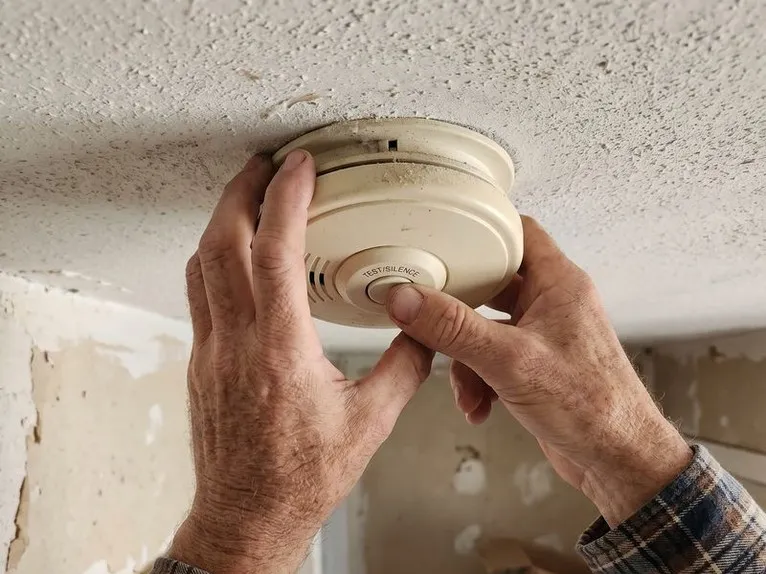
Then add the protection the Handbook treats as non-negotiable: a battery-backed CO alarm in the same room and on every level of the house. Project 52, the book's CO and smoke alarm grid, takes about an hour and roughly $90, and the book says every heating decision in it was written assuming that grid is installed. Our guide to CO detector placement shows where the alarms go.
If anyone gets a headache, feels dizzy, weak, sick to the stomach, sleepy or confused while the heater runs, get everyone outside to fresh air, then call 911. Our page on carbon monoxide poisoning symptoms covers the signs.
Fuel and refueling rules
Most kerosene heater fires start with the fuel. CPSC's guidance:
- Use only 1-K kerosene, bought from a dealer who can certify the grade. Other grades release more pollutants, and different grades can look the same.
- Never use gasoline. Even a small amount of gasoline mixed into kerosene can sharply raise the risk of fire or explosion.
- Store kerosene in its own container, usually blue, never in a red gasoline can or a can that ever held gasoline. CPSC's warning label also says to store it away from other fuel containers.
- Buy at the kerosene pump, not the gasoline pump. Some stations have a separate island for it.
- Refuel outdoors only, away from anything that burns, after the heater is off and cool. Don't fill past the full mark, since the fuel needs room to expand.
Fire safety around a kerosene heater
Keep the heater at least 3 feet from furniture, curtains, bedding and clothing, and keep children and pets away from its hot surfaces. Never run it without its protective grille. The U.S. Fire Administration advises turning space heaters off when you leave the room or go to bed.
If the heater flares up or flames get out of control, CPSC says not to move or carry it, which can make the fire worse. Use the manual shut-off switch if it has one. If that doesn't put the fire out, leave the house, warn others and call the fire department. CPSC's warning label also says not to try to smother the fire or throw water on it.
CPSC recommends smoke alarms on every level, outside sleeping areas and inside bedrooms. A mounted ABC extinguisher still belongs in the house for other small fires; see our guide to the best fire extinguisher for home use.
Kerosene heater vs propane heater
| Kerosene heater | Indoor-rated propane heater | |
|---|---|---|
| Exhaust | Unvented, stays in the room | Unvented, stays in the room |
| Safety shutoff | Varies by model | Oxygen depletion sensor required for indoor use |
| Fuel | 1-K kerosene only, stored in a blue can | Propane cylinders sized per the manual |
| Refueling | Outdoors, heater off and cool | Per the manual |
| Local rules | Restricted in some places | Check local rules too |
| CO alarm in the room | Yes | Yes |
Neither one is a vented appliance, so neither meets the Handbook's rule. If you are choosing between them, read can you use a propane heater indoors for the propane side.
Safer ways to stay warm when the power is out
The Handbook's Chapter 4 opens with a point worth remembering: cold is managed in layers, and the cheapest layers are not heaters. A sealed room, warm sleep systems and a household that gathers in one place carry people through outages that defeat homes with far more heating power. Project 49, "The One Warm Room," does it for about $40 and an hour of planning.
The overnight hours matter most. Project 53 of the book gives each person a sleeping bag rated at least 20°F below the coldest indoor temperature you expect, a foam pad underneath and a wool blanket on top, for about $60 and 30 minutes. That setup burns no fuel at all while the household sleeps, which is exactly when an unvented heater is most dangerous.
Start with how to stay warm without power, and if you heat with wood, keep the stove ready with our wood stove safety guide.
Frequently asked questions
Can you use a kerosene heater in a closed room?
CPSC says to run a kerosene heater in a room with the door open to the rest of the house. If the door must stay closed, or the house is tight or winterized, open an outside window about one inch to let in fresh air. Keep a battery-backed CO alarm in the room.
Do kerosene heaters give off carbon monoxide?
Yes. CPSC notes that kerosene heaters produce low levels of carbon monoxide and nitrogen dioxide even when working properly, which may be harmful, especially to people with breathing or circulation problems. Ventilate as CPSC describes, keep the wick clean and set correctly, and use a CO alarm.
Are kerosene heaters legal indoors?
It depends on where you live. Some states and cities restrict or ban unvented kerosene heaters in homes, and rental rules can be stricter. The CDC advises checking with your local fire department on whether they are allowed in your community before you use one.
Can you use gasoline in a kerosene heater?
Never. CPSC says even small amounts of gasoline or other volatile fuels mixed with kerosene can greatly increase the risk of fire or explosion. Use only water-clear 1-K kerosene, keep it in its own blue container, and never store it in a can that has held gasoline.
Sources
- The Off-Grid Handbook, Garrett Dalton, Chapter 4 intro
- CPSC: Kerosene Heater Safety (Pub. 5052, PDF)
- CDC: Safety Guidelines During and After a Winter Storm
- U.S. Fire Administration: Heating Fire Safety
- CPSC: Carbon Monoxide Information Center
- CDC: Carbon Monoxide Poisoning Basics
Safety guidance changes. Check the agency pages above for the current version, and follow your local code and manufacturer instructions.