How to keep elderly warm in winter, at home, at night and in an outage
Older bodies lose heat faster and notice it later. A few habits at home, and a plan for when the power fails, make most of the difference.
In this article
Here is how to keep elderly warm in winter: set the heat to at least 68°F, dress them in loose layers with socks, slippers and a head covering, add extra covers and long underwear at night, and make sure they eat enough and go easy on alcohol. Check on them often in cold weather, and if a power outage leaves the home without heat, move them somewhere warm early.
Those steps come from the National Institute on Aging (NIA). It warns that even a mildly cool home, 60 to 65°F, can lead to hypothermia in older adults.
Why older adults get cold faster
NIA explains that changes that come with aging make it harder to notice the body getting too cold. Several common conditions make it harder to stay warm:
- Diabetes can keep blood from flowing normally to provide warmth.
- Thyroid problems can affect the body's ability to hold a normal temperature.
- Parkinson's disease and arthritis can make it hard to put on more clothes, pull up a blanket or get out of the cold.
- Memory problems can mean forgetting to dress warmly or turn up the heat.
Some medicines, including some over-the-counter cold medicines, can affect body heat too. NIA suggests asking the doctor whether any medication your parent or partner takes does this, and what to do about it.
How to keep elderly warm in winter at home
NIA notes that about 20% of cold-related injuries happen at home. Its indoor checklist:
- Heat set to at least 68°F, day and night.
- Drafts blocked with a rolled towel at the bottom of doors.
- Blinds and curtains closed, with weather stripping or caulk on gaps around windows. Our guide to insulating windows for winter covers this.
- Warm clothes indoors: socks, slippers and a throw blanket within reach of the favorite chair.
- Enough food to keep weight steady, since some body fat helps hold heat.
- Little or no alcohol, which makes the body lose heat.
- Someone checking in during cold weather.
NIA recommends warm, loose layers, because the air between layers holds heat. Change out of damp clothes right away.
How to keep elderly warm at night
Night is when cold catches people off guard. The Off-Grid Handbook puts it this way in Project 53, "Sleep Systems": people do not freeze at 2 p.m.; the crisis hours are 2 a.m. NIA's advice for bedtime is extra covers, long underwear under pajamas and a head covering.
The book's layer rule fills in the rest:
- Insulation below, such as a mattress topper or, on the floor, a closed-cell foam pad. The floor steals more heat than the air.
- A sleeping bag or warm comforter around, and a wool or fleece blanket over it.
- A knit cap and wool socks. Much of the body's heat loss happens through poor insulation underneath and an uncovered head.
- Warm, dry sleepwear only, because going to bed damp defeats any bag.
For outages, the Handbook calls for one real sleeping bag per person, rated at least 20°F below the coldest indoor temperature you expect, and puts the whole set together for about 30 minutes and roughly $60. Our guide to sleeping warm in a cold house has the details.
Keeping seniors warm during a power outage
When the furnace stops, act early. NIA's advice is that if an outage leaves an older person without heat, they should try to stay with a relative or friend. Ready.gov adds that if the cold is extreme, go to a community location with power.
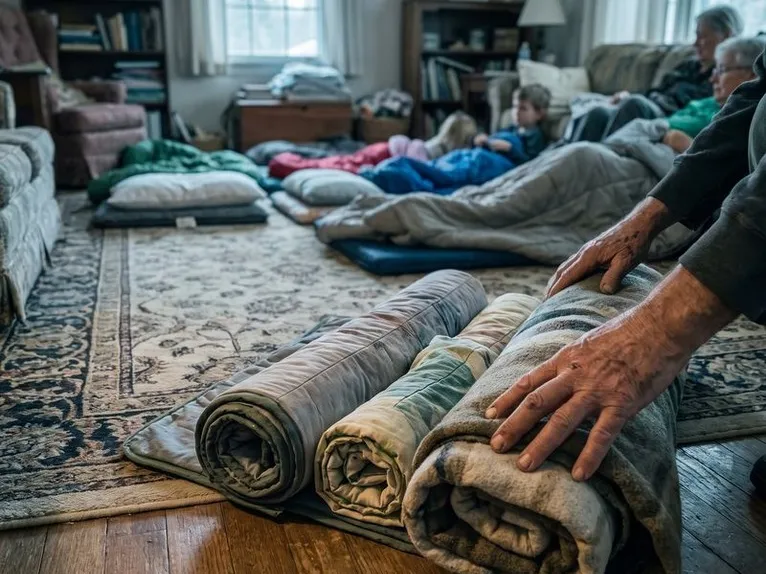
If everyone is staying home, use the Handbook's Project 49, "The One Warm Room": heat one small room instead of the house. Seal the doorway with heavy blankets, cover the floor with rugs and bring the household in together. Per the book, four people give off about 400 watts of body heat, and group sleeping in the warm room multiplies everyone's warmth, with children and elders in the center of the arrangement. Our guide to staying warm without power walks through the setup.
Pick that room ahead of time, and if possible choose one on the same floor as a bathroom, so nobody has to climb cold stairs at night. The book's field note: households that pre-picked the room settle in hours faster than households that debate it cold. Keep glasses, hearing aids, medicines, a flashlight and a charged phone in the room too, and plan the move to a relative's home or a warming center before the roads ice over, as our guide to preparing for an ice storm explains.
- Medical devices and medicines: Ready.gov advises talking to the medical provider now about a power outage plan for devices that need electricity and medicines that need refrigeration.
- No improvised heat: never a gas oven, grill or camp stove indoors, and a generator only outdoors, at least 20 feet from the house. Read why a gas stove is not a heater.
- A CO alarm in the warm room and on every level. Older adults are more likely to get sick from carbon monoxide, per the CDC. See CO detector placement.
Check on older neighbors
The CDC's winter storm guidance says to check on older friends and neighbors often to make sure their homes are heated properly. The Handbook turns that into a plan in Project 67, a neighborhood map: sketch the block, have low-key conversations ("if the power went out a few days, we check on each other, here is our number"), and mark the check-first houses: elderly, disabled, single parents and anyone who depends on a medical device. The book notes that most people are relieved someone asked.
Our guide to a neighborhood emergency plan covers how to set this up.
Warning signs of hypothermia in older adults
Hypothermia means the body's core temperature has dropped below 95°F. NIA lists these early signs:
- Cold hands and feet.
- A puffy or swollen face.
- Pale skin.
- Shivering or shaking, though not everyone shivers.
- Slowed or slurred speech.
- Seeming sleepy, angry or confused.
Because hypothermia affects thinking, the person may not realize they need help. NIA is clear: hypothermia is a medical emergency, so call 911 right away. While you wait, move the person somewhere warmer, offer a warm drink if they are alert, and wrap them in dry blankets, towels or coats.
Frequently asked questions
What temperature should an elderly person's house be in winter?
The National Institute on Aging recommends setting the heat to at least 68°F. It warns that even mildly cool homes, from 60 to 65°F, can lead to hypothermia in older adults. Block drafts, close curtains and keep warm layers and a blanket close by.
How can I keep my elderly parent warm at night?
Use extra covers, long underwear under pajamas and a head covering, as NIA advises. Add insulation underneath, since the bed or floor pulls heat away, plus wool socks and dry sleepwear. Keep the bedroom heat at a safe level and check in during cold snaps.
What should seniors do if the power goes out in winter?
Move early. NIA suggests staying with a relative or friend, and Ready.gov says to go to a community location with power if the cold is extreme. At home, heat one sealed room, gather together with blankets and sleeping bags, keep a CO alarm in the room and never use a gas oven or grill for heat.
What are the signs of hypothermia in the elderly?
NIA lists cold hands and feet, a puffy or swollen face, pale skin, shivering, slowed or slurred speech, and seeming sleepy, angry or confused. Hypothermia is a medical emergency: call 911 right away, move the person somewhere warmer and wrap them in dry blankets.
Sources
- The Off-Grid Handbook, Garrett Dalton, Project 53
- National Institute on Aging: Cold Weather Safety for Older Adults
- CDC: Preventing Hypothermia
- CDC: Safety Guidelines During and After a Winter Storm
- Ready.gov: Power Outages
- CDC: Carbon Monoxide Poisoning Basics
Safety guidance changes. Check the agency pages above for the current version, and follow your local code and manufacturer instructions.