How to flush a toilet without water: the bucket method, step by step
When the taps stop, the toilet still works. It just needs a bucket, the right water and a few rules about when to stop flushing.
In this article
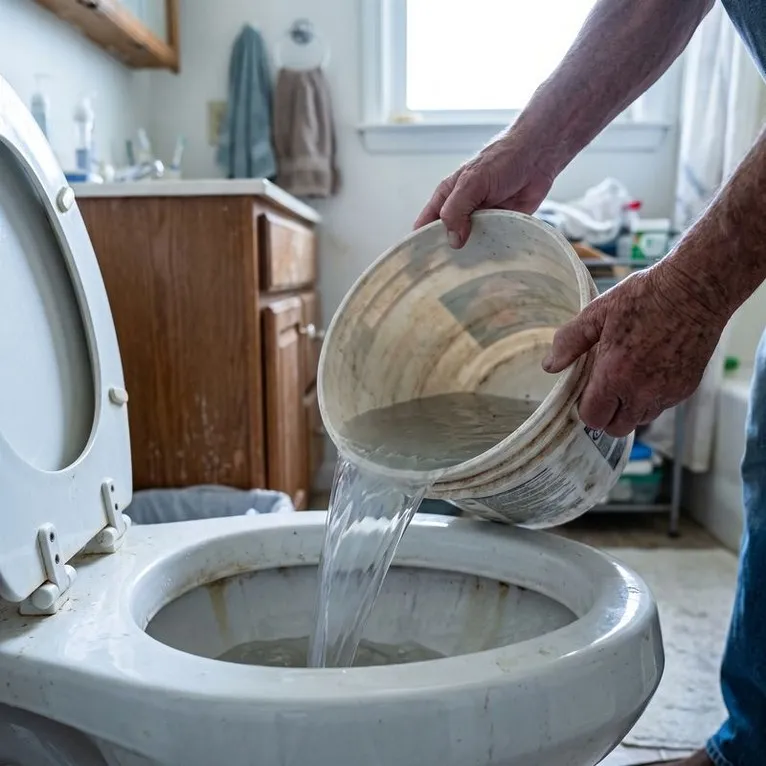
The short answer to how to flush toilet without water in the tank: pour 1.5 to 2 gallons straight into the bowl, not the tank, in one quick, steady pour. The rush of water pushes the waste through the trap and the toilet flushes on its own. Use bath water, rain barrel water or used wash water for this, never your drinking water.
That is step 3 of Project 10 in The Off-Grid Handbook, the Greywater Bucket Loop. The book's warning comes first: in a grid-down week, flushing toilets with drinking water is how reserves die.
How to flush toilet without water: the bucket method
- Lift the seat so nothing splashes on it.
- Fill a bucket with 1.5 to 2 gallons of non-drinking water. A 5-gallon bucket filled partway is easier to handle than a full one.
- Pour fast and steady into the bowl, aiming toward the drain hole. A slow trickle just fills the bowl; a quick pour starts the siphon that empties it.
- Let it finish. The bowl empties and refills partly on its own.
- Wash your hands. CDC says soap and water is best; if you cannot spare the water, use a hand sanitizer with at least 60% alcohol.
Water weighs about 8.3 pounds per gallon, the book notes, so a 2-gallon pour is over 16 pounds. If lifting is hard, use a smaller container and pour twice in quick succession, or ask for help. Project 11 of the Handbook adds a hand-pump siphon kit that moves water from barrel to jug to bathtub without lifting.
Bowl or tank: which is better?
The book says the bowl, and there is a practical reason: pouring into the bowl flushes right away and uses only the water you pour. Filling the tank means lifting a heavy lid, keeping water clean enough to sit in the tank, and wasting some of it on the refill.
It also means your flushing water never touches the parts of the toilet connected to the house plumbing. Keep it simple: bucket, bowl, done.
What water to use for flushing
Ready.gov says to store at least one gallon of water per person per day, for drinking and sanitation. One flush uses more than that. That is why the Handbook builds its greywater loop: every flush that uses wash water saves a day of someone's drinking water.
- Bathtub water. Fill the tub when the outage starts. Our guide on water during a power outage explains why the first minutes matter.
- Greywater. Water caught from the sink and shower. Project 10 uses a basin under the faucet, a small mesh strainer and three 5-gallon buckets boldly labeled GREYWATER. Use it within 24 hours; the book says it is not for storage.
- Rain barrel water. Ideal for flushing. See how to set up a rain barrel.
Set up the loop before the storm
Project 10 is rated Easy in the book: about an hour and roughly $25 in buckets, a basin and a strainer. Strain the water as you collect it, because the book warns that food solids sour fast. Any soapy water you do not use for flushing can go on ornamental plants, not on vegetables you eat raw, which the book notes is common extension-service guidance. Doing it once on a calm day means nobody has to work it out by flashlight.
Greywater is non-potable, always. The Handbook's safety rules: never store it beyond a day, never let it touch food surfaces, and keep the buckets visually distinct from every drinking water container in the house. Our greywater guide covers the full loop, and how much water per person per day covers the drinking supply.
Flushing a toilet during a power outage
Whether the toilet works in a power outage depends on your water and your sewer:
- City water: the tank usually refills as long as there is pressure. If pressure drops, switch to the bucket method.
- Private well: the pump stops with the power, so the tank will not refill. Save what is left in the pipes for drinking and use the bucket.
- Septic system: see the next section before you flush often.
If your utility or local officials ask residents to limit water use or not to flush, follow that instruction. Sewer systems use pumps too, and some cannot move wastewater without power. Flush only when needed during a long outage.
Septic systems in an outage
Texas A&M AgriLife Extension explains the difference. A gravity septic system, where wastewater flows downhill to the tank and drain field, keeps working in an outage. A system with electric parts, such as a pump tank, an aerobic unit or drip or spray distribution, collects wastewater until the power comes back, and its reserve space is small.
For a system with electric parts, the extension service advises:
- Short outage: limit water to essentials such as toilet flushing and hand washing. No laundry, baths, showers or dishwashing.
- Drains slowing down: stop all water use. The reserve may be full.
- Long outage: stop all water use.
If you do not know which type you have, look for an alarm box or control panel in the yard or on the house; it usually means electric parts. Your septic service company can tell you for sure.
When not to flush at all
If the sewer line or septic system is damaged or blocked, flushing pushes sewage back into the house. The County of San Diego Department of Environmental Health says that if a sewer line blockage is suspected or obvious, stop running water into the drains and do not flush toilets. Signs include sewage backing up into a toilet, tub or floor drain, gurgling drains and a sewage smell.
In that case, the county suggests a camp or RV toilet, or large extra-strength trash bags, double-bagged, set in a watertight container with a tight lid or used as a liner in the toilet bowl, with household disinfectant for odor. Hold the bags until local officials say how to dispose of them. A few heavy-duty bags and a lidded bucket are worth adding to your power outage preparations.
Bags are a stopgap for a day or two. If the sewer line will be dug up for a week, or a whole household is waiting on a septic repair, a rented portable toilet set in the driveway is usually easier on everyone. Rental is priced by the day, week or month, and this guide to how much it costs to rent a porta potty compares published prices and the add-ons that change a quote.
Avoid contact with any overflowing sewage, and keep children and pets away from it. Our checklist on what to do when the power goes out covers the rest of the first hours.
Frequently asked questions
How much water does it take to flush a toilet with a bucket?
About 1.5 to 2 gallons, poured quickly and steadily straight into the bowl, not the tank. The fast pour starts the siphon that empties the bowl. A slow trickle only raises the water level. Use non-drinking water such as bath water, rain barrel water or strained wash water from the sink and shower.
Can you flush a toilet when the power is out?
Usually. On city water the tank refills as long as there is pressure. On a private well the pump stops, so use the bucket method. On a septic system with a pump or other electric parts, limit flushing to what is necessary, and stop all water use if drains slow down or the outage drags on.
Should I pour the water into the tank or the bowl?
The bowl. Pouring 1.5 to 2 gallons straight into the bowl flushes immediately and uses only the water you pour. Filling the tank means lifting a heavy lid and keeping that water clean, for no extra benefit. Lift the seat first and pour toward the drain hole.
When should you not flush the toilet in an emergency?
Do not flush if the sewer line or septic system may be damaged or blocked, for example if sewage is backing up into a toilet, tub or drain. Flushing then pushes sewage into the house. Use a camp toilet or double-bagged trash bags in a lidded container instead, and follow local officials' instructions.
Sources
- The Off-Grid Handbook, Garrett Dalton, Project 10
- Ready.gov: Water
- Texas A&M AgriLife Extension: Onsite Wastewater Treatment Systems, Responding to Power Outages and Floods (PDF)
- County of San Diego DEH: Sewage Disposal in an Emergency (PDF)
- CDC: Hand Sanitizer vs. Soap and Water
- CDC: What to Do to Protect Yourself During a Power Outage
Safety guidance changes. Check the agency pages above for the current version, and follow your local code and manufacturer instructions.