How to sanitize water storage containers with plain bleach
One teaspoon of bleach, one quart of water and thirty seconds. It is the step that keeps a year of stored water from going off.
In this article
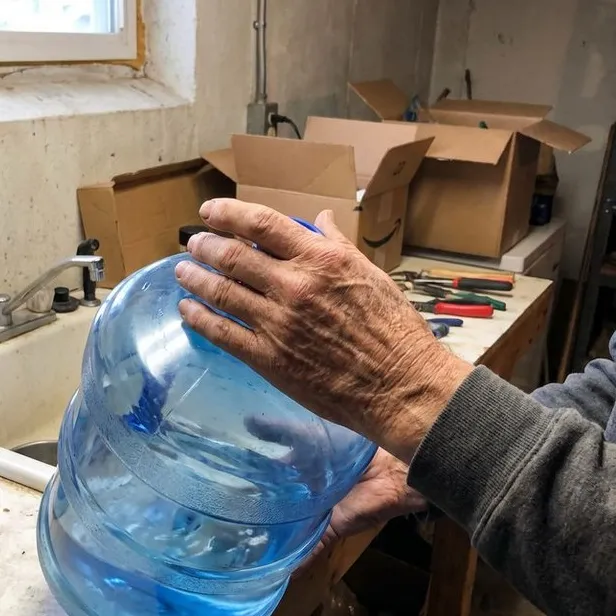
Here is how to sanitize water storage containers: wash them with soap and water and rinse. Then mix 1 teaspoon of unscented liquid household bleach into 1 quart of water, pour it in, cap the container and shake so the solution touches every inside surface. Wait at least 30 seconds, pour it out, and let the container air-dry before filling. That is CDC's method.
The Off-Grid Handbook uses the same ratio in step 2 of Project 5. Sanitizing takes a few minutes per container, and it is worth doing even on brand-new jugs.
What you need
- Plain, unscented bleach labeled 5 to 9 percent sodium hypochlorite. CDC says to use bleach in that range, and the book specifies plain bleach with no additives.
- Dish soap and a bottle brush.
- A measuring teaspoon and a quart measure or jar.
- A funnel.
- Gloves, if bleach bothers your skin.
Skip scented, "splash-less" or "color-safe" bleach. Those products carry additives or less active ingredient, and they are not meant for anything that will hold drinking water.
How to sanitize water storage containers, step by step
- Wash. Scrub the inside with warm, soapy water, paying attention to the threads of the neck and the inside of the cap. Rinse until no soap remains.
- Mix the solution. 1 teaspoon of unscented bleach in 1 quart (4 cups) of water.
- Coat every surface. Pour the solution in, cap tightly and shake, turning the container on every side so the solution reaches the walls, the shoulders and the cap.
- Wait. At least 30 seconds, per CDC.
- Pour out and dry. Empty the solution and let the container air-dry with the cap off. Oregon State University Extension adds that you can rinse with clean, purified water instead; the Handbook rinses with treated water.
- Fill and date. Fill with tap water, cap it, and write "drinking water" and the date on the label.
Run the cap and any spigot through the same solution. Caps are where hands touch most, and a dirty cap undoes a clean jug.
How to clean water jugs with bleach: the ratio for bigger batches
One quart of solution is plenty for a 5-gallon jug. For larger containers, keep the same strength and simply make more of it:
| Solution needed | Unscented bleach | Water |
|---|---|---|
| 1 quart | 1 teaspoon | 4 cups |
| Half gallon | 2 teaspoons | 2 quarts |
| 1 gallon | 4 teaspoons | 4 quarts |
This is a sanitizing solution for empty containers, not a drinking water dose. Treating water you will drink takes far less bleach: a few drops per gallon, measured for your bleach's strength, as set out in how to purify water with bleach. Do not mix the two up.
How to sanitize a water barrel
A 55-gallon barrel is too heavy to shake, so you roll it instead.
- Rinse the barrel with a hose and a long brush, then drain it.
- Mix about a gallon of the same solution: 4 teaspoons of unscented bleach in 1 gallon of water.
- Pour it in through the bung, close both bungs, and slowly roll and tip the barrel so the solution washes over every inside surface, including the top.
- Let it sit at least 30 seconds after the last surface is wet, then drain it completely.
- Let it air-dry with the bungs open, or rinse with clean tap water, then fill it where it will stay.
Get help moving a barrel, even an empty one, and never lift with a twisted back. A food-grade barrel that once held syrup or juice needs extra scrubbing with soap first, because sugar residue feeds bacteria.
Bleach safety: the rules that do not bend
The Handbook's safety box for Project 6 is short: never mix bleach with other cleaners or with ammonia, and use only plain, unscented sodium hypochlorite bleach. Bleach mixed with ammonia or acids releases toxic gases.
- Work in a ventilated room, such as a laundry room or kitchen with a window open.
- Rinse out any other cleaner before bleach goes in a container.
- Keep bleach in its original bottle, out of reach of children and pets.
- Date the bottle when you open it. The book replaces bleach yearly because it loses strength over time.
Never sanitize, and never store water in, a container that once held bleach, pesticides or other chemicals. CDC is clear that those containers are off the list for drinking water.
Common mistakes to avoid
- Skipping the soap. Bleach works best on a clean surface. Wash first, every time.
- Forgetting the cap. The threads and the inside of the cap need the solution as much as the walls do.
- Using old bleach. An unmarked bottle from the back of the laundry shelf may be weak. Date it when you open it.
- Too strong a mix. More bleach is not better. It takes longer to air out and can leave a taste.
- Rinsing with untreated water. Air-dry, or rinse with clean, safe water, never with water from a barrel or creek.
The same solution works for the rest of your water gear: the funnel, a spigot, a pitcher you use to dip from a tub, and the hose from a siphon kit. Pull the solution through the hose, let it sit a moment, drain it and hang it to dry.
When to sanitize again
Sanitize every time you empty and refill a container, which for most households is the six-month rotation in how to store water long term. Sanitize again if a cap was left off, if the water looked cloudy or smelled off, or if the container sat empty and open.
The six-month rotation is also a good time to look the containers over. Replace any jug with cracks, a warped neck or plastic that has turned chalky. The book's field note favors stacked 5-gallon containers, which are easy to handle at the sink.
Once your containers are clean and full, the next question is quantity. Our guide to how much water per person per day gives the target for your household, and Project 5 of the Handbook turns it into a labeled, dated store.
Frequently asked questions
How much bleach do I use to sanitize a water container?
CDC's ratio is 1 teaspoon of unscented liquid household bleach (5 to 9 percent sodium hypochlorite) in 1 quart of water. Pour it in, cap and shake so it touches every surface, wait at least 30 seconds, then pour it out and let the container air-dry.
Do I need to rinse a water container after sanitizing with bleach?
No. CDC says to pour the solution out and let the container air-dry. Oregon State University Extension adds that you can rinse with clean, purified water instead. Do not rinse with untreated water, which would undo the sanitizing.
Do new water containers need to be sanitized?
Yes. CDC's instructions apply to every container you fill yourself. New containers can pick up dust and handling in the warehouse and store. Washing and sanitizing takes a few minutes and protects water you may keep for six months.
Can I use scented or splash-less bleach to sanitize water jugs?
No. Use only plain, unscented bleach labeled 5 to 9 percent sodium hypochlorite. Scented, color-safe and splash-less products contain additives or different strengths. Never mix bleach with ammonia or other cleaners, which releases toxic gases.
Sources
- The Off-Grid Handbook, Garrett Dalton, Project 5
- CDC: How to Create an Emergency Water Supply
- Oregon State University Extension: Soda bottles for emergency water storage?
- Ready.gov: Water
- CDC: How to Make Water Safe in an Emergency
- EPA: Emergency Disinfection of Drinking Water
Safety guidance changes. Check the agency pages above for the current version, and follow your local code and manufacturer instructions.