How long to boil water to purify it: one minute, or three up high
Boiling is the oldest way to make water safe, and still the most reliable. The clock starts at a rolling boil, not at the first bubbles.
In this article
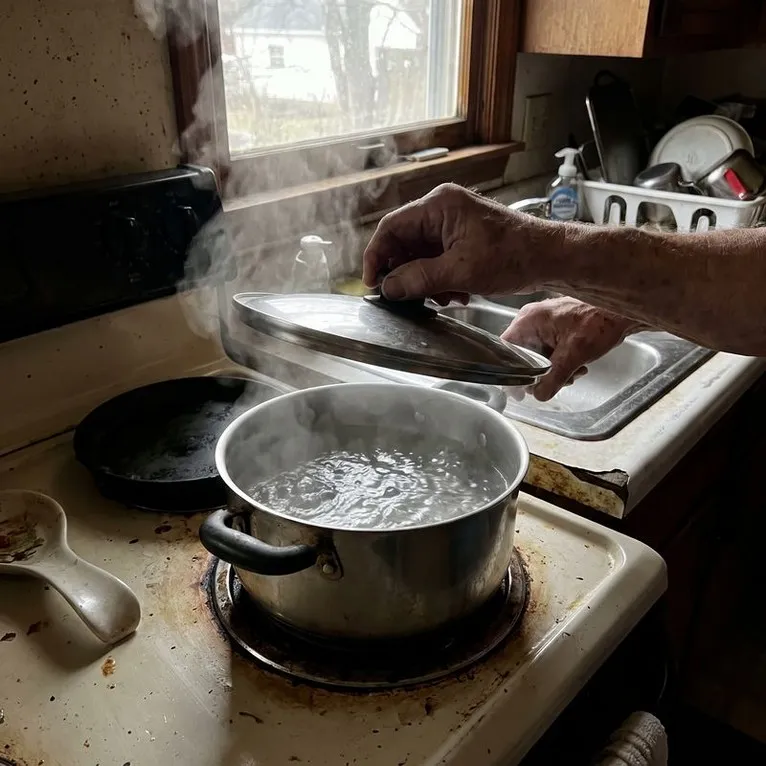
How long to boil water to purify it? Keep it at a full rolling boil for 1 minute. Above 6,500 feet of elevation, boil it for 3 minutes. That is CDC's guidance, and it kills the bacteria, viruses and parasites that cause waterborne illness. Let the water cool on its own, then store it in a clean, covered container.
The Off-Grid Handbook calls boiling the gold standard and puts it first on the instruction card in Project 6, the Emergency Disinfection Station: about 20 minutes of setup and roughly $15, per the book.
How long to boil water to purify it
A rolling boil is one that keeps bubbling hard even when you stir it. Start timing at that point, not when the first small bubbles appear on the bottom of the pot.
| Your elevation | Rolling boil time (CDC) |
|---|---|
| Up to 6,500 feet | 1 minute |
| Above 6,500 feet | 3 minutes |
Longer is not more effective in any way that matters, and boiling for 10 or 20 minutes only wastes fuel and boils water away. One full minute does the job at most elevations.
Boiling water at high altitude
Water boils at a lower temperature the higher you go, so it needs more time at a boil to do the same work. That is why the time triples up high.
The two federal agencies draw the line in slightly different places. CDC, and the Handbook with it, uses 6,500 feet. EPA's emergency disinfection page says to boil for 3 minutes above 5,000 feet. If you live between 5,000 and 6,500 feet, boiling for 3 minutes satisfies both and costs only a little extra fuel.
Not sure of your elevation? Your county's website or a topographic map will tell you, and it is worth writing on your instruction card before you need it.
How to purify water by boiling, step by step
- Start with clear water. If it is cloudy, let it settle, then pour the clear water off the top or filter it through a clean cloth, paper towel or coffee filter. The book's rule is that disinfection works on clear water.
- Bring it to a rolling boil in a clean pot with a lid.
- Time it: 1 minute, or 3 minutes above 6,500 feet.
- Let it cool naturally with the lid on. Do not add ice unless it was made from safe water.
- Store it covered in clean, sanitized containers with tight lids.
Boiled water tastes flat because the air has been driven out. CDC suggests pouring it back and forth between two clean containers, letting it stand a few hours, or adding a pinch of salt per quart.
The Handbook's station keeps a dedicated stock pot for this job, so the boiling pot is never also the soup pot with a film of grease. A laminated card with the times sits beside it, because, as the book's field note puts it, nobody remembers the numbers under stress.
Boiling water during a power outage
A gas stovetop can usually be lit with a match during an outage; follow your range's manual. Use it for cooking and boiling only. Never use a gas oven or stovetop to heat the house, which is a carbon monoxide risk explained in can you use a gas stove for heat.
Camp stoves, propane burners, grills and charcoal belong outdoors only, never in the house or the garage, even with the door open. Set them up away from doors, windows and vents. Our guide on how to cook without electricity covers safe outdoor setups and fuel.
If fuel is scarce, the sun can do some of the work. Water held at about 149°F is pasteurized, and solar water pasteurization shows how to reach that temperature with a black jar, a reflector and an indicator, with no fuel at all.
Make the instruction card
The Handbook's Project 6 is less about the pot than about the card next to it. Step 4 says to write both procedures, boiling and bleach, on a waterproof card with your own bleach's exact concentration, laminate it, and tape it to the station. Step 5 says to date the bleach bottle and replace it yearly, because bleach loses strength.
A good card for boiling has four lines: filter or settle cloudy water first; rolling boil for 1 minute, or 3 minutes up high; cool with the lid on; store covered and labeled. Add your elevation so nobody has to guess.
Keep the station somewhere everyone in the house can find it, and walk older children through it once. Boiling water is also a burn risk, so turn pot handles inward, keep small children out of the kitchen while it cools, and pour with both hands or ladle it out instead of lifting a heavy pot.
What boiling does not fix
Boiling kills germs. It does not remove chemicals. CDC says not to rely on boiling for water that contains fuel, toxic chemicals or radioactive material, and EPA adds heavy metals and salts to the list. Boiling actually concentrates those contaminants slightly as the water evaporates.
If floodwater may have reached your water source, or it smells of fuel or chemicals, use bottled water and call your local health department. The Handbook's safety note for Project 6 says the same: these methods address microorganisms only, and when in doubt, follow your local authorities.
Boiling or bleach: which to use
Boiling is the most reliable choice when you have fuel and a safe place to use it. Bleach is the backup when you do not: CDC's dose for 5 to 9 percent bleach is 8 drops per gallon of clear water, then 30 minutes of waiting. The full method and the table for other strengths are in how to purify water with bleach.
Your local water utility may tell you which method to use. During an official notice, follow its instructions first; our guide to what to do during a boil water advisory covers dishes, ice, babies and pets. For water you store ahead of time, there is no boiling needed at all if you start with safe tap water, as explained in how to store water long term.
Frequently asked questions
How long do you boil water to make it safe to drink?
Bring clear water to a full rolling boil for 1 minute, per CDC. Above 6,500 feet, boil it for 3 minutes. Let it cool naturally and store it in clean, covered containers. If the water is cloudy, let it settle or filter it through a clean cloth or coffee filter first.
Do you need to boil water longer at high altitude?
Yes. Water boils at a lower temperature at higher elevations, so CDC says to boil it for 3 minutes above 6,500 feet. EPA uses a lower line of 5,000 feet. If you live between the two, boiling for 3 minutes covers both recommendations.
Does boiling water remove chemicals?
No. Boiling kills bacteria, viruses and parasites, but it does not remove fuel, pesticides, heavy metals, salts or other chemicals, and it can slightly concentrate them. If your water may be chemically contaminated, use bottled water and contact your local health department.
Is a minute of boiling better than bleach?
Boiling is the most reliable household method when you have fuel and a safe place to boil. Bleach is the backup: 8 drops of 5 to 9 percent unscented bleach per gallon of clear water, stirred, then 30 minutes of waiting before drinking.
Sources
- The Off-Grid Handbook, Garrett Dalton, Project 6
- CDC: How to Make Water Safe in an Emergency
- EPA: Emergency Disinfection of Drinking Water
- CDC: Drinking Water Advisories, An Overview
- Ready.gov: Water
Safety guidance changes. Check the agency pages above for the current version, and follow your local code and manufacturer instructions.