How to clean gutters safely: ladder rules, steps and when to call a pro
Clean gutters protect the roof, the foundation and any rain barrel below. The ladder is the dangerous part, so the plan starts there.
In this article
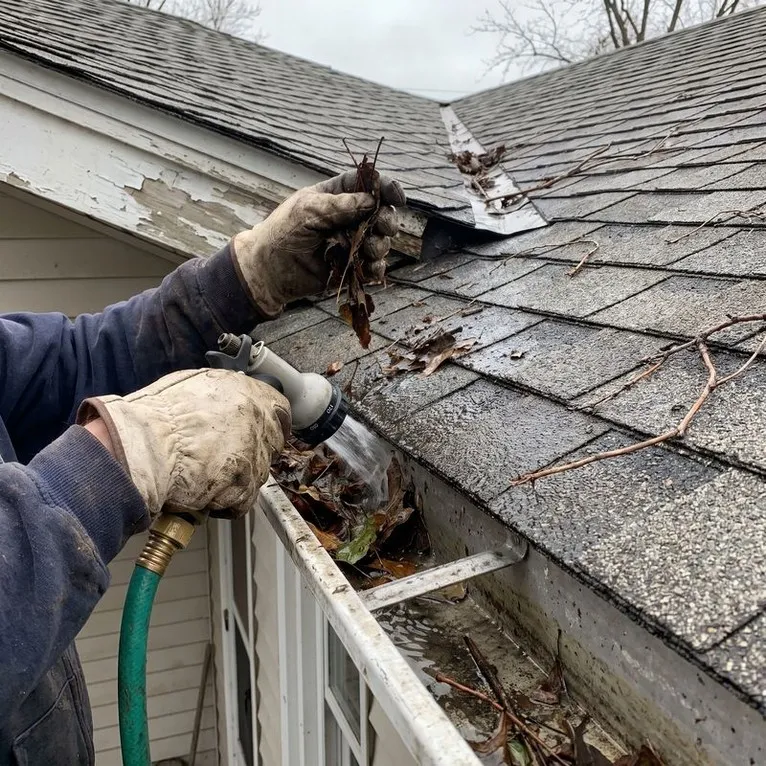
Here is how to clean gutters: set a sturdy ladder on firm, level ground with a helper at its base, scoop out leaves and debris by hand or with a gutter scoop, then flush each run with a hose toward the downspout and check that water flows freely out the bottom. Work in the fall after the leaves drop, and again in spring if trees overhang the roof.
The Off-Grid Handbook covers this in Project 8, Gutter Screening & Roof Prep: about an hour and $30, per the book. Its safety box is the most important line on the page: ladder work causes more household injuries than any project in the book.
Ladder safety comes first
The book's ladder rules are short: use a stabilizer, keep three points of contact, and never work a roof edge alone or in wind. OSHA and CPSC add the details:
- Inspect the ladder before you climb. A cracked rail or loose rung means it stays on the ground.
- Set it at the right angle: the base one foot out from the wall for every four feet of height, per OSHA.
- Extend it at least 3 feet above the gutter edge if you will step off, and do not stand on the top three rungs of an extension ladder.
- Three points of contact: two hands and a foot, or two feet and a hand, facing the ladder.
- Have a helper hold the base, as CPSC recommends for gutter cleaning, and keep children and pets out from under it.
- Look up for power lines. Never use a metal ladder near them.
- Move the ladder often instead of leaning out. Keep your body centered between the rails.
A ladder stabilizer, sometimes called a standoff, holds the top of the ladder off the gutter itself, so you are not leaning your weight on the thing you are cleaning. The Handbook lists one with the tools for this project.
How to clean gutters, step by step
Gather gloves, a gutter scoop or small plastic trowel, a bucket with a hook or a tarp spread below, and a hose with a spray nozzle. Then:
- Start at the downspout end and clear the opening first, so water and loose debris have somewhere to go.
- Scoop the debris into the bucket or onto the tarp, working away from the downspout. Wet leaves come out in clumps; dry ones blow around.
- Flush the run with the hose, toward the downspout, as the book's step 1 says: clear the gutters completely, then flush.
- Check the downspout. If water backs up, spray up from the bottom outlet, or work a plumber's snake in from below. Do not hang off the ladder to push from the top.
- Check the joints and slope. Water should run to the downspout without pooling. Seal leaking seams with gutter sealant, which the book includes in its materials list.
- Check where the water goes. The U.S. Department of Energy's building science guidance says downspouts should end at least 5 feet from the foundation.
How to clean gutters safely without a tall ladder
For a single-story home, there are ways to keep both feet on the ground or close to it:
- A hose attachment with a curved wand that sprays into the gutter from below.
- A telescoping scoop or grabber designed for gutters.
- A short, stable step ladder for low runs, never used as a lean-to ladder.
They do not get gutters as clean as hands do, but they handle routine clearing between deeper cleanings.
And there is no shame in hiring it out. CPSC notes that people 65 and older are 80 percent more likely than other adults to visit an emergency room for injuries involving ladders or stools. A two-story roof, a steep pitch, power lines near the gutter or anyone feeling unsteady are all good reasons to call a gutter or roofing contractor.
Gutter cleaning tools and screens
Once the gutters are clean, the book's next steps keep them that way:
- Mesh screening along every run that feeds a collection downspout.
- A leaf strainer dropped into the downspout head.
- A look at the roof: crumbling shingles, moss mats and overhanging dead branches all feed the gutters. Inspect from the ladder or the ground; do not walk the roof.
Screens do not end the job. Debris still collects on top of them and needs brushing off, but it stays out of the downspouts, where clogs are hardest to reach.
Why clean gutters matter for stored water
In the Handbook, the roof is the catchment surface for the whole rain system, and an hour of cleanup upstream saves endless filter maintenance downstream. Clean, screened gutters mean less grit and fewer leaves in a rain barrel, and a first flush diverter that does not clog after every storm.
Gutters also protect the house. Overflowing gutters dump water against the foundation and, in cold climates, help ice build up along the roof edge. Rain barrel overflow follows the same logic: Rutgers recommends sending it at least 6 feet from a basement foundation.
What to do with the debris
Gutter muck is mostly leaves, twigs and grit, and much of it can go straight into a compost pile or under shrubs as mulch. Bag anything with shingle granules or roofing scraps for the trash. Rinse and dry gloves and the scoop before putting them away, and wash your hands well, since gutters collect bird droppings along with the leaves.
If the gutters were packed with shingle granules, mention it to a roofer. Heavy granule loss is a sign of an aging roof, which the book's step 4 asks you to check for.
When to clean gutters
The book's step 5 says to recheck each fall before the wet season, and to put the job on Project 72, the Seasonal Build Order. That calendar lists gutters and roof prep first in its autumn block, with this field note: nobody fixes gutters in a storm, so schedule the work for when it is merely a chore.
The National Weather Service also lists clearing clogged gutters and downspouts as a step before hurricane season. Homes under heavy trees may need a spring cleaning too, after the seed pods and blossoms fall.
Gutters are one line on a longer list. See the winter storm preparedness checklist for the rest of the autumn work, and how to winterize a rain barrel before the first hard freeze.
Frequently asked questions
How often should you clean your gutters?
At least once a year in the fall, after the leaves drop and before the wet season, which is when the Off-Grid Handbook schedules it. Homes under trees may need a second cleaning in spring. The National Weather Service also lists clearing gutters as a step before hurricane season.
What is the safest way to clean gutters?
Use a ladder in good condition on firm, level ground, set one foot out for every four feet of height, with a stabilizer and a helper at the base. Keep three points of contact, never stand on the top rungs, avoid power lines and never work alone or in wind. For high or steep roofs, hire a professional.
Can I clean gutters from the ground?
For a single-story home, yes, at least for routine clearing. Curved hose wands and telescoping gutter scoops reach into the gutter from below. They are less thorough than hand cleaning, so plan on a deeper cleaning, or a hired one, now and then.
Are gutter guards worth it?
Mesh screens keep leaves out of the gutter and downspouts, and the Off-Grid Handbook fits them on every run that feeds a rain barrel. They still need occasional brushing off, but they make clogs far less likely and keep rain barrel water cleaner.
Sources
- The Off-Grid Handbook, Garrett Dalton, Project 8
- OSHA: Portable Ladder Safety QuickCard
- CPSC: Home Safe, Outdoor Repairs
- U.S. Department of Energy, Building Science Education: Stormwater, Gutters and Downspouts
- National Weather Service: Hurricane Safety Checklist
- Rutgers Cooperative Extension: Rain Barrels Part II, Installation and Use (FS1118)
Safety guidance changes. Check the agency pages above for the current version, and follow your local code and manufacturer instructions.