How to test water quality at home: strips, lead and when to call a lab
A home water test kit is good at spotting change. Deciding whether water is safe to drink is a job for a certified lab.
In this article
- How to test water quality at home: start with your water source
- What a home water test kit measures
- How to use water test strips
- How accurate are water test strips?
- Testing for lead at home
- City water: read your annual water quality report
- When to send water to a certified lab
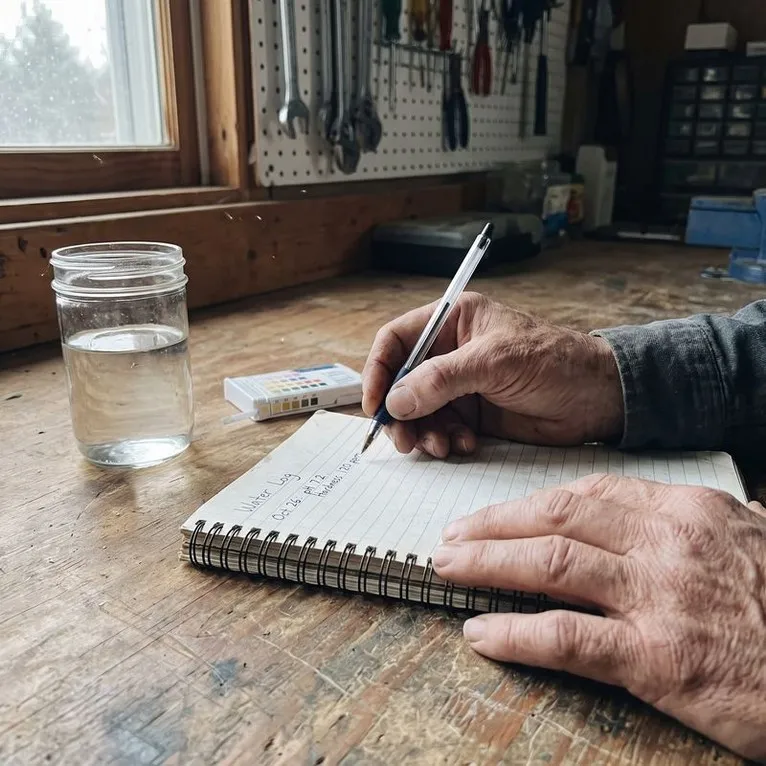
- Keep a water log
- Frequently asked questions
How to test water quality at home: use a home water test kit with strips for bacteria, nitrates, pH, hardness and chlorine, follow its timing exactly, and write every result in a log. Treat the strips as a screening tool. If a strip flags a problem, or if you need to know whether water is safe to drink, send a sample to a state-certified laboratory. Lead needs a lab test, because you cannot see, taste or smell it.
That is Project 13 of The Off-Grid Handbook, Water Test & Log: about 30 minutes and $25 in materials, per the book. Its safety box sums it up: home strips are screening tools, not certifications, and no filter replaces knowing what is in your water.
How to test water quality at home: start with your water source
What to test depends on where your water comes from.
- City water. Your utility tests it and must send customers an annual Consumer Confidence Report by July 1, according to EPA. Home testing is mostly about your own pipes and filters.
- A private well. Nobody tests it but you. EPA recommends a certified lab test every year for total coliform bacteria, nitrates, total dissolved solids and pH. Our guide to how to test well water covers that routine in detail.
- Rainwater or stored water. Strips show whether a filter or disinfection step is doing its job. A lab decides whether it is drinkable.
What a home water test kit measures
The Handbook's kit covers five things. Here is what each one tells you, in plain terms.
| Test | What it tells you |
|---|---|
| Bacteria (usually coliform) | A sign that surface water or waste may be getting in; any positive needs a lab follow-up |
| Nitrates | Fertilizer, manure or septic influence; the EPA limit is 10 mg/L as nitrogen |
| pH | How acidic or alkaline the water is; acidic water can corrode pipes |
| Hardness | Dissolved calcium and magnesium; mostly a scale and soap issue |
| Chlorine | Whether disinfectant is present, in city water or after bleach treatment |
Chlorine is the one people forget. After you treat water with bleach, a chlorine strip confirms that some disinfectant is still there, which backs up EPA's "faint chlorine smell" check in how to purify water with bleach.
How to use water test strips
Every brand differs slightly, so the instructions in the box come first. These habits make any kit more useful:
- Check the date. Old or expired strips may not read correctly.
- Use a clean glass and fill it straight from the tap or stage you are testing.
- Time it. Dip for exactly as long as the kit says and read the colors at exactly the stated time.
- Read in daylight against the chart, holding the strip next to the color pads.
- Write it down right away, with the date and where the sample came from.
The Handbook adds a step most people skip: test each stage of your chain once, at the source, after the filter and after disinfection. Then you know what each stage actually does.
How accurate are water test strips?
It depends on the test. The San Francisco Public Utilities Commission compared three home kit brands with its laboratory. Coliform bacteria, nitrate, nitrite and iron agreed with the lab more than 80% of the time for all three brands. Lead and chlorine agreed well for two brands but not the third. pH, hardness and alkalinity agreed less than 60% of the time for most brands.
Its advice is the same as the book's: a poor result from a kit should be confirmed by a laboratory that uses certified methods. A good result is reassuring, but it is not proof.
Testing for lead at home
EPA says that since you cannot see, taste or smell lead dissolved in water, testing is the only sure way to know. It recommends contacting your water utility or a certified laboratory, and says testing typically costs $20 to $100. Some utilities offer it at low cost.
Lead usually comes from the plumbing, not the source. EPA notes lead pipes are more likely in older cities and homes built before 1986, and that water sitting in pipes picks up more lead, so it suggests running the tap, a shower or a load of laundry before drinking. Follow the lab's sampling instructions exactly, including when to take the sample.
City water: read your annual water quality report
If you are on a public system, start with the Consumer Confidence Report. EPA says it lists your water source, the regulated contaminants found and how they compare with the limits, and information on contaminants such as nitrate, arsenic or lead where they may be a concern. Many utilities post it online.
Home testing then answers the questions the report cannot: what your own pipes add, and whether your filter or stored water is behaving. After a boil water advisory, follow the utility's instructions rather than a strip.
When to send water to a certified lab
The book and the agencies agree on the moments that call for a lab rather than a strip:
- Any positive bacteria strip, or nitrates near the limit.
- A private well, at least once a year.
- An infant in the house, which the book says always calls for a certified lab.
- After floods, nearby construction, or any change in taste, odor or color.
- Before anyone drinks from a rainwater system, as in a rainwater collection system for drinking water.
EPA says to use only laboratories certified for drinking water testing; your state certification office or health department can point you to one. Until a high result is explained, use stored or bottled water, as described in how to store water long term.
Keep a water log
The last step in Project 13 is the one that pays off over years: log everything with dates. A single result is a snapshot. A log catches slow drift, like nitrates creeping up after spring fertilizing, and gives a lab or health department something real to work with. Keep the page in your household binder, next to the lab reports. Useful columns are the date, who took the sample, where it came from, strip or lab, every value, and a note on anything unusual, such as heavy rain or plumbing work.
Frequently asked questions
Are home water test strips accurate?
For some tests, reasonably. A San Francisco Public Utilities Commission comparison found coliform, nitrate, nitrite and iron strips agreed with the lab more than 80% of the time, while pH, hardness and alkalinity often agreed less than 60%. Confirm any poor result with a certified lab.
Can I test for lead at home?
Home kits exist, but EPA recommends testing through your water utility or a certified laboratory, at a typical cost of $20 to $100. You cannot see, taste or smell lead in water, and it usually comes from household plumbing, especially in homes built before 1986.
How often should I test my water at home?
Take a baseline now, test each stage of any filter or storage system once, and retest after floods, plumbing work or any change in taste, odor or color. Private wells need a certified lab test at least once a year for coliform bacteria, nitrates, total dissolved solids and pH.
What should I do if a home water test shows bacteria?
Stop drinking that water, use stored, bottled or disinfected water, and send a sample to a state-certified lab to confirm. If it is confirmed, contact your local health department or utility for the next step before changing anything.
Sources
- The Off-Grid Handbook, Garrett Dalton, Project 13
- EPA: Protect Your Home's Water (Private Wells)
- EPA: Basic Information about Lead in Drinking Water
- EPA: Consumer Confidence Report Information for Consumers
- San Francisco Public Utilities Commission: Home Test Kits
- CDC: Guidelines for Testing Well Water
Safety guidance changes. Check the agency pages above for the current version, and follow your local code and manufacturer instructions.