Emergency water storage containers: which ones to buy and which to skip
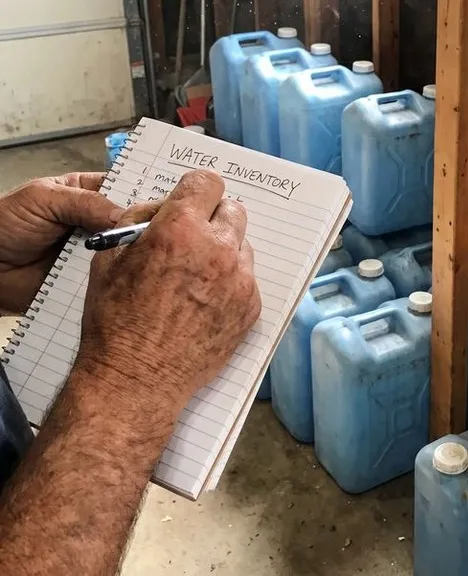
The right container is food-grade, sealed tight and light enough for you to lift. For most homes, that means a stack of 5-gallon jugs.
In this article
- What makes a good emergency water storage container
- Emergency water storage containers compared
- Why 5 gallon water storage containers win for most homes
- When a 55-gallon drum makes sense
- Features worth paying a little more for
- Containers to avoid
- Water storage containers for home: setting them up
- Frequently asked questions
The best emergency water storage containers for most homes are food-grade 5 to 7 gallon jugs with tight caps, plus a few cases of commercially bottled water. They stack, fit in a closet, and one person can lift them. Large 55-gallon drums hold more but weigh about 460 pounds when full. Skip milk jugs, glass and anything that ever held chemicals.
The Off-Grid Handbook makes the same call in Project 5, which builds a dated, rotating water store in about an hour for $40 to $100. This guide compares the options so you can buy once.
What makes a good emergency water storage container
CDC lists four things to look for in a container you fill yourself:
- Food grade. FDA-approved for food or drinking water. Non-food plastics can leach chemicals into what they hold, as Utah State University Extension explains.
- A tight-closing lid that keeps out dust, insects and hands.
- Durable, unbreakable material. CDC says not glass.
- A narrow opening so you can pour without dipping in. A spigot is even better.
Many food-grade water containers are made of HDPE, the plastic marked with a 2 inside the recycling triangle. The label "for drinking water" or "food grade" matters more than the color or the brand.
Emergency water storage containers compared
| Container | Good for | Watch out for |
|---|---|---|
| Commercially bottled water | Drinking; CDC calls it the safest source | Check the date; keep sealed until use |
| 5 to 7 gallon food-grade jugs | Most homes; stack in closets | About 42 to 58 pounds full |
| 2-liter soda bottles, cleaned | Small, free, easy to tuck away | Sanitize first; keep cool |
| 55-gallon food-grade drum | Large households with floor space | About 460 pounds full; needs a pump or siphon |
| Milk jugs | Not recommended | Thin plastic breaks down and leaks |
| Glass jars and bottles | Not as a main supply | Break easily in an emergency |
The weights come from simple math. Water weighs 8.3 pounds per gallon, as the Handbook notes in Project 11, so a 5-gallon jug is about 42 pounds and a 7-gallon jug about 58. Rutgers Cooperative Extension puts a full 55-gallon barrel at about 460 pounds.
Why 5 gallon water storage containers win for most homes
The book's field note is plain: stacked 5-gallon containers beat one big drum for most homes. It gives three reasons:
- They fit. A closet floor, under a bed or a basement shelf holds several.
- One person can carry them. That matters when the water is needed in the kitchen, not the basement.
- Failure is small. A cracked jug costs five gallons. A failed drum costs fifty-five.
If lifting 42 pounds is hard for you, choose smaller 2 to 3 gallon jugs, or fill the big ones only partway and note it on the label. Water you cannot move is not much help. A jug with a built-in spigot, set on the edge of a counter, lets you fill a glass without lifting it at all.
When a 55-gallon drum makes sense
A drum holds a lot of water in one footprint, which suits a large household with a garage or basement corner that stays cool. It needs a solid, level base, a bung wrench to open it, and a way to get water out without tipping it: a drum pump, or a siphon kit like the one in how to start a siphon.
Once a drum is full, it does not move. Put it where it will stay before you fill it, and keep it away from fuel cans, paint and pesticides, since USU Extension notes that plastic is permeable to some vapors.
Features worth paying a little more for
Two containers can hold the same five gallons and be very different to live with. A few details make daily use easier, especially when the power is out and the light is poor:
- A spigot or pour spout. It lets you fill a pot without lifting or tipping the jug, and keeps hands out of the water.
- A vent cap. Jugs with a small vent pour smoothly instead of glugging and splashing.
- Flat sides that stack. Rectangular jugs use closet space far better than round ones, and the book's field note leans on that.
- A handle you can grip with one hand, molded deep enough for a gloved or arthritic hand.
- Room for a label. CDC asks you to mark each container "drinking water" with the storage date, so pick a jug with a flat spot for tape and marker.
Whatever you choose, buy a few of the same model. Matching jugs stack evenly, share caps and spigots, and make the six-month rotation quicker.
Containers to avoid
- Milk jugs. Oregon State University Extension advises against them: the plastic is designed to break down over time and can leak, and milk protein left behind can spoil stored water.
- Anything that held chemicals. CDC says never reuse containers that held toxic liquids or solids, including bleach and pesticides.
- Glass as your main supply. USU Extension notes glass is easily broken and may be damaged in the very emergency you are storing for.
- Non-food plastics, such as paint buckets, waterbed liners or pool liners, which USU says are not approved for food storage.
Cleaned 2-liter soda bottles are fine, according to Oregon State University Extension, as long as they are sanitized first and kept cool, dark and dry.
Water storage containers for home: setting them up
Whatever you buy, the setup is the same, and it is the core of Project 5 in the Handbook:
- Sanitize each container with CDC's solution of 1 teaspoon of unscented bleach in 1 quart of water. Details are in how to sanitize water storage containers.
- Fill from the tap and cap tightly.
- Label each one "drinking water" with the fill date.
- Store between 50°F and 70°F, out of sunlight, on a shelf or pallet rather than bare concrete.
- Replace self-filled water every six months, as explained in how to store water long term.
To decide how many containers to buy, multiply one gallon per person per day by the days you want to cover, then add some for pets and hot weather. Our guide to how much water per person per day has the numbers for households of two, four and six.
Containers you fill from the tap are only one layer. A rain barrel set up as in how to connect rain barrels together covers flushing and washing, so the clean water in your jugs can go to drinking and cooking.
Frequently asked questions
What are the best containers for storing emergency water?
Food-grade 5 to 7 gallon jugs with tight caps suit most homes, along with sealed, commercially bottled water. CDC recommends food-grade containers with tight lids, made of unbreakable material, ideally with a narrow opening or spigot. Avoid milk jugs, glass and anything that held chemicals.
Can I store water in milk jugs?
It is not recommended. Oregon State University Extension advises against milk jugs because the plastic is designed to break down and can leak, and leftover milk protein can spoil the water. Cleaned 2-liter soda bottles or purpose-made food-grade jugs are better choices.
Is a 55-gallon drum better than 5-gallon jugs?
Only if you have a cool, solid spot and a pump or siphon to draw water out. A full drum weighs about 460 pounds and cannot be moved. The Off-Grid Handbook prefers stacked 5-gallon containers for most homes because one person can carry them and a single leak loses five gallons, not fifty-five.
How heavy is a 5-gallon water jug?
About 42 pounds, since water weighs roughly 8.3 pounds per gallon. A 7-gallon jug weighs about 58 pounds. If that is too heavy to lift safely, use smaller jugs or a container with a spigot that can stay in place while you fill glasses and pots.
Sources
- The Off-Grid Handbook, Garrett Dalton, Project 5
- CDC: How to Create an Emergency Water Supply
- Oregon State University Extension: Soda bottles for emergency water storage?
- Utah State University Extension: Water Storage and Emergency Use
- Ready.gov: Water
- Rutgers Cooperative Extension: Rain Barrels Part II, Installation and Use (FS1118)
Safety guidance changes. Check the agency pages above for the current version, and follow your local code and manufacturer instructions.