How to stop a draft under a door: sweeps, thresholds and quick fixes
A thin gap under a door lets in more cold air than it looks. Most doors can be fixed in an hour with a screwdriver and a hacksaw.
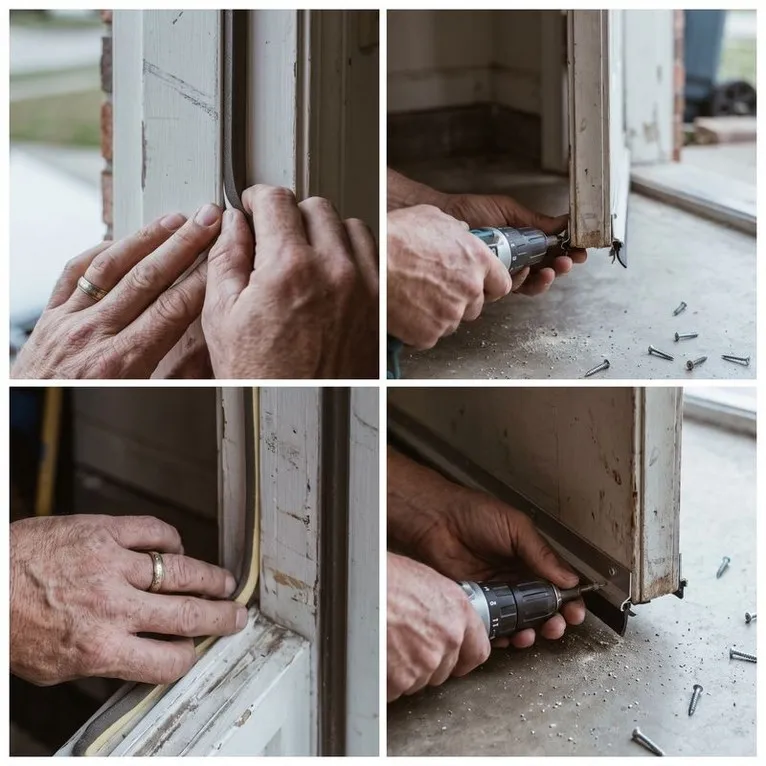
In this article
Here is how to stop a draft under a door: close the gap at the bottom with a door sweep, a door shoe or a new threshold, and weatherstrip the sides and top so the air doesn't simply move to the next gap. For a quick fix, a draft snake or a rolled towel along the bottom works today, and costs nothing.
It is worth doing. The Off-Grid Handbook puts it plainly in Project 47: a 1/8-inch gap under a door is a permanently open window's worth of leak.
How to stop a draft under a door: find the gap first
Before buying anything, confirm where the air gets in. The Department of Energy suggests two easy tests:
- The dollar bill test. Shut the door on a dollar bill. If you can pull it out without it dragging, air is getting through. Try it at the bottom and at several spots along the sides.
- The light test. At night, shine a flashlight around the closed door while someone watches from the other side. Large gaps show up as light.
On a windy day, the Handbook's smoke test finds smaller leaks: pass a lit incense stick slowly around the door edges, and where the smoke dances, air moves. Our guide on how to find air leaks in your house walks through the full test.
Also look at the threshold itself. A cracked or loose threshold, or a door that has sagged on its hinges, may need a repair before any seal can work. Tightening the hinge screws sometimes closes a gap on its own.
Door sweep, door shoe or threshold?
The Department of Energy's weatherstripping guide compares the options for the bottom of a door:
| Type | What it is | Good to know |
|---|---|---|
| Door sweep | A metal strip with a brush, vinyl, sponge or felt edge, screwed to the face of the door | Relatively easy to install, many are adjustable for an uneven threshold. Can drag on carpet |
| Door shoe | An aluminum channel with a vinyl insert that wraps the bottom of the door | Durable and sheds rain outside. Harder to install, and the door may need trimming |
| Bulb threshold | A threshold with a vinyl bulb the door presses down on | Combines threshold and seal. Wears with foot traffic |
| Draft snake | A fabric tube filled with something heavy, laid along the bottom | No tools and fully removable, but only works when it is in place |
For most exterior doors, a door sweep is the place to start. DOE notes where it goes: on the inside face of a door that swings in, and on the outside face of one that swings out.
Door sweep installation, step by step
You need a tape measure, a hacksaw or tin snips, a pencil, a drill or screwdriver, and the sweep. Read the package instructions, since designs vary.
- Measure the door's width at the bottom, and buy a sweep at least that long.
- Cut it to length with a hacksaw if it is metal. DOE's advice for all weatherstripping: measure twice before you cut.
- Close the door and hold the sweep against it so the seal just touches the threshold. It should press lightly, not fold over.
- Mark the screw holes through the slots, then drill small pilot holes.
- Screw it on, using the slotted holes so you can adjust the height later.
- Test the door. It should close and latch without a fight. Repeat the dollar bill test along the bottom.
Adhesive products have one more rule from DOE: apply them to clean, dry surfaces when it is above 20°F, so don't leave the job for the coldest day.
How to weatherstrip a door on the sides and top
A sealed bottom with leaky sides just moves the draft. DOE's guidance is to weatherstrip the entire jamb, with one continuous strip along each side, meeting tightly at the corners. Use a thickness that presses snugly between the door and the jamb without making the door hard to shut.
- V-strip (tension seal) fits the sides and top of a door. It is durable and almost invisible.
- Foam tape is the easiest to install and inexpensive, but it doesn't last as long.
- Tubular rubber or vinyl is tacked to the stop so the door presses against it, and seals well.
Step 3 of Project 47 is simply weatherstrip every exterior door and fit sweeps. The whole project, which also covers caulking and foam around windows, outlets and pipes, takes about three hours and roughly $50, per the book.
Quick fixes for renters and for an outage
If you can't drill into the door, or need a fix tonight:
- A draft snake or rolled towel along the bottom. The Handbook uses draft snakes as the movable last layer in its window kit, Project 48, and the same idea works at a door.
- A slide-on sweep that slips under the door without screws, for interior doors. Most are a foam tube on each side of the door, cut to width with scissors, and come off in seconds when you move out.
- A heavy blanket on a tension rod across a doorway. In Project 49, the book seals the warm room this way, with gaps stuffed, and calls the door of the warm room its thermostat.
For a winter outage, start with the doors of the one room you plan to keep warm, as described in how to stay warm without power, and do the same for its windows with our guide to insulating windows for winter.
Two safety checks before you seal
Exit doors must still open easily. A seal that makes a door stick is a problem in a fire. If the door is hard to open after the change, adjust the sweep up.
Fuel-burning appliances need air. DOE advises assessing ventilation before tightening a house. Don't seal the door of a closet or room that holds a furnace or water heater drawing its air from that space, and keep battery-backed carbon monoxide alarms on every level; see CO detector placement. A tighter house also holds heat longer when the power is out, which our guide to how long a house stays warm without power explains.
Frequently asked questions
What is the best way to stop a draft under a door?
Install a door sweep, a door shoe or a bulb threshold, and weatherstrip the sides and top as well. The Department of Energy describes a sweep as relatively easy to install, with many types adjustable for an uneven threshold. A draft snake is a good no-tools fix in the meantime.
Which side of the door does a door sweep go on?
On the inside face of a door that swings into the house, and on the outside face of a door that swings out, per the Department of Energy. Set it so the seal touches the threshold lightly when the door is closed.
How do I know if my door is leaking air?
Close the door on a dollar bill. The Department of Energy says that if you can pull it out without it dragging, you're losing energy. You can also shine a flashlight around the door at night while someone watches from outside.
How big a gap under a door is too much?
Even a small one matters. The Off-Grid Handbook warns that a 1/8-inch gap under a door is a permanently open window's worth of leak. If you can see daylight under a closed exterior door, it needs a sweep or a new threshold.
Sources
- The Off-Grid Handbook, Garrett Dalton, Project 47
- US Department of Energy, Energy Saver: Weatherstripping (archived January 2026)
- US Department of Energy, Energy Saver: Detecting Air Leaks (archived May 2026)
- US Department of Energy, Energy Saver: Air Sealing Your Home (archived June 2026)
- ENERGY STAR: A Do-It-Yourself Guide to Sealing and Insulating (PDF)
Safety guidance changes. Check the agency pages above for the current version, and follow your local code and manufacturer instructions.