How to build a solar oven from two boxes, glass and foil
An insulated box, a glass lid and a few foil reflectors make a fuel-free oven for slow cooking on sunny days.
In this article
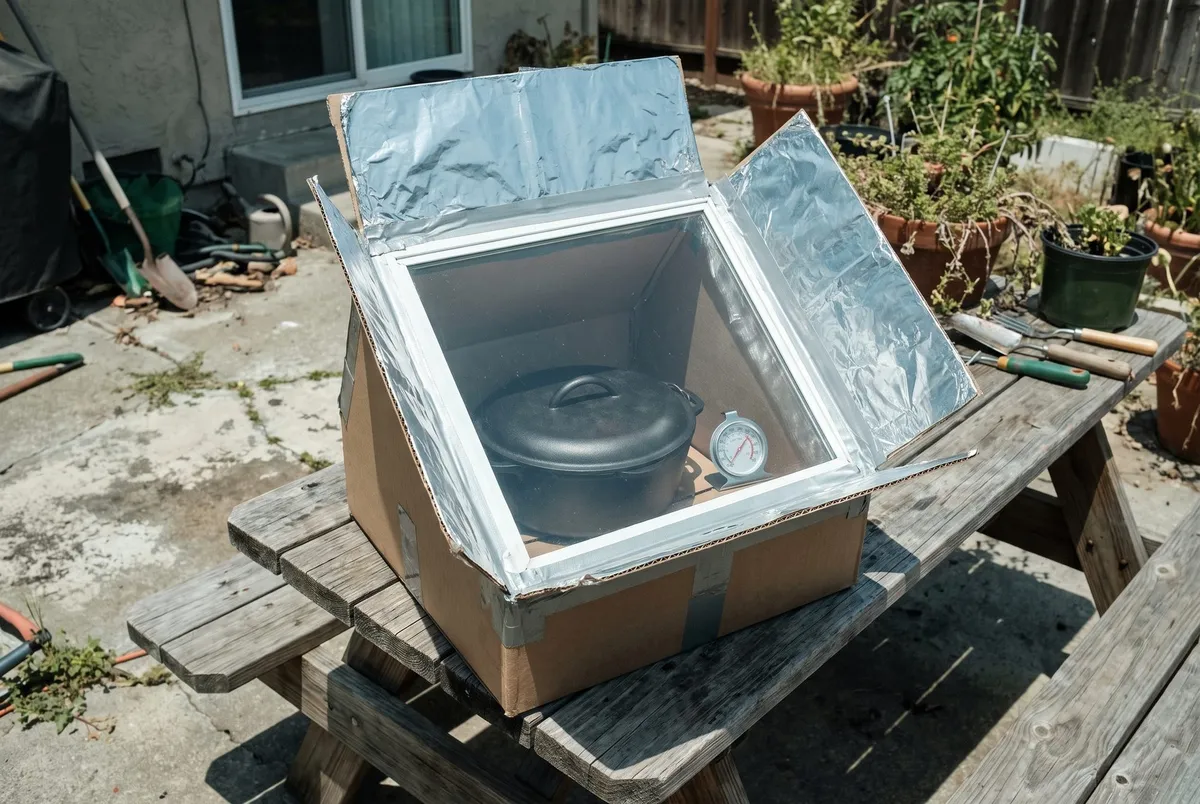
Here is how to build a solar oven: nest one cardboard box inside a larger one with 1 to 2 inches of insulation between them, line the inside with foil, paint the floor black, seal a glass or clear acrylic panel over the top, and hinge a foil-covered flap above it as a reflector. In decent sun, a box oven like this reaches 250 to 350°F, enough to bake, roast and simmer stews. Plan on roughly double the normal cooking time, and check meat with a thermometer.
That is Project 57 of The Off-Grid Handbook, the Solar Box Oven: about three hours and $40 in materials, per the book.
What you need
The Handbook's list:
- Two nesting cardboard boxes, or plywood if you want a permanent oven
- Crumpled newspaper or foam insulation for the gap between the boxes
- A glass or acrylic panel for the lid
- Heavy foil, black high-temperature paint, a dark metal pot with a lid, and an oven thermometer
- Tools: a utility knife, scissors, glue and foil tape
The inner box sets the oven's size. Pick one that holds your pot with a little room around it, and an outer box 2 to 4 inches bigger each way, so the insulation gap can be 1 to 2 inches all round.
How to build a solar oven, step by step
- Nest and insulate. Pack 1 to 2 inches of insulation into the gap between the boxes, line the inside of the inner box with foil, and paint its floor black. Foil bounces light around inside; the black floor turns it into heat.
- Glaze the top. Fit the glass or acrylic over the opening and seal the edges with foil tape so the heat stays in.
- Add reflectors. Hinge a foil-faced flap along the back edge as the main reflector, then add side reflectors. The book says side reflectors add 50°F or more.
- Cook in a thin, dark, lidded pot. Aim the box at the sun and re-aim it every 30 to 45 minutes as the sun moves.
- Plan around its nature. Allow roughly double the usual cook time, start dinner stews in the morning, and keep the thermometer where you can see it.
The Florida Solar Energy Center describes the same three ingredients for any box cooker: reflectors to bring in more sunlight, glazing to let sunlight in and trap the heat, and insulation to hold it.
How hot does a solar oven get?
The Handbook puts a well-made box oven at 250 to 350°F in decent sun. The Florida Solar Energy Center says commercially made box ovens can reach 400°F on a clear, sunny day. Your oven's number depends on:
- The sun. Clear midday sun is best; thin cloud cuts heat quickly.
- Aim. An oven left pointing at where the sun was an hour ago loses heat. Hence the 30 to 45 minute re-aim.
- Wind. A breeze strips heat from the glass. Set the oven out of the wind.
- Seal and insulation. Gaps around the glass let hot air out.
Season matters too. The oven works best from spring through early fall, when the sun climbs high; in winter, with a lower sun, expect lower temperatures and longer cooking, and tilt the box so the glass faces the sun more squarely.
Put the oven thermometer inside before you start. It tells you whether the day is good enough to cook meat, or better suited to bread, rice or vegetables.
What to cook, and how long it takes
The Florida Solar Energy Center says box cookers can cook the same foods as a standard oven or a slow cooker, and gives the same rule of thumb as the Handbook: figure twice the regular cooking time. Slow-cooker recipes suit it well. Foods rarely burn or overcook, and they generally need less liquid than usual.
Use a thermometer in the food, not a timer, to decide when it's done. The Handbook keeps the food-safety line standard, per USDA:
| Food | USDA safe minimum internal temperature |
|---|---|
| All poultry, including ground poultry | 165°F |
| Ground beef, pork, veal and lamb | 160°F |
| Beef, pork, veal and lamb steaks, chops and roasts | 145°F, then rest 3 minutes |
| Fish and shellfish | 145°F |
| Egg dishes | 160°F |
| Leftovers and casseroles | 165°F |
Solar oven food safety
A solar oven heats food slowly, and USDA's food safety rules are built around how long food spends warm but not hot. Its "Danger Zone" is 40°F to 140°F, where bacteria grow fast, and food shouldn't sit out more than 2 hours, or 1 hour above 90°F.
- Thaw meat first. USDA gives this rule for slow cookers, the other low, slow method: always thaw meat or poultry before it goes in.
- Start early. The Handbook's morning start gives food time to climb past the Danger Zone while the sun is high.
- Have a backup. If clouds roll in and the food stalls below a safe temperature, finish it on another heat source, outdoors if it burns fuel.
- Handle leftovers promptly. USDA says refrigerate them within 2 hours of cooking and reheat to 165°F. Don't use the solar oven to rewarm leftovers slowly.
Use pot holders. The Florida Solar Energy Center warns that solar cookers get extremely hot, and the pot and glass will burn bare hands. Don't stare into the reflectors on a bright day either; they bounce a lot of light.
A fuel-free oven for outage days
The book's field note sums up the oven's real job: fuel arbitrage. Every hour of sun-baking is camp-stove fuel saved for cloudy days. In a long outage, that stretches a propane supply noticeably; our guide to how to cook without electricity covers the fuel math, and the outdoor cooking station shows where the oven fits.
The Handbook also uses the oven for heating water with the rules from Project 7; see solar water pasteurization. For planning meals around the oven, try the emergency meal plan, and for a fuel-burning partner for cloudy days, the DIY rocket stove.
Frequently asked questions
How hot does a homemade solar oven get?
The Off-Grid Handbook puts a well-built box oven at 250 to 350°F in decent sun, with side reflectors adding 50°F or more. The Florida Solar Energy Center says commercial box ovens can reach 400°F on a clear day. Sun, aim, wind and sealing make the difference.
How long does it take to cook in a solar oven?
About twice the normal cooking time, according to both The Off-Grid Handbook and the Florida Solar Energy Center. Start dinner stews in the morning, re-aim the oven every 30 to 45 minutes, and use a food thermometer, not a timer, to decide when food is done.
Is it safe to cook meat in a solar oven?
Yes, if it reaches USDA safe temperatures: 165°F for poultry, 160°F for ground meats, 145°F plus a 3-minute rest for steaks and roasts. Thaw meat first, start early in good sun, and finish on another heat source if clouds stall the cooking.
What materials do I need to build a solar oven?
The Off-Grid Handbook uses two nesting cardboard boxes, newspaper or foam insulation, a glass or acrylic lid, heavy foil, black high-temperature paint, a dark lidded pot and an oven thermometer, plus a utility knife, scissors, glue and foil tape. About $40.
Sources
- The Off-Grid Handbook, Garrett Dalton, Project 57
- USDA FSIS: Safe Minimum Internal Temperature Chart
- USDA FSIS: Danger Zone (40°F to 140°F)
- USDA FSIS: Slow Cookers and Food Safety
- Florida Solar Energy Center (UCF): Solar Cookers
Safety guidance changes. Check the agency pages above for the current version, and follow your local code and manufacturer instructions.