How to cover a broken window: a safe temporary fix with plywood, a tarp or plastic
A broken window lets in rain, cold and anyone passing by. A tarp, a few strips of wood and an hour of calm work will hold until the glass can be replaced.
In this article
How to cover a broken window, in short: first make it safe. Put on heavy gloves, sturdy shoes and eye protection, keep children and pets out of the room, and photograph the damage. Then remove the loose glass and close the opening. A plywood panel screwed to the frame is the strongest temporary fix. A heavy tarp wrapped around wood battens and screwed to the outside framing sheds rain. Plastic sheeting taped inside is a stopgap for small breaks. A glazier does the permanent repair.
This is the "patch" half of the storm kit in Project 58 of The Off-Grid Handbook, which the book says can make a breached window shed weather with a tarp in minutes.
How to cover a broken window safely: start here
- Wait for the storm to pass. During high winds, the National Weather Service says to stay away from windows and glass doors, in a small interior room. No window is worth standing next to in a hurricane.
- Check the room. If walls are cracked, ceilings sag or power lines are down outside, stay out until it has been checked. If you smell gas, leave and call from outside.
- Dress for glass: heavy work gloves, closed shoes with thick soles, long sleeves and safety glasses. Ready.gov advises protective clothing and working with someone else during cleanup.
- Take pictures first. FEMA advises photographing all damage, inside and out, before you clean up or throw anything away, and keeping every receipt for repairs. Tarps, plywood and screws count.
Clearing the broken glass
- Lay a drop cloth or cardboard under the window, inside and out if you can.
- Remove loose shards from the top of the frame down, so nothing falls on your hands. Rock each piece gently and lift it out. Leave firmly seated glass for the glazier.
- Put the pieces in a sturdy box, not a trash bag, and label it "broken glass."
- Vacuum the sill and floor, then wipe with a damp paper towel to pick up slivers.
A cracked pane that is still in one piece is easier. Strips of clear packing tape over both sides of the crack keep it together and hold out drafts until replacement. If the glass is loose in the frame, take it out rather than trust the tape.
How to tarp a window after a storm
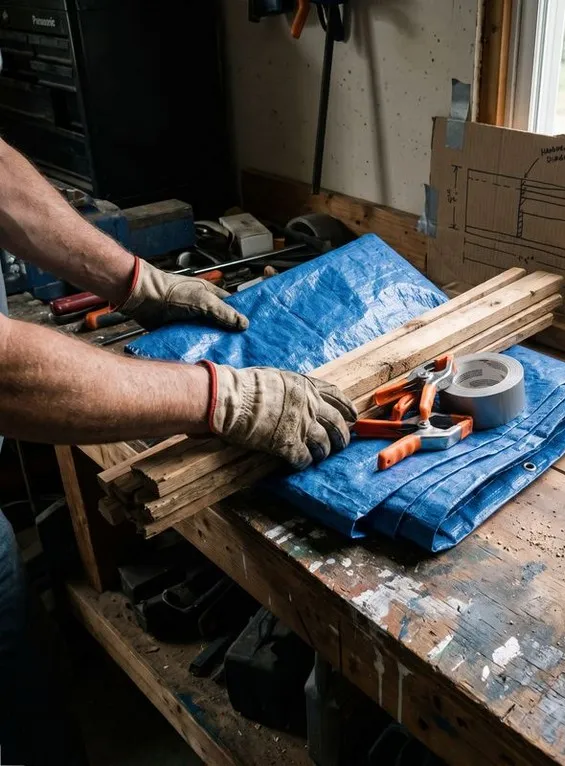
This is the Handbook's method: tarp, battens, clamps, tape. Battens are thin strips of wood, such as 1x2 or 1x3 furring strips.
- Cut the tarp so it overlaps the opening by at least a foot on every side.
- Wrap the top edge around a batten once or twice, like a window shade, so the screws pass through wood and several layers of tarp, not a single thin sheet that will tear.
- Screw the batten to the framing above the window, outside if you can reach safely from the ground. Wood trim and siding hold better than vinyl.
- Repeat at the sides and bottom, pulling the tarp snug so it doesn't flap.
- Tape the edges with duct or heavy tape, and use spring clamps to hold the tarp while you work.
The top edge goes on first, and the tarp hangs outside the frame so rain runs down and away instead of into the wall.
Temporary broken window fix: which option to use
| Option | Best for | Limits |
|---|---|---|
| Plywood panel screwed to the frame | Ground-floor windows, security, several days or more | Blocks light; needs a saw and drill, or a pre-cut panel |
| Tarp wrapped on battens, outside | Rain, any size of opening, fast | Not secure; can tear in strong wind |
| Plastic sheeting taped inside | Small breaks, keeping cold and dust out overnight | Weak against rain and wind; tape fails on wet surfaces |
| Clear packing tape over a crack | A cracked pane still in one piece | Not for missing or loose glass |
If you built the Handbook's board-up kit, the window's own labeled 5/8-inch plywood panel is already cut and pre-drilled. Put it back up. Our guide to how to board up windows for a hurricane covers fastening methods.
Upstairs windows and ladders
A broken second-story window is where this job turns dangerous. The Handbook's ladder rule is direct: ladder work causes more household injuries than any project in the book. Use a stabilizer, keep three points of contact, and never work a roof edge alone or in wind. A tarp on a ladder catches wind like a sail.
For upper floors, cover the opening from inside with plastic sheeting stapled or taped to the inner trim, close the door to that room, and put a towel along the sill. Leave the outside to a contractor. After a big storm they will be busy, so call early.
Keep the room dry and warm
Water that gets past a broken window soaks drywall and carpet, and mold can follow. FEMA advises documenting damage and taking steps to stop the spread of mold. Mop up, run fans if the power is on, and move rugs and furniture away from the wall.
In cold weather, close that room off and heat the rest of the house. Never use a gas oven or stove for heat. Our guide to how to stay warm without power covers the safe options. For a broken pane in a glass door, see how to secure a sliding glass door.
Build the patch kit before you need it
After a storm, hardware stores are often closed or out of tarps. The Handbook's Project 58 keeps the patch kit next to the plywood panels: a heavy tarp, wood battens, spring clamps, and duct and heavy-duty tape. The book prices the whole kit at about $50 in hardware plus the plywood, and about two hours of work. Add these to the box:
- Heavy work gloves and safety glasses
- A box of exterior wood screws and a charged drill
- A roll of plastic sheeting and a staple gun
- A utility knife and a marker
- Clear packing tape
If you are still choosing between plywood and permanent protection, read hurricane shutters vs plywood, and keep the whole storm plan in your hurricane preparedness checklist.
Frequently asked questions
How do you temporarily cover a broken window?
Wear gloves, sturdy shoes and eye protection, photograph the damage, and remove loose glass from the top down. Then screw a plywood panel over the frame, or wrap a heavy tarp around wood battens and screw them to the outside framing. Plastic sheeting taped inside works for small breaks overnight.
How do you tarp a window after a storm?
Cut the tarp to overlap the opening by about a foot on every side, roll the top edge around a wood batten and screw it to the framing above the window, then do the sides and bottom, pulling it snug. Tape the edges. Work from the ground only, and never in wind.
Can you use plastic wrap or a trash bag to cover a broken window?
Only as a short stopgap for a small break, from the inside. Thin plastic tears and tape lets go on wet surfaces. Heavier plastic sheeting stapled to the trim is better, and plywood or a tarp on battens is better still for rain and security.
Should you cover a broken window during a hurricane?
No. During the storm, the National Weather Service says to stay away from windows and glass doors in a small interior room. Cover the opening only after the wind has dropped and the area is safe.
Sources
- The Off-Grid Handbook, Garrett Dalton, Project 58
- National Weather Service: Hurricane Safety, Take Action
- Ready.gov: Hurricanes
- FEMA: How to Document Damages After Severe Weather Events
- CDC: Returning Home After a Natural Disaster
- FEMA: File Your National Flood Insurance Policy Claim
Safety guidance changes. Check the agency pages above for the current version, and follow your local code and manufacturer instructions.