How to secure a sliding glass door: the bar, the pin and the screws that stop a lift
The latch on most sliding doors was never meant to stop anyone. Three cheap additions do the real work, and none of them needs a locksmith.
In this article
- How to secure a sliding glass door: why the latch is not enough
- Step 1: a sliding door security bar or a dowel in the track
- Step 2: pin locks through the frames
- Step 3: stop the panel from being lifted out
- Light and sightlines around the glass
- What it costs and how it fits the bigger plan
- Frequently asked questions
Here is how to secure a sliding glass door in one afternoon: block the track with a security bar or a snug dowel, add a pin lock through the overlapping frames, and drive screws into the top track so the panel can't be lifted out. Then make the glass easy to see from the street, because a visible door is an unattractive one.
None of this replaces the latch. It backs it up. The Seattle Police Department's crime prevention bulletin says sliding doors often have locking mechanisms that are easy to force, and that some older doors can be lifted right off their track, which defeats the latch completely.
How to secure a sliding glass door: why the latch is not enough
A sliding door has two weak spots. The first is the latch, a small hook that catches a pin on the frame. A pry bar between the frame and the door can pop it. The second is the space above the panel. Most doors need a little room in the top track so they can be installed, and if there is enough room, the whole panel can be lifted up and swung out of the bottom track.
So a good fix does two jobs: it stops the door from sliding, and it stops the door from lifting. That is why police guidance calls for more than one device.
The Off-Grid Handbook treats this as part of Project 66, Security Basics: Locks, Light, Sightlines. Its materials list includes a security bar for the weakest door and window pin locks or dowels for sliders and sash windows. The whole project, doors, lights and windows together, is rated Medium, about half a day and roughly $150.
Step 1: a sliding door security bar or a dowel in the track
First check which panel moves and whether it slides on the inside track or the outside track. Seattle Police give two options for a door on the inside track:
- A snug wooden or metal dowel laid in the bottom track, cut so it fills the gap between the moving panel and the frame. If the latch is broken, the door still can't slide.
- A hinged security bar (often sold as a "Charlie bar") mounted across the middle of the door. It folds down to lock and swings up out of the way when you want to open the door. Lengths are adjustable.
For a door that slides on the outside track, the bulletin suggests a slide bolt along the bottom inside track or a commercial track lock.
One rule matters more than the hardware. If this door is a way out of the house in a fire, everyone who lives there must be able to remove the bar or dowel in seconds, in the dark. NFPA's escape planning guidance says to check that doors and windows can be opened easily, and that security bars need emergency release devices inside. Keep the dowel in the track, not in a closet, and show children how to lift it.
Step 2: pin locks through the frames
A pin lock stops the panel from sliding even if the bar is out. The Seattle Police method: find the spot where the inner and outer frames overlap, drill a downward-angled hole through the inner frame and halfway into the outer frame, then drop in a sturdy pin or nail that fits snugly. Use a pin long enough to pull out by hand.
- Drill only where there is no chance of hitting the glass.
- Store-bought pin locks do the same job with a cleaner look.
- If you rent, ask before you drill.
The same idea works on double-hung windows, the kind where the bottom half slides up. Seattle Police call them sash pins: with the window closed, drill at a slight downward angle through the inside sash and halfway into the outer one, and insert a pin. A second hole a few inches higher lets you pin the window open a crack for air. Those are the window pin locks on the Handbook's list, and the bulletin repeats the same caution: a window you may need for escape must stay easy to open from inside.
Step 3: stop the panel from being lifted out
Slide the door closed and look at the gap above it. If you can lift the panel noticeably, there is too much head space. Seattle Police suggest driving large flat-head sheet metal screws into the top track, at both ends and in the middle, and adjusting them so the door just clears as it slides. Now the panel can't rise far enough to come off the bottom track.
Test it: close the door, lock it, and try to lift and pull from inside. Nothing should move. If the door scrapes, back the screws out a quarter turn.
Light and sightlines around the glass
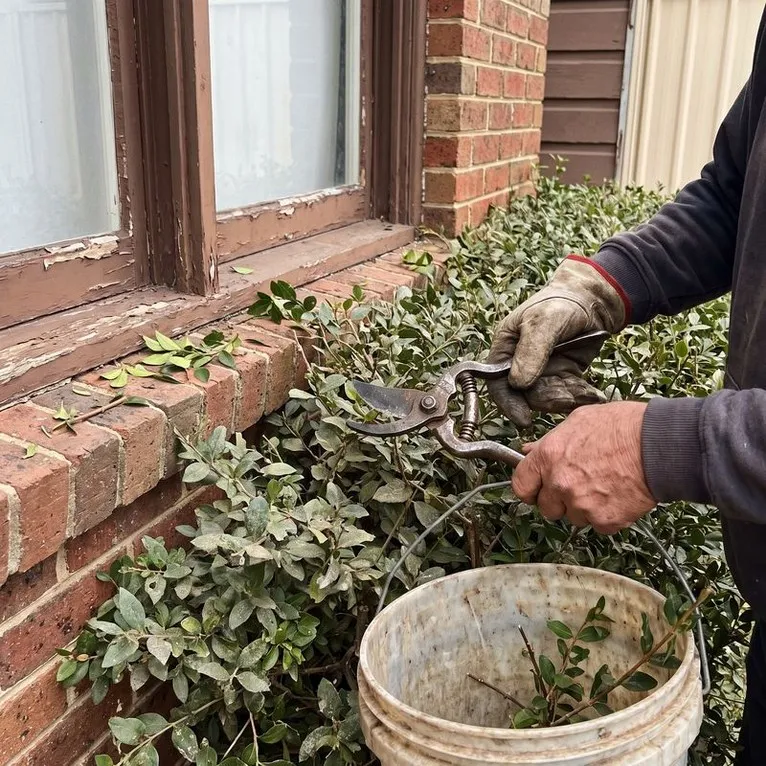
Glass doors usually face a back yard or a side yard, which is exactly where nobody is looking. Steps 3 and 4 of Project 66 deal with that: motion-sensor lights at doors, the driveway and the dark side of the house, and shrubs cut back so windows and doors can be seen from the street. The book's line is simple: a visible entry is an unattractive one.
Seattle Police use a 3/6 rule for planting near the house: shrubs no taller than 3 feet, and tree limbs no lower than 6 feet. They also suggest curtains or blinds on any glass that is easy to see into, so valuables aren't on display. Our guide to solar motion sensor lights covers placement and winter charging.
What it costs and how it fits the bigger plan
| Upgrade | What it stops | Note |
|---|---|---|
| Dowel or security bar | Sliding open | Must come out in seconds for escape |
| Pin lock through frames | Sliding open | Drill clear of the glass |
| Screws in top track | Lifting off the track | Adjust so the door still glides |
| Motion light and trimmed shrubs | Working unseen | Solar models keep working in outages |
The Handbook's field note on Project 66 sums up the thinking: statistically, the burglar's tools are a door nobody locked and thirty seconds. Locks, screws and light defeat the actual threat. So the cheapest upgrade of all is the habit of locking the slider every time it closes.
The front and garage doors deserve the same afternoon: see how to secure a door from being kicked in. If a storm is the bigger worry for your glass, read how to board up windows for a hurricane. And security is easier with neighbors watching out for each other, which is what a neighborhood emergency plan sets up. For the paperwork side, a home inventory video takes ten minutes.
Frequently asked questions
What is the best way to secure a sliding glass door?
Use more than one layer. Police crime prevention guidance suggests a snug dowel or hinged security bar in the track to stop sliding, a pin through the overlapping frames, and screws in the top track so the panel can't be lifted out. Keep the latch locked as well.
Does a broomstick in a sliding door track work?
A snug wooden or metal dowel in the bottom track does work on doors that slide on the inside track, because it stops the panel from sliding if the latch is forced. Cut it to fit the gap closely, and keep it where everyone can remove it quickly in a fire.
How do I stop a sliding door from being lifted off the track?
If the panel lifts when closed, there is too much space in the top track. Seattle Police suggest driving large flat-head sheet metal screws into the top track at both ends and in the middle, adjusted so the door just clears as it slides.
Is a sliding door security bar safe in a fire?
It can be, if it opens instantly from inside. NFPA says escape routes must open easily and security bars need inside emergency releases. Make sure every household member, including children, can lift the bar or dowel quickly in the dark.
Sources
- The Off-Grid Handbook, Garrett Dalton, Project 66
- Seattle Police Crime Prevention Bulletin: Window Security (PDF)
- Seattle Police Crime Prevention Bulletin: Deterring Burglary From Outside the Home (PDF)
- Seattle Police Crime Prevention Bulletin: Door Security (PDF)
- NFPA: How to Make a Home Fire Escape Plan
Safety guidance changes. Check the agency pages above for the current version, and follow your local code and manufacturer instructions.