Home inventory for insurance: the ten-minute video and what to write down
After a fire or a flood, nobody remembers everything they owned. A walk-through video made on a quiet afternoon remembers for you.
In this article
The simplest home inventory for insurance is a video: about ten minutes of phone video walking every room and opening every closet, saved to a USB drive that lives outside the house. FEMA adds one thing worth doing: write down descriptions to go with it, including year, make and model numbers where they apply.
This guide covers how to make that inventory and keep it current. It can't tell you what your policy covers or how a claim will be handled. Those are questions for your insurance company or agent, and the inventory is what makes that conversation easier.
Why a home inventory for insurance matters
FEMA's guide to documenting and insuring your property gives the reasons plainly. A detailed inventory helps you prove the value of what you owned, which could speed claim processing. It provides documentation for tax deductions on losses. And an up-to-date list helps you decide how much insurance to buy in the first place.
There is a human reason too. The California Department of Insurance points out that after a loss, the emotions make it hard to remember all your belongings. Few people can list the contents of a linen closet on a good day, never mind the week after a fire.
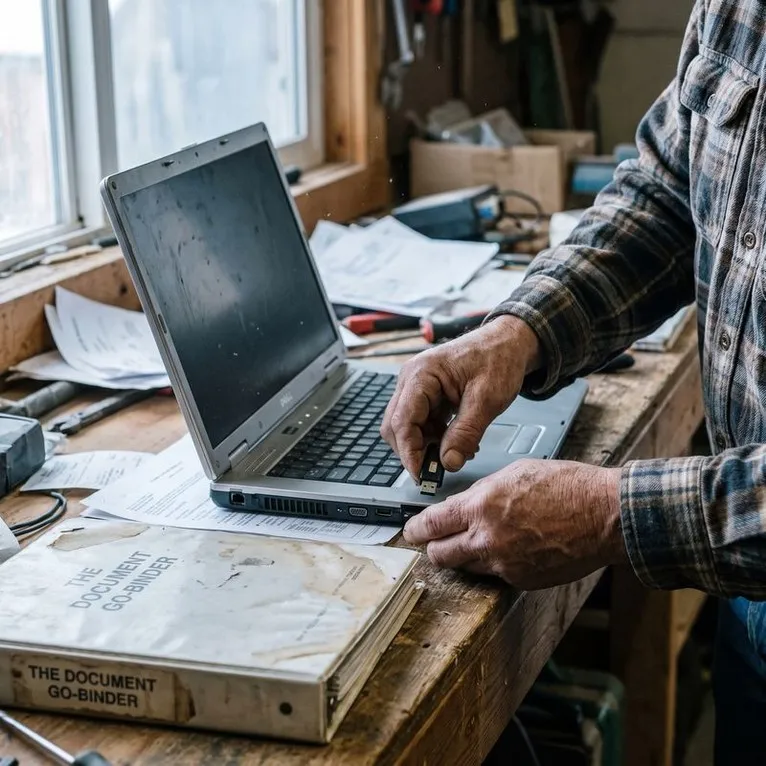
The Off-Grid Handbook puts the inventory inside Project 64, The Document Go-Binder, an evening's work for about $25. Step 4 is the video, and the book calls it "the insurance claim you will be glad exists."
How to do a home inventory video, room by room
Pick a daytime hour with good light and a charged phone. Then:
- Start at the front door and say the date out loud. Then name each room as you enter it.
- Pan slowly around the whole room, then go back for close-ups of anything valuable.
- Open every closet, cabinet and drawer. The Handbook is specific about opening every closet, because that is where most of the value hides: clothes, linens, tools, small appliances.
- Talk as you film. The California Department of Insurance suggests commentary about each item: "this is the sofa we bought in 2021," "these are my mother's silver serving pieces."
- Get serial numbers on camera for electronics and appliances. Turn the item around and hold the shot for a second.
- Don't skip the edges of the house. The department lists extra closets, pantries, basements and attics. Add the garage, the shed, the patio furniture and anything in the yard.
Photos work too, and some people like both. The California guide notes that photographs are especially useful when an item is hard to describe on paper or a receipt can't be found, and suggests a date on each one. A photo of each wall of a room, plus close-ups of anything valuable, covers the same ground as a slow video pan.
Ten minutes is the Handbook's figure for a typical home walk-through. A large house or a full garage may take two short videos, and that is fine. Shorter clips per floor are easier to find later.
What to write down with the video
Video shows what you had. A short written list makes it usable. FEMA suggests descriptions with year, make and model, and an appraisal for valuable items. California's guide adds serial numbers and receipts.
| Item type | What to note |
|---|---|
| Electronics and appliances | Brand, model, serial number, rough purchase year |
| Furniture | Room, what it is, where it came from |
| Jewelry, art, collections | Description, photos, any appraisal you have |
| Tools and garage gear | Brand and model for the larger pieces |
| Clothing and linens | A rough count by closet is enough |
Keep receipts for bigger purchases in the same folder, or photograph them. A phone photo of a receipt is far better than a faded original in a drawer. Write the list in plain words you will understand later, in a hurry, on a borrowed computer. Nobody needs a spreadsheet with forty columns.
Where to keep your home inventory
An inventory stored only in the house can burn with the house. The Handbook's rule in step 5: the binder goes in the shelter room, the USB copy goes somewhere else, or with your out-of-area contact. The project calls for an encrypted USB drive, so a lost stick doesn't hand a stranger a tour of your home.
FEMA's advice lines up: leave copies with trusted relatives or friends, and protect electronic copies with strong passwords. California's guide suggests keeping an updated copy in at least two places, such as a fire-resistant box at home, a locked cabinet at work, or with a family member. The person who holds your copy is usually the same out-of-area contact in your family emergency communication plan.
Keep a note in the binder that says where the USB copy is. That note also belongs in the 72-hour kit, which the Handbook stocks with the go-binder's location.
How often to update it
The Handbook calendars an annual refresh with tax season, which is easy to remember because the paperwork is already out. California's Department of Insurance suggests updating more often, three or four times a year, for example at the start of each season, and adding major purchases like a new TV or refrigerator as soon as possible.
A practical middle ground: refresh the full video once a year, and film a 30-second clip whenever something big comes into the house. FEMA also suggests reviewing your policy every year. Bringing the updated list to that review is one good reason to keep the habit.
The rest of the binder
The video is one page of a larger project. Project 64 also copies the identity set (IDs, birth and marriage certificates), the ownership and money set (deeds or lease, vehicle titles, insurance declarations pages, account and policy numbers), and the medical set (prescription lists, allergies, doctor contacts). The full list is in our emergency binder checklist.
The book's field note explains the idea: originals stay wherever they live safely, and the binder is the working copy that leaves the house in ninety seconds. If you are helping a parent set one up, see emergency preparedness for seniors, and keep some small bills with it, as covered in how much cash to keep at home.
Frequently asked questions
How do I make a home inventory for insurance?
Walk through every room with your phone recording video, opening every closet and drawer and describing items as you go. Add a short written list with brand, model and serial numbers for valuable items, and keep a copy outside the house.
Is a video good enough for a home inventory?
A video is a strong start, and FEMA says photos or videos help record your belongings. It also suggests writing down descriptions with year, make and model numbers, and getting appraisals for valuable items. Ask your insurer what documentation it prefers.
Where should I keep my home inventory?
Somewhere you can reach after a disaster, and not only in the house. The Off-Grid Handbook keeps the binder at home and a USB copy elsewhere or with an out-of-area contact. FEMA suggests copies with trusted relatives and password-protected electronic copies.
How often should I update my home inventory?
The Handbook refreshes it once a year at tax season. The California Department of Insurance suggests three or four times a year and adding major purchases right away. A yearly full video plus a short clip after each big purchase covers both.
Sources
- The Off-Grid Handbook, Garrett Dalton, Project 64
- FEMA / Ready.gov: Document and Insure Your Property (PDF)
- California Department of Insurance: Home Inventory Guide (PDF)
- Ready.gov: Financial Preparedness
- Ready.gov: Emergency Financial First Aid Kit
Safety guidance changes. Check the agency pages above for the current version, and follow your local code and manufacturer instructions.